Last updated: May 30, 2026
Quick Answer: ElevenLabs Voice Design lets you create custom AI voices from a simple text description, no audio samples needed. As of early 2026, the Voice Design v3 update generates three candidate voices per prompt in seconds, giving creators, businesses, and developers access to near-human-quality synthetic speech across 70+ languages. It’s part of a broader platform that includes text-to-speech, voice cloning, dubbing, and conversational AI agents.
Key Takeaways
- ElevenLabs Voice Design v3 (released March 2026) creates custom voices from text prompts alone, specifying age, accent, tone, and pacing [5].
- The company raised $500M in a Series D round at an $11B valuation in February 2026, signaling massive investor confidence [5].
- Voice Design supports 70+ languages through a deepened partnership with Google Cloud infrastructure [3].
- You pay only for preview text characters, not per voice sample generated [5].
- ElevenLabs now functions as a full audio generation stack: TTS, STT, voice cloning, voice design, dubbing, streaming, and agents [8].
- The “1 Million Voices” accessibility initiative pledges up to $1B in free voice credits for people with permanent voice loss [3].
- Strict voice clone verification requires consent, addressing deepfake and privacy concerns [9].
- No special hardware is required; the platform runs entirely in-browser and via API.
What Exactly Is ElevenLabs AI Voice Technology?
ElevenLabs is an AI audio company that generates synthetic speech nearly indistinguishable from human voices. Its core product suite now spans text-to-speech, voice cloning, voice design, real-time streaming, dubbing, and conversational AI agents [8].
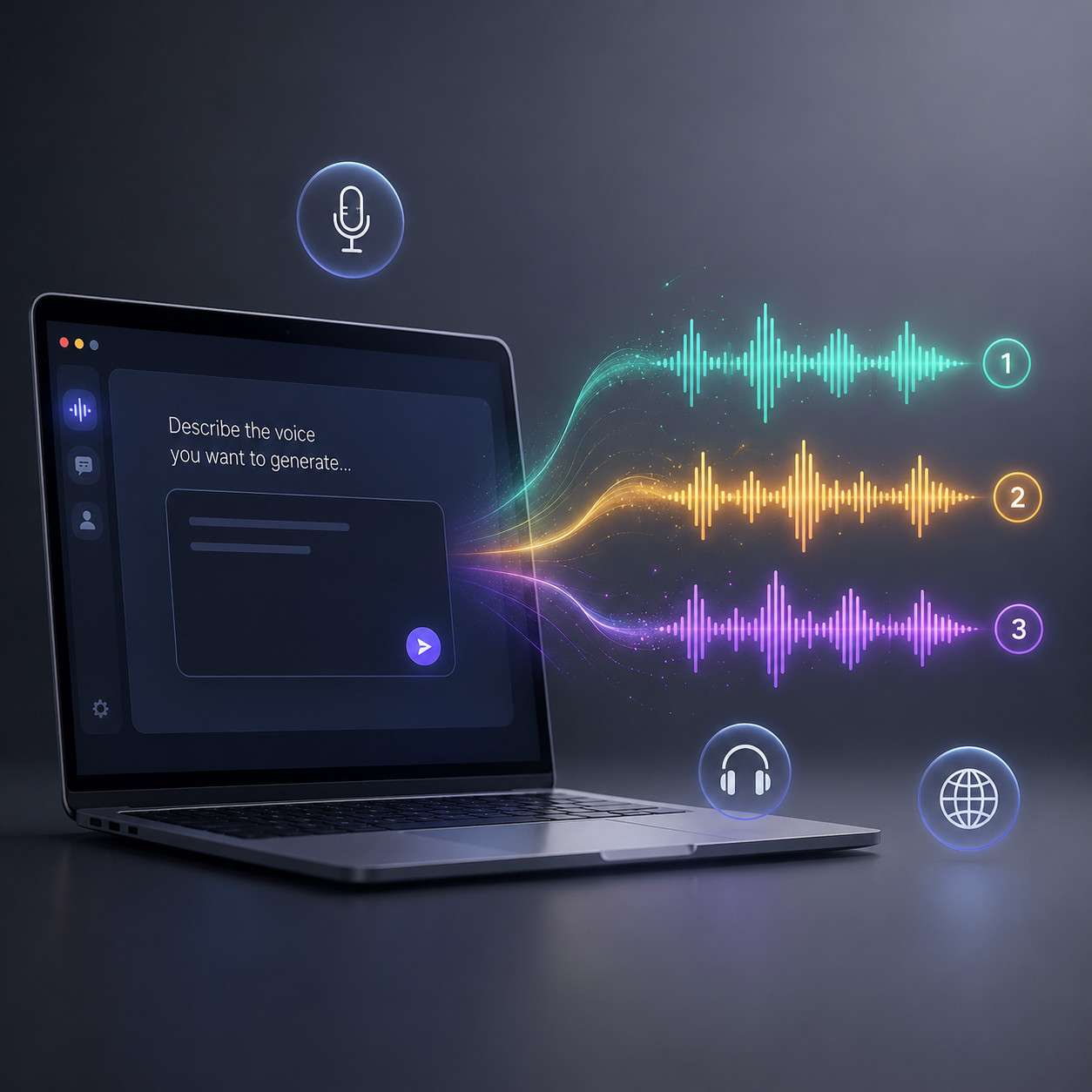
The standout feature in 2026 is Voice Design v3, a prompt-based voice generator. You type a description like “middle-aged New Yorker with rising intonation and a half-smile,” and the system returns three candidate voices in seconds [5]. No audio samples are required. You pick the one you like, and it’s ready for production use.
The underlying engine, Eleven v3, handles context better than previous models, particularly when combined with dialogue mode and audio tags like [whisper] or [excited] [6]. Think of it less as a text-to-speech tool and more as a casting director you can talk to in plain English.
This approach to revolutionizing digital communication through a deep dive into Eleven Labs voice design technology matters because it removes the biggest barrier to custom voice content: the need for recording studios, voice actors, or audio samples.
How Much Does ElevenLabs Voice Design Cost?
ElevenLabs uses a character-based pricing model. You pay for the characters in your preview text when generating voices, not per voice sample created [5]. This means experimenting with Voice Design is relatively cheap.
Here’s a breakdown of ElevenLabs’ pricing tiers as of 2026:
| Plan | Monthly Cost | Characters/Month | Voice Design Access |
|---|---|---|---|
| Free | $0 | ~10,000 | Limited |
| Starter | $5 | 30,000 | Yes |
| Creator | $22 | 100,000 | Yes |
| Pro | $99 | 500,000 | Yes, with priority |
| Scale | $330 | 2,000,000 | Full access + API |
| Enterprise | Custom | Custom | Full access + SLA |
Note: Pricing is based on publicly listed plans and may change. Check ElevenLabs’ official site for current rates.
Choose the Creator plan if you’re a solo podcaster or YouTuber producing weekly content. Choose Pro or Scale if you’re running an agency or producing content in multiple languages. The free tier works for testing, but you’ll hit limits fast.
If you’re exploring other AI-powered tools for your creative workflow, our guide to the best AI graphic design tools covers complementary platforms.
Can ElevenLabs Clone My Own Voice?
Yes, ElevenLabs offers both instant and professional voice cloning. Instant cloning needs just a short audio sample (as little as one minute). Professional cloning requires longer samples but produces higher fidelity results.
However, there’s an important catch: every cloned voice now requires verification. ElevenLabs implemented stricter consent protocols, meaning you must verify that you own or have permission to clone each voice [9]. You cannot clone someone else’s voice without their explicit consent.
This verification process adds friction, but it’s a deliberate trade-off. The company is actively working to prevent deepfake misuse, which has become a significant concern across the AI voice industry [9].
Common mistake: Uploading low-quality audio samples for cloning. Background noise, room echo, or inconsistent microphone positioning will degrade your cloned voice. Record in a quiet space with a decent USB microphone for best results.
Is ElevenLabs Better Than Other AI Voice Tools Like Descript or Murf?
ElevenLabs leads in voice naturalness and customization depth, but the “best” tool depends on your workflow. Here’s how they compare:
| Feature | ElevenLabs | Descript | Murf |
|---|---|---|---|
| Voice naturalness | Excellent | Good | Good |
| Custom voice design (from text) | Yes (v3) | No | No |
| Voice cloning | Yes | Yes (Overdub) | Limited |
| Video editing built-in | No | Yes | No |
| Languages supported | 70+ | ~20 | 20+ |
| Real-time streaming | Yes | No | No |
| Conversational AI agents | Yes | No | No |
| Starting price | $5/mo | $24/mo | $23/mo |
Choose ElevenLabs if voice quality and multilingual support are your top priorities, or if you need custom-designed voices and API access. Choose Descript if you need an all-in-one video and podcast editor with decent AI voice features. Choose Murf if you want a simple interface for basic voiceover work.
A 2025 hands-on review reported that an ElevenLabs-powered YouTube channel grew to 6,000 subscribers and 8 million views in three months, crediting the naturalness of the AI voices for enabling rapid content production [8]. That kind of result is harder to replicate with less expressive alternatives.
What Languages Does ElevenLabs Support?
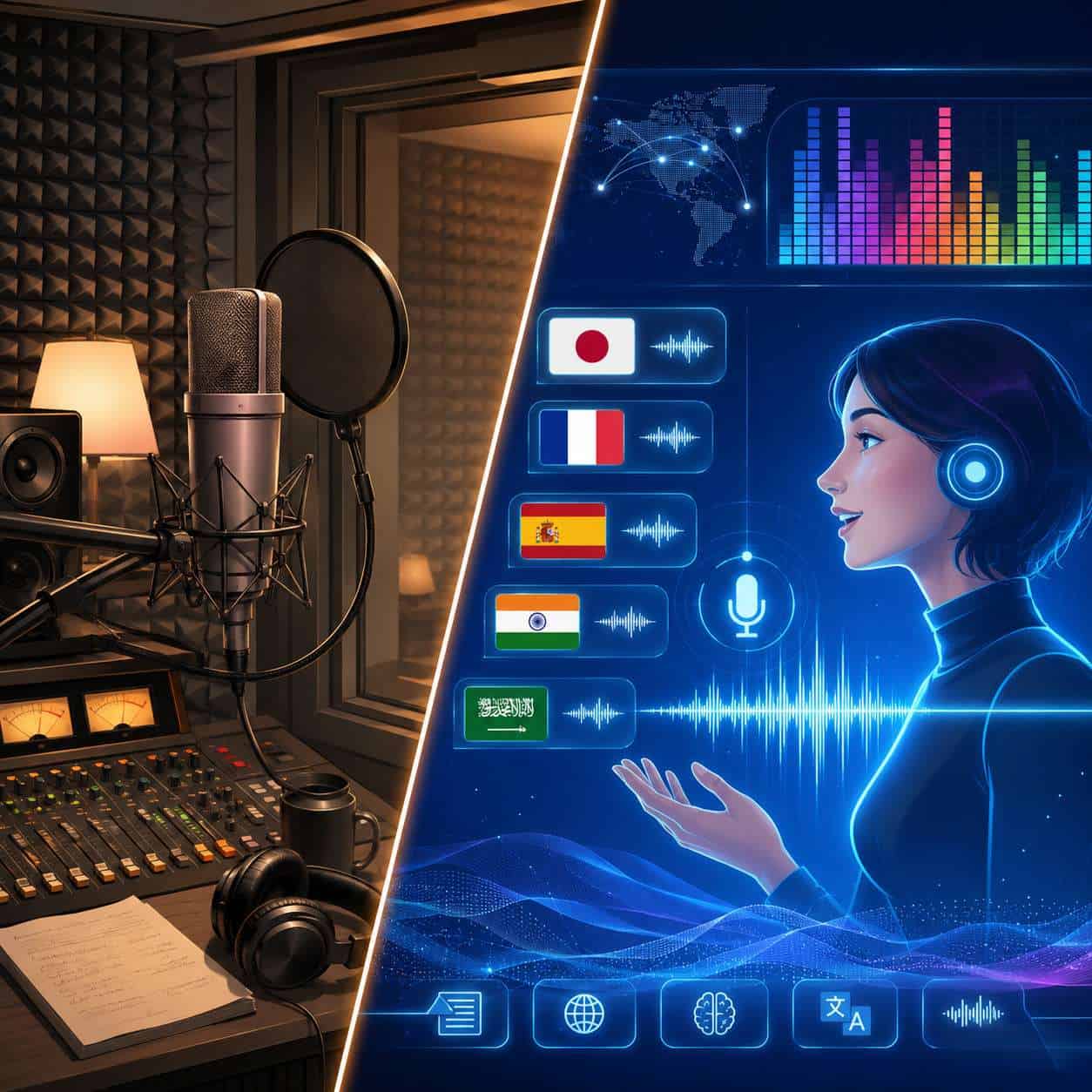
ElevenLabs supports over 70 languages as of 2026, thanks to its deepened infrastructure partnership with Google Cloud [3]. The Multilingual v2 model handles most of these languages, and older model voices are being deprecated in favor of newer engines [1].
Supported languages include major global languages (English, Spanish, Mandarin, Hindi, Arabic, French, German, Japanese, Korean, Portuguese) plus many regional languages. The platform handles accent variation within languages too, so you can prompt for “British English with a Birmingham accent” or “Latin American Spanish with a Mexican inflection.”
Edge case: Some lower-resource languages may have less natural output than English or Spanish. If you’re producing content in a less common language, test extensively before committing to production use.
For creators working across languages, combining voice AI with AI-powered content generation tools can streamline multilingual content pipelines significantly.
What Are the Best Use Cases for ElevenLabs Voice AI?
ElevenLabs works best for content creation, e-learning, customer support automation, accessibility, and media localization. The platform’s versatility means it fits many workflows, but some use cases deliver more value than others.
High-value use cases:
- Podcasts and YouTube channels: Generate consistent narrator voices without booking studio time. The v3 engine handles long-form content with stable quality [6].
- E-learning and training: Create course narration in multiple languages from a single script. Articulate, a major e-learning platform, already integrates ElevenLabs voices [1].
- Audiobooks: Produce multi-character narration using Voice Design to create distinct character voices from text prompts.
- Customer support agents: Build voice-enabled AI agents that sound natural and on-brand, powered by ElevenLabs’ conversational AI stack.
- Accessibility: The “1 Million voices” initiative specifically targets people with permanent voice loss, using cloning and generative tech to restore personal voices [3].
- Media dubbing and localization: Dub video content into 70+ languages while preserving the speaker’s vocal characteristics.
Which Industries Use ElevenLabs Voice Technology Most?
Media, education, customer service, and healthcare accessibility are the primary adopters. ElevenLabs’ recognition as a 2026 Google Cloud “Applied AI Partner of the Year” highlights enterprise deployments across customer support, media production, and localization verticals [3].
Media and entertainment companies use it for dubbing, audiobook production, and AI radio (ElevenLabs partnered with Super Hi-Fi to produce fully AI-generated radio content [7]). Education platforms like Articulate integrate ElevenLabs voices directly into course authoring tools [1]. Healthcare and accessibility organizations leverage the cloning technology for voice restoration.
If you’re building digital products that incorporate voice AI, understanding AI-powered content optimization can help you maximize the impact of your audio content strategy.
Can ElevenLabs Create Emotional or Nuanced Voice Tones?
Yes, and this is where ElevenLabs genuinely stands apart. The v3 engine and Voice Design v3 both support fine-grained emotional control through multiple mechanisms.
How to control emotion and nuance:
- Text prompts in Voice Design: Describe the emotional quality directly, e.g., “warm and reassuring tone with gentle pacing” [5].
- Audio tags in scripts: Insert tags like
[whisper],[excited],[sad], or[laughing]directly into your text-to-speech scripts [6]. - Stability and similarity sliders: Lower stability increases expressiveness and variation; higher stability keeps the voice consistent.
- Loudness and Guidance Scale controls: New in v3, these let you balance how closely the output follows your prompt versus optimizing for audio quality [1].
- Dialogue mode: Designed specifically for conversational content, this mode makes voices sound more natural in back-and-forth exchanges [6].
One content creator described the experience as being able to “direct” AI voices similarly to working with human talent [6]. That’s a fair characterization for most standard use cases, though extremely subtle emotional performances (like sarcasm or dry humor) still sometimes miss the mark.
What Are Common Mistakes People Make When Using AI Voice Generation?
The biggest mistakes are writing for the eye instead of the ear, using vague prompts, and skipping quality checks.
Mistakes to avoid:
- Writing scripts meant to be read, not heard. Spoken language uses shorter sentences, contractions, and natural pauses. Write conversationally.
- Using vague Voice Design prompts. “A nice female voice” gives poor results. “A 30-year-old woman with a warm British accent, conversational pacing, and studio-quality recording” gives excellent results [1].
- Skipping the preview text step. Longer, context-rich preview texts produce more stable voices. Don’t test with just “Hello, how are you?” [1].
- Ignoring audio quality descriptors. Adding “studio-quality recording” or “broadcast quality” to your prompt noticeably improves output [1].
- Not testing across content types. A voice that sounds great reading a news article might sound wrong for a bedtime story. Test your designed voice across your actual content.
- Over-relying on defaults. Adjust stability, similarity, and the new Guidance Scale controls to fine-tune output for your specific needs.
Is ElevenLabs Good for Podcasters and Content Creators?
ElevenLabs is one of the strongest options available for podcasters and content creators in 2026, particularly those producing solo or multilingual content.
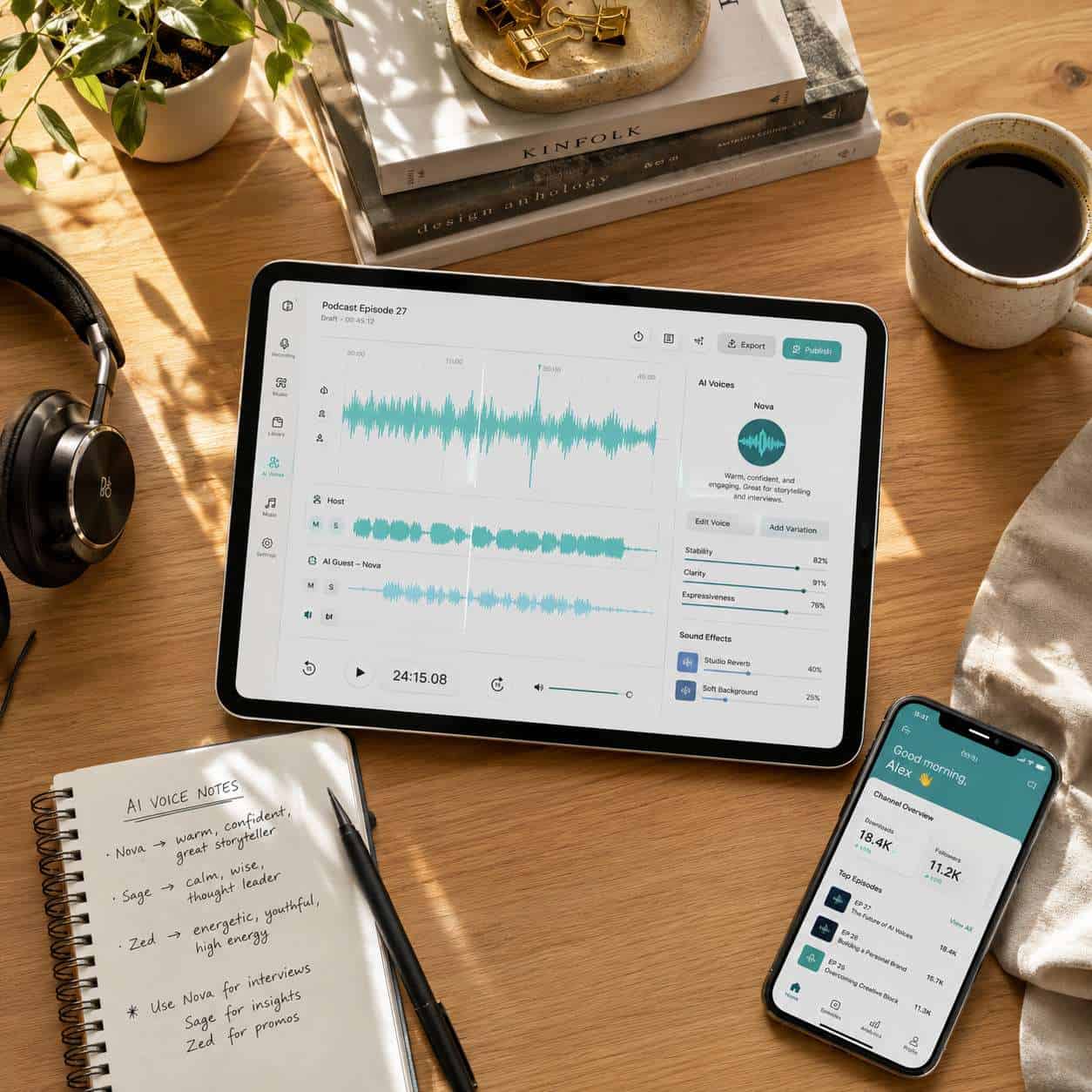
The platform lets you create a unique branded voice using Voice Design (so your show doesn’t sound like everyone else’s AI narrator), script multi-voice conversations for interview-style formats, and produce content in 70+ languages from a single English script [6]. The v3 engine handles long-form content with consistent quality, which was a weak point in earlier models.
A practical example: one NerdyNav reviewer documented building a YouTube channel to 8 million views in three months using ElevenLabs voices, noting that the naturalness of the output was the key factor [8]. Voice Design v3 lowers the barrier further by letting creators build bespoke voices without any audio samples.
For creators who also need visual content, pairing voice AI with tools like Canva’s AI design assistant or learning how to design engaging carousels creates a powerful end-to-end content production workflow.
How Accurate Is ElevenLabs Voice AI Compared to Real Human Voices?
In controlled tests, ElevenLabs’ latest models are often described as the most realistic AI voice generators available. The v3 engine produces output that many listeners cannot reliably distinguish from human speech in short clips [8].
That said, accuracy varies by context:
- Short-form content (ads, intros, notifications): Nearly indistinguishable from human voices.
- Long-form narration (audiobooks, courses): Very good, but attentive listeners may notice subtle repetition patterns or occasional unnatural emphasis.
- Emotional or dramatic performance: Good with proper prompting and audio tags, but still a step below trained voice actors for complex performances.
- Conversational dialogue: Strong in dialogue mode, though rapid-fire exchanges can sometimes feel slightly mechanical.
The gap between AI and human voice performance is narrowing fast. For most commercial applications, ElevenLabs output is production-ready without post-processing.
What Kind of Hardware or Software Do I Need to Use ElevenLabs?
You need a modern web browser and an internet connection. That’s it for basic use.
ElevenLabs runs entirely in the cloud. The heavy computation happens on Google Cloud infrastructure with NVIDIA RTX Blackwell-class GPUs [3], so your local hardware doesn’t matter. A Chromebook works just as well as a high-end workstation for generating voices.
For different use cases:
- Browser-based generation: Any modern browser (Chrome, Firefox, Safari, Edge). No downloads.
- API integration: Basic programming knowledge (Python, JavaScript, etc.) and an API key from your ElevenLabs account.
- Mobile: ElevenLabs offers a mobile app available on Google Play [2].
- Post-production editing: You’ll want a basic audio editor (Audacity is free) if you need to trim, combine, or adjust generated audio files.
If you’re integrating voice AI into a website, our resources on building professional websites without code and AI chatbot integration for WordPress can help you add voice features to your digital presence.
Are There Privacy Concerns with AI Voice Cloning?
Yes, and ElevenLabs has taken increasingly aggressive steps to address them. The primary concern is unauthorized voice cloning, where someone’s voice is replicated without consent for fraud, impersonation, or misinformation.
ElevenLabs’ safeguards include:
- Mandatory voice verification: Every cloned voice is flagged and requires the user to confirm they have rights to that voice [9].
- Consent requirements: You cannot clone another person’s voice without their explicit permission [9].
- Audio watermarking: Generated audio contains identifiers that can trace output back to the generating account.
- Usage monitoring: The platform monitors for misuse patterns and can suspend accounts that violate terms.
These measures add friction to the cloning process, which some users find frustrating [9]. But given the potential for misuse, the trade-off is reasonable. If you’re using voice cloning for legitimate purposes (your own voice, a consenting client’s voice, or a deceased family member’s voice for memorial purposes), the verification process is straightforward.
Important: Laws around AI-generated voice content vary by jurisdiction. Some U.S. states and EU countries have specific regulations about synthetic media disclosure. Check your local requirements before publishing AI voice content commercially.
Conclusion
ElevenLabs has evolved from a text-to-speech API into a comprehensive audio generation platform, and Voice Design v3 represents its most accessible creative tool yet. The ability to describe a voice in plain English and get production-ready output in seconds fundamentally changes who can create professional audio content.
Your next steps:
- Try Voice Design for free. Create an ElevenLabs account and experiment with detailed text prompts. Be specific about age, accent, tone, and audio quality.
- Test with real content. Don’t just generate “Hello world.” Use an actual script from your podcast, course, or video project to evaluate quality accurately.
- Explore the full stack. Voice Design is just one piece. Look into the dubbing, agents, and streaming features if you’re building products or scaling content.
- Stay current. ElevenLabs is actively deprecating older voice models [1], so build your workflows around the latest engines (v3 and Multilingual v2).
- Respect the guardrails. Complete voice verification honestly, disclose AI-generated content where required, and use the technology responsibly.
The $11B valuation and Google Cloud partnership signal that this technology isn’t a novelty; it’s becoming core infrastructure for digital communication in 2026 and beyond.
FAQ
Q: Is ElevenLabs free to use? A: Yes, there’s a free tier with approximately 10,000 characters per month. It’s enough for testing but not for regular content production.
Q: Can I use ElevenLabs voices commercially? A: Yes, all paid plans include commercial usage rights for generated audio. Check the specific terms for your plan tier.
Q: How long does it take to generate a voice with Voice Design? A: Voice Design v3 returns three candidate voices in seconds after you submit a text prompt [5].
Q: Does ElevenLabs work offline? A: No. All processing happens on cloud servers. You need an active internet connection.
Q: Can I fine-tune a Voice Design voice after creating it? A: You can adjust parameters like stability, similarity, loudness, and Guidance Scale after selecting a voice [1]. You can also regenerate with a modified prompt.
Q: Is ElevenLabs replacing voice actors? A: For many commercial applications (e-learning, basic narration, customer support), yes, it’s a viable alternative. For high-end dramatic performance, professional voice actors still have an edge [8].
Q: What’s the difference between voice cloning and Voice Design? A: Voice cloning replicates an existing person’s voice from audio samples. Voice Design creates entirely new voices from text descriptions, no audio needed [5].
Q: Can ElevenLabs handle real-time voice generation? A: Yes, the platform supports real-time streaming for applications like live conversational AI agents and interactive content.
Q: What happened to older ElevenLabs voices? A: Some older AI voices are being retired (e.g., April 30, 2026 deprecation) and replaced with newer models like Multilingual v2 [1].
Q: Is the “1 Million Voices” program available now? A: ElevenLabs announced the initiative at SXSW in March 2026, pledging up to $1B in free voice credits for people with permanent voice loss [3].
Related ElevenLabs guides: explore ElevenLabs unveiled — a complete look at its voice AI capabilities, learn about ElevenLabs Adam voice and AI voice synthesis in 2026, and discover how ElevenLabs is revolutionizing voice AI with synthetic speech.
References
[1] community.articulate – https://community.articulate.com/discussions/discuss/some-ai-voices-are-going-away-in-april-what-to-do-next/1250049 [2] Details – https://play.google.com/store/apps/details?id=io.elevenlabs.coreapp&hl=en_US [3] Blog – https://elevenlabs.io/blog [5] mexc – https://www.mexc.com/news/867909 [6] Elevenlabs Tutorial – https://www.feisworld.com/blog/elevenlabs-tutorial [7] Super Hi Fi And Elevenlabs Partner To Produce Fully Ai Radio – https://www.redtech.pro/super-hi-fi-and-elevenlabs-partner-to-produce-fully-ai-radio/ [8] Elevenlabs Review – https://nerdynav.com/elevenlabs-review/ [9] Every Cloned Voice Is Flagged Now – https://www.reddit.com/r/ElevenLabs/comments/1dfq2zi/every_cloned_voice_is_flagged_now/