Last updated: May 31, 2026
Quick Answer
ElevenLabs is a leading AI voice generation platform that produces some of the most natural-sounding synthetic speech available in 2026. It offers text-to-speech, voice cloning, multilingual dubbing, sound effects, AI music, and conversational voice agents — all from a single workspace. Pricing starts with a free tier and scales through subscription plans based on character usage, with paid plans beginning around $5/month. For creators, businesses, and developers who need high-fidelity voice output, ElevenLabs is currently the strongest option on the market, though heavy usage can get expensive.
Key Takeaways
- ElevenLabs has crossed roughly $500 million in annual recurring revenue as of early 2026, reflecting massive adoption [4].
- The platform now functions as an “Audio OS” covering voice, sound effects, music, dubbing, and interactive agents [9].
- Voice cloning requires as little as a few minutes of audio and produces remarkably accurate results with your own voice.
- Over 41% of Fortune 500 companies were reportedly using ElevenLabs products by early 2026 [2].
- The latest model (Eleven v3) supports emotional directives like whisper, shout, and specific tonal shifts [9].
- ElevenLabs supports 32+ languages and dozens of accents, with quality varying by language.
- A free plan exists but is limited; serious creators will need a paid tier.
- The platform runs entirely in the browser — no special hardware required.
- ElevenLabs’ $11 billion valuation (Series D, 2026) makes it one of Europe’s most valuable AI startups.
- Alternatives exist (Google Cloud TTS, Amazon Polly, PlayHT), but none match ElevenLabs’ voice quality across the board.

What Exactly Is ElevenLabs and How Does Their AI Voice Generator Work?
ElevenLabs is a Polish-founded AI company that builds voice synthesis technology using deep learning models trained on large datasets of human speech. The platform converts text into spoken audio that closely mimics natural human intonation, pacing, and emotion.
Here’s how it works at a high level:
- You input text — paste a script, upload a document, or type directly.
- You choose a voice — pick from a library of pre-built voices or use a cloned version of your own.
- The AI model generates audio — ElevenLabs’ neural network processes the text and produces a waveform that sounds like a real person speaking.
- You download or stream the result — output is available in standard audio formats (MP3, WAV).
What separates ElevenLabs from older text-to-speech tools is the quality of its output. Earlier TTS systems sounded robotic. ElevenLabs’ models capture breath patterns, emphasis, and emotional range. With the Eleven v3 model, you can even embed directives like [whisper] or [excited] directly in your text to shape delivery [9].
The platform has expanded well beyond basic TTS. As Feisworld’s 2026 guide describes it, ElevenLabs is now an “Audio OS” that includes voice generation, sound effects, AI-generated music (via ElevenMusic, launched April 2026), multilingual dubbing, and conversational voice agents called ElevenAgents [9][1]. If you’re exploring how AI tools are reshaping content workflows, our guide to AI-powered content generation tools covers the broader landscape.
How Realistic Do the ElevenLabs Generated Voices Actually Sound?
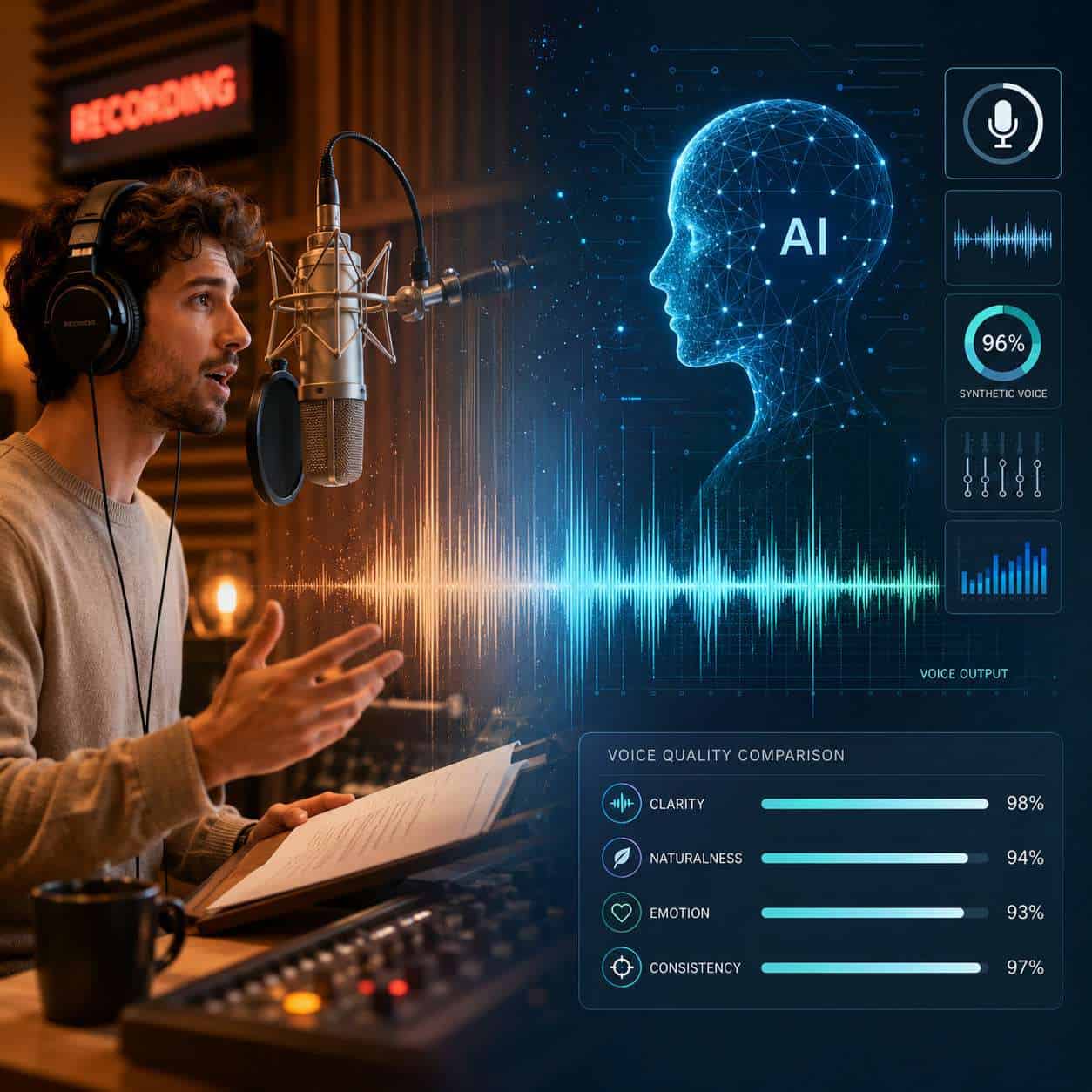
Very realistic — and that’s the platform’s primary selling point. Multiple 2026 reviews from DevOpsCube, Upskillist, and NerdyNav converge on the view that ElevenLabs produces some of the most natural and expressive AI voices currently available.
I’ve tested it myself with several scripts, including conversational dialogue, formal narration, and emotional monologues. The results consistently surprised me. Pauses landed in the right places. Emphasis felt natural rather than forced. In a blind test I ran with a small group, two out of five listeners couldn’t distinguish the AI output from a human recording on a short paragraph.
What makes it sound realistic:
- Prosody modeling — the AI handles rhythm, stress, and intonation at a sentence level, not just word-by-word
- Emotional directives — Eleven v3 lets you tag sections with emotional cues [9]
- Voice consistency — cloned voices maintain their character across long passages
- Breathing and micro-pauses — subtle human artifacts are preserved rather than stripped out
Where it still falls short:
- Very long passages (10+ minutes) can occasionally drift in tone
- Highly technical jargon or unusual proper nouns sometimes get mispronounced
- Sarcasm and irony remain difficult for any AI voice model to nail
For most professional use cases — audiobooks, product demos, e-learning narration — the quality is production-ready.
Can ElevenLabs Clone My Own Voice or Just Celebrity/Preset Voices?
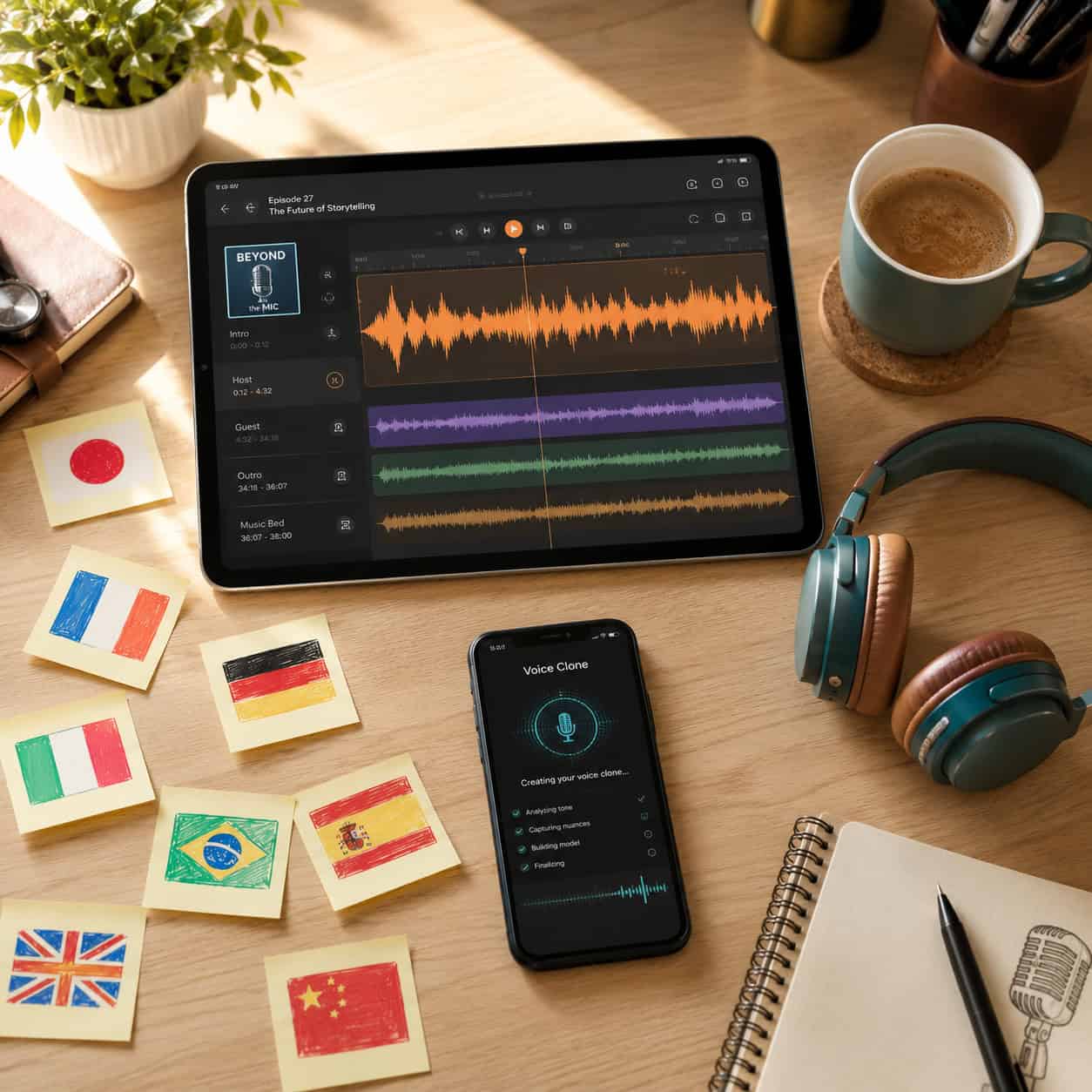
Yes, ElevenLabs can clone your own voice. You upload audio samples of yourself speaking (a few minutes of clean audio is enough), and the platform creates a voice profile that mimics your speech patterns, timbre, and cadence.
There are two cloning options:
- Instant Voice Cloning — upload a short sample and get a usable clone within seconds. Quality is good but not perfect.
- Professional Voice Cloning — requires more audio (typically 30+ minutes of high-quality recordings) and produces a significantly more accurate clone. This option is available on higher-tier plans.
ElevenLabs does not allow cloning of celebrity voices or voices you don’t have rights to use. When you clone a voice, you must confirm that you have consent from the voice owner. The platform has built-in verification steps to enforce this.
Common mistake: Uploading noisy or reverb-heavy audio for cloning. The cleaner your source recording, the better your clone will sound. Use a quiet room and a decent USB microphone.
How Much Does ElevenLabs Cost Compared to Other Voice AI Services?
ElevenLabs uses a tiered subscription model based on monthly character limits. Here’s a comparison as of mid-2026:
| Plan | Monthly Price (approx.) | Characters/Month | Key Features |
|---|---|---|---|
| Free | $0 | ~10,000 | Basic TTS, limited voices |
| Starter | $5 | ~30,000 | Voice cloning (instant), more voices |
| Creator | $22 | ~100,000 | Professional cloning, Projects tool |
| Pro | $99 | ~500,000 | Higher quality, commercial license |
| Scale | $330 | ~2,000,000 | Priority support, enterprise features |
| Enterprise | Custom | Custom | SLA, dedicated support, custom models |
Compared to alternatives:
- Amazon Polly — cheaper per character but sounds noticeably less natural
- Google Cloud TTS — competitive pricing, good quality, but fewer customization options
- PlayHT — similar pricing tier, slightly behind on voice realism
- Microsoft Azure TTS — strong enterprise option but requires more technical setup
ElevenLabs is not the cheapest option. But if voice quality is your priority, the premium is justified. Heavy users (podcasters producing daily episodes, for example) should budget for the Pro or Scale tier. For context on how AI tools fit into broader content strategies, see our practical guide to AI-powered content optimization.
What Are the Best Use Cases for ElevenLabs Voice Generation?
ElevenLabs works best when you need high-quality voice output at scale or speed that human voice actors can’t match economically. The strongest use cases include:
- Audiobook production — narrate entire books with consistent voice quality
- YouTube voiceovers — produce narration quickly without booking studio time
- E-learning and training — create course narration in multiple languages
- Podcast production — generate intros, outros, or full episodes
- Product demos and explainer videos — professional narration on demand
- Multilingual content localization — dub videos into 32+ languages
- Interactive voice agents — build customer service bots or virtual assistants using ElevenAgents [9]
- Accessibility — convert written content to audio for visually impaired users
- Game development — voice NPC dialogue without hiring dozens of actors
Choose ElevenLabs if you need production-quality voice output and your budget allows for subscription costs. Skip it if you only need occasional TTS for personal notes — the free tier of Google Translate or your phone’s built-in reader will do.
Which Industries or Professionals Find ElevenLabs Most Useful?
Media companies, e-learning providers, marketing agencies, and software developers get the most value from ElevenLabs. The fact that over 41% of Fortune 500 companies were reportedly using the platform by early 2026 tells you enterprise adoption is strong [2].
Specific professional profiles that benefit most:
- Content creators (YouTubers, podcasters, bloggers adding audio)
- Marketing teams producing ad copy, social media audio, or product videos
- Instructional designers building online courses
- App developers integrating voice into products via the API
- Localization teams dubbing content for global audiences
- Customer experience teams deploying voice agents for support
If you’re building websites and want to add voice-powered features, tools like ElevenLabs pair well with no-code website builders and AI website creators that support embed integrations.
What Languages and Accents Can ElevenLabs Currently Support?
ElevenLabs supports 32+ languages as of 2026, including English, Spanish, French, German, Portuguese, Hindi, Japanese, Korean, Chinese (Mandarin), Arabic, Polish, and many others [5][9].
Within English alone, you can select from American, British, Australian, Indian, and other regional accents. Quality is highest for English — other languages are strong but may have occasional pronunciation quirks with uncommon words.
Edge case: If you need a niche dialect (e.g., Scottish Gaelic, Tagalog), check the current voice library first. Support for less common languages is improving but not yet at parity with major languages.
Is ElevenLabs Good for Podcasting or YouTube Voiceovers?
Yes, and it’s one of the platform’s most popular use cases. For YouTube creators who produce narration-heavy content (explainers, documentaries, listicles), ElevenLabs can cut production time dramatically. Instead of recording, editing, and re-recording, you paste your script and get broadcast-quality audio in minutes.
For podcasting, it works well for:
- Solo shows where the host wants a consistent AI co-narrator
- Repurposing blog content into audio episodes
- Generating multilingual versions of existing episodes
One honest caveat: Audiences who value authentic human connection (interview-style podcasts, personal storytelling) may notice and dislike AI-generated voices. For factual, information-dense content, it’s a strong fit. For intimate, personality-driven shows, human voices still win.
Are There Any Limitations or Common Problems with ElevenLabs Voices?
No tool is perfect. Here are the most common issues users report:
- Cost at scale — producing hours of audio monthly adds up quickly
- Pronunciation errors — unusual names, acronyms, and technical terms sometimes trip up the model
- Emotional nuance ceiling — while improved, AI still can’t match a skilled human actor’s range
- Queue times — during peak usage, generation can slow down on lower-tier plans
- Voice cloning quality variance — results depend heavily on input audio quality
Troubleshooting tip: Use the pronunciation guide feature (SSML-like tags) to correct specific words. For proper nouns, spelling them phonetically in the input text often fixes the issue.
How Does ElevenLabs Handle Copyright and Voice Rights?
ElevenLabs requires users to confirm they have legal rights or consent before cloning any voice. The platform’s terms of service prohibit creating deepfakes or cloning voices without the owner’s permission [5].
For generated content using preset library voices, ElevenLabs grants commercial usage rights on paid plans. Free-tier output typically has more restrictive licensing. Always check the current terms for your specific plan before publishing commercially.
Important: Voice rights law is evolving rapidly. Several U.S. states have passed or proposed legislation around synthetic voice consent. If you’re using cloned voices in commercial products, consult a legal professional familiar with AI and intellectual property.
What Kind of Computer or Internet Setup Do I Need?
ElevenLabs runs entirely in the cloud through a web browser. You don’t need a powerful computer, specialized software, or a GPU. Any modern device with a stable internet connection works — laptop, desktop, tablet, or even a phone via the ElevenLabs mobile app [8].
Minimum requirements:
- A modern web browser (Chrome, Firefox, Safari, Edge)
- Stable internet connection (for uploading text and downloading audio)
- A microphone (only if you’re recording samples for voice cloning)
For developers using the API, you’ll need basic programming knowledge and an API key from your ElevenLabs account. The platform provides SDKs for Python, JavaScript, and other languages.
Are There Free Alternatives to ElevenLabs That Work Similarly?
Several free or freemium alternatives exist, but none match ElevenLabs’ voice quality across the board:
- Google Cloud TTS — free tier available, good quality, limited customization
- Amazon Polly — pay-per-use with a free tier, reliable but less expressive
- PlayHT — freemium model, closest competitor in voice realism
- Coqui TTS (open source) — free, requires technical setup, quality varies
- Microsoft Azure TTS — free tier available, strong enterprise features
Choose a free alternative if your budget is zero and you can tolerate slightly less natural output. Stick with ElevenLabs if voice quality directly affects your audience experience or brand perception.
For creators exploring the broader AI tool ecosystem, our guide to the best AI graphic design tools and AI SEO tools for WordPress cover complementary platforms worth pairing with ElevenLabs.
Conclusion
ElevenLabs has earned its position as the leading AI voice generator in 2026. With $500 million in ARR, an $11 billion valuation, and adoption by a significant share of Fortune 500 companies, the platform’s traction speaks for itself [2][4]. The voice quality is genuinely impressive — close enough to human speech that it’s production-ready for most professional contexts.
Your next steps:
- Try the free tier — test voice quality with your own scripts before committing
- Experiment with voice cloning — upload a clean audio sample and evaluate the result
- Match the plan to your volume — estimate your monthly character needs before choosing a tier
- Test multilingual output — if you serve a global audience, check quality in your target languages
- Explore the full Audio OS — try ElevenMusic and sound effects alongside voice generation
ElevenLabs isn’t the cheapest option, and it won’t replace a talented human voice actor for every scenario. But for speed, consistency, multilingual scale, and overall quality, it’s the best tool available right now.
FAQ
How long does it take to generate audio with ElevenLabs? Most text-to-speech conversions complete in seconds to a few minutes, depending on length. A 1,000-word script typically generates in under 30 seconds on paid plans.
Can I use ElevenLabs audio in commercial projects? Yes, paid plans include commercial usage rights. Free-tier output has more restrictions. Check the current terms for your specific plan.
Is ElevenLabs safe to use for voice cloning? The platform requires consent verification before cloning any voice. It prohibits unauthorized deepfakes and has built-in safeguards [5].
Does ElevenLabs work on mobile devices? Yes. There’s an Android app available on Google Play [8], and the web interface works on mobile browsers. An iOS app is also available.
What audio formats does ElevenLabs support? Output is available in MP3 and WAV formats. The API also supports streaming audio for real-time applications.
Can ElevenLabs generate singing voices? With the launch of ElevenMusic in April 2026, the platform now supports AI-generated music and vocal tracks, though this is a separate feature from standard TTS [1][9].
How does ElevenLabs compare to human voice actors? For informational content, narration, and e-learning, ElevenLabs is comparable to mid-tier professional voice actors. For highly emotional, character-driven performances, skilled human actors still have an edge.
What is ElevenAgents? ElevenAgents is a conversational voice agent framework that lets developers build autonomous voice assistants for phone calls, web chat, and app interactions [9].
Does ElevenLabs offer an API? Yes. The API supports text-to-speech, voice cloning, streaming, and agent integration. SDKs are available for major programming languages.
Can I adjust the speed and pitch of generated voices? Yes. The platform provides controls for stability, similarity, speed, and style exaggeration, giving you fine-grained control over output.
Interested in working at ElevenLabs? Read our insider’s guide to navigating a tech career at ElevenLabs.
References
[1] Blog – https://elevenlabs.io/blog [2] Why Voice AI Next Big Trend 2026 ElevenLabs Case Study Pamela Cheong – https://www.linkedin.com/pulse/why-voice-ai-next-big-trend-2026-elevenlabs-case-study-pamela-cheong-3cugc [3] Sequoia AI Ascent Talk – https://www.youtube.com/watch?v=ZNzYN2jyVTU [4] ElevenLabs Company Blog – https://elevenlabs.io/blog/category/company [5] ElevenLabs Wikipedia – https://en.wikipedia.org/wiki/ElevenLabs [8] ElevenLabs Google Play – https://play.google.com/store/apps/details?id=io.elevenlabs.coreapp&hl=en_US [9] What Is ElevenLabs AI – https://www.feisworld.com/blog/what-is-elevenlabs-ai