
Last updated: May 10, 2026
Quick Answer
Lovable.dev operates from a network of global offices anchored by its Stockholm headquarters, with significant expansion into Boston, London, New York, and San Francisco in 2026. The AI-powered app builder crossed $400 million ARR in February 2026 and now employs roughly 200 people, with plans to reach 400 by year-end [3][6]. Its headquarters strategy reflects a distributed model: engineering stays rooted in Sweden while sales and go-to-market teams expand across the U.S. and U.K.
Key Takeaways
- Lovable’s global headquarters is in Stockholm, Sweden, where the company was founded in 2023
- A new Boston office opened in April 2026 in the Downtown Crossing neighborhood with 25 initial employees [1][8]
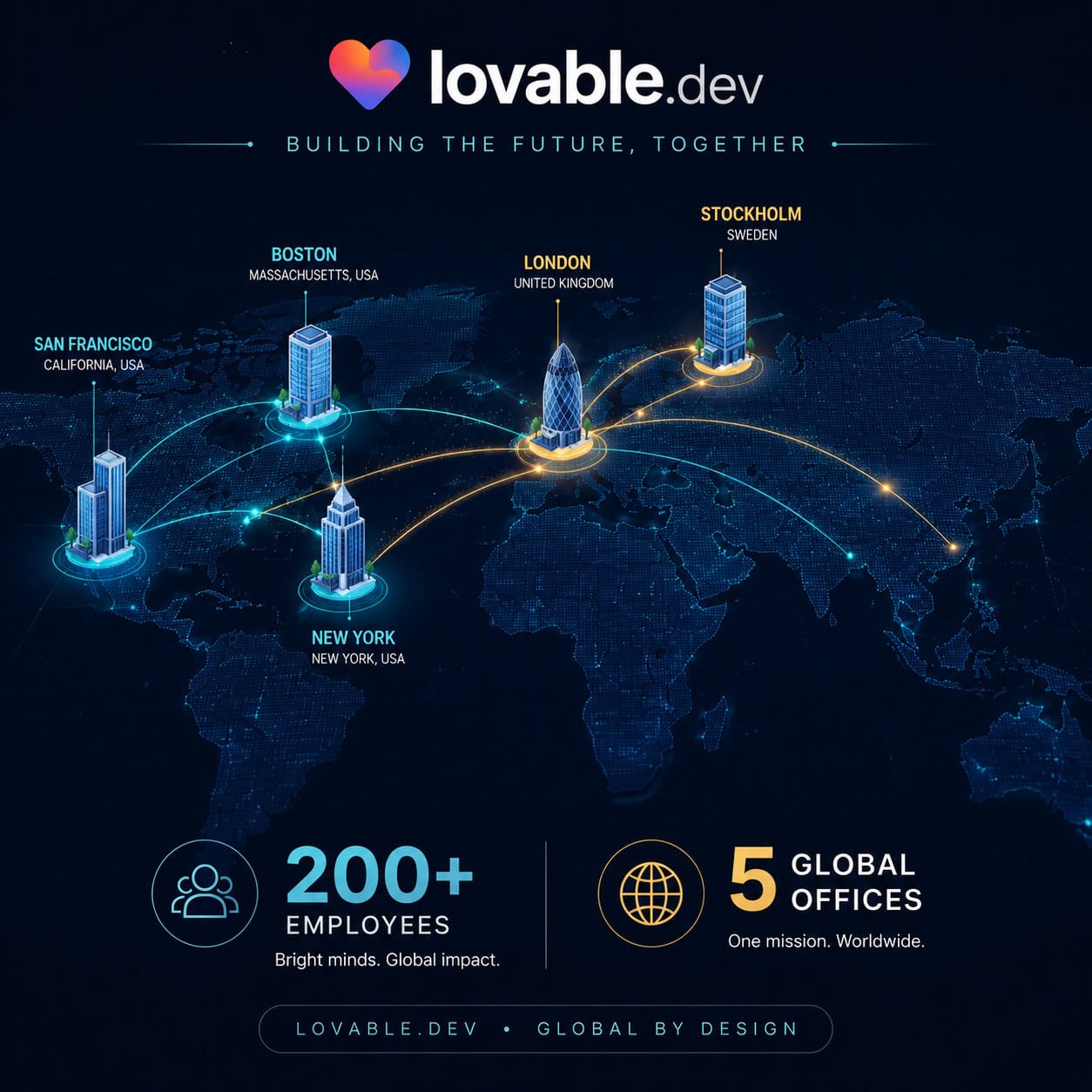
- The company is actively hiring across five cities: Stockholm, London, Boston, New York, and San Francisco [4]
- Lovable crossed $400 million ARR in February 2026, running five months ahead of projections [6]
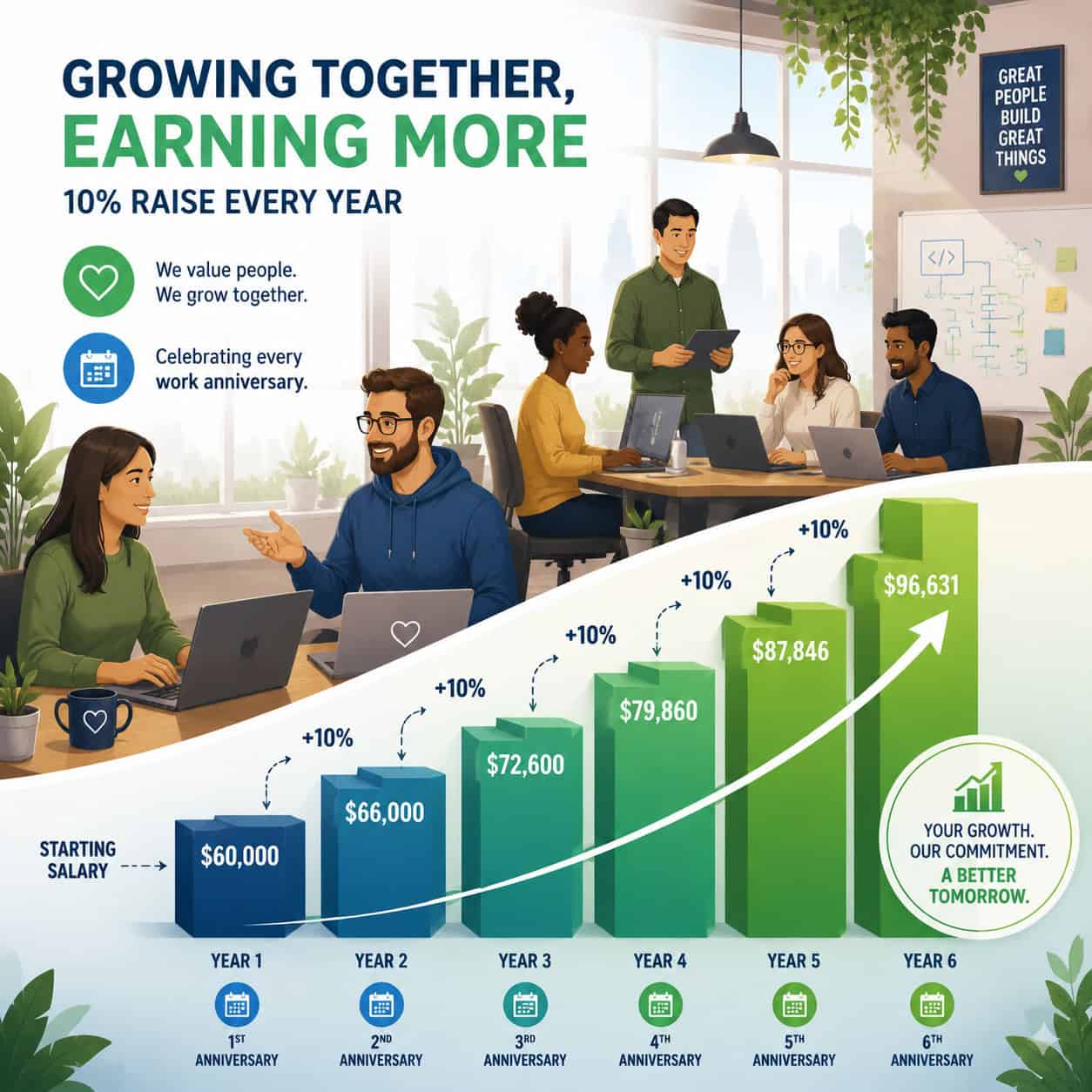
- All 200 full-time employees receive automatic 10% annual salary raises on their work anniversaries [1]
- More than half of Fortune 500 companies reportedly use Lovable’s platform [6]
- The company raised $330 million in Series B funding led by CapitalG (Alphabet’s growth fund) [6]
- Lovable plans to double headcount to 400 employees by the end of 2026
Where Is Lovable.dev Headquartered and What Offices Does It Operate?
Lovable.dev’s primary headquarters is in Stockholm, Sweden, where CEO Anton Osika founded the company (originally as GPT Engineer) in 2023 [3]. The Stockholm office houses the core engineering and product teams that build the AI platform.
As of spring 2026, Lovable operates offices in:
| City | Function | Status |
|---|---|---|
| Stockholm, Sweden | Global HQ, Engineering, Product | Established 2023 |
| Boston, USA | Sales, Go-to-Market | Opened April 2026 |
| London, UK | Expansion hub | Active hiring |
| New York, USA | Expansion hub | Active hiring |
| San Francisco, USA | Expansion hub | Active hiring |
The Boston office sits in the Downtown Crossing district and launched with 25 employees. According to local reporting, the company plans to hire “dozens of additional local employees over the coming months” [8]. This marks Lovable’s first major U.S. foothold, focused specifically on sales and go-to-market operations rather than engineering.
Common mistake: Assuming Lovable is a Silicon Valley company. Despite its rapid U.S. expansion, the company’s technical roots and leadership remain in Stockholm. If you’re looking to work on the core AI product, Stockholm is where that happens.
For teams evaluating whether to build professional websites without code, understanding where Lovable operates helps clarify its support hours and enterprise sales coverage.
How Did Lovable Grow So Fast to Justify Global Expansion?
Lovable’s revenue trajectory explains the aggressive office expansion. The company hit $400 million in annual recurring revenue by February 2026, pacing five months ahead of internal projections [6]. That growth rate—from a company barely two years old—is what attracted a $330 million Series B round led by CapitalG.
Key growth milestones:
- 2023: Founded as GPT Engineer in Stockholm
- 2024: Rebranded to Lovable, launched consumer product
- Early 2025: Began gaining enterprise traction
- February 2026: Crossed $400M ARR [6]
- April 2026: Opened Boston office, announced multi-city hiring [1][4]
Laela Sturdy, Managing Partner at CapitalG, stated: “Lovable has done something rare: built a product that enterprises and founders both love. The demand we’re seeing from Fortune 500 companies signals a fundamental shift in how software gets built” [6].
Matt Murphy from Menlo Ventures compared the company to “category builders like our previous early investments in Uber and Anthropic—companies that have the opportunity to be enormous” [6].
This isn’t just a developer tool anymore. More than half of Fortune 500 companies are reportedly using Lovable to build internal tools and prototypes [6]. That enterprise demand is precisely why the company needs physical offices in major business hubs rather than operating as a fully remote startup.
If you’re exploring how AI tools are reshaping creative workflows, our guide to AI-powered content generation tools covers the broader landscape.
What Makes Lovable’s Workplace Culture Different From Other AI Startups?
The most distinctive policy inside Lovable.dev HQ is its automatic 10% annual salary increase for every full-time employee who meets performance expectations [1]. This isn’t a discretionary bonus or a merit-based negotiation—it’s a guaranteed raise on each employee’s work anniversary.
Elena Verna, Lovable’s Head of Growth, explained the rationale: “Because we don’t take retention for granted. It’s treated as compounding value that is actively recognized and rewarded. You don’t have to re-prove your worth every cycle” [1].
Why this matters in context: Most startups offer equity-heavy compensation with modest base salaries. A guaranteed 10% annual raise on base salary is unusual because it compounds significantly—an employee’s salary would roughly double in seven years without any promotion.
The company’s hiring philosophy also stands out. Maryanne Caughey, who leads Lovable’s people team, described their approach: “We hire people with a founder mentality who can operate with autonomy, ship meaningful work early, and grow their impact over time. We want to reward that” [1].
Decision rule: Choose Lovable if you value predictable compensation growth and autonomy over the traditional startup model of low base pay plus lottery-ticket equity. Choose a more traditional VC-backed startup if you prefer higher equity upside with more compensation uncertainty.
How Does Lovable’s Product Compare to Competitors Like GitHub Copilot and Bolt.new?
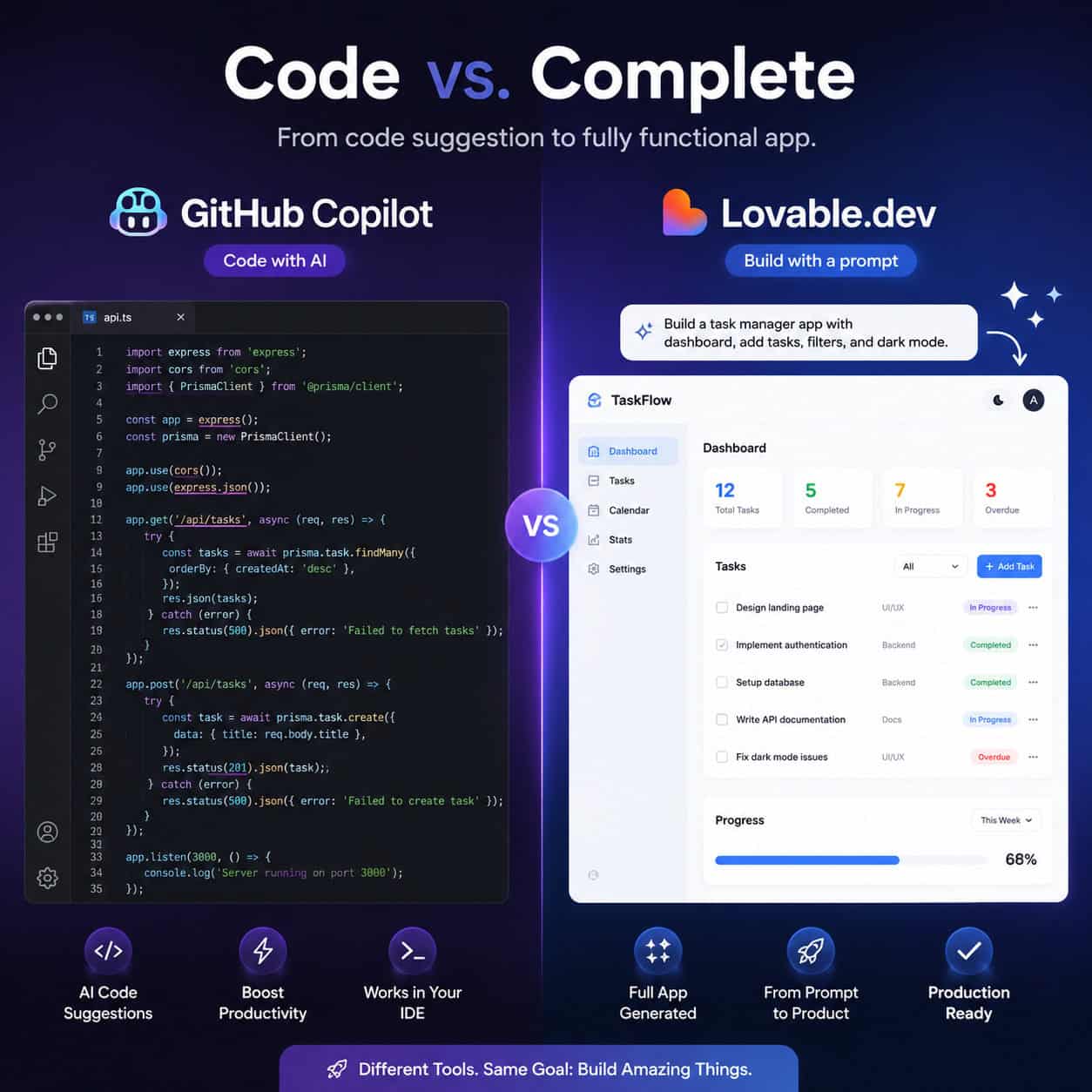
Understanding what Lovable builds inside its headquarters requires comparing it to alternatives. Lovable generates complete, multi-file web applications from natural language prompts. This is fundamentally different from code-completion tools.
| Feature | Lovable | GitHub Copilot | Bolt.new |
|---|---|---|---|
| Primary function | Full app generation | Inline code suggestions | App generation |
| Works inside existing IDE | No (standalone) | Yes (VS Code, JetBrains) | No (browser-based) |
| Generates complete projects | Yes | No | Yes |
| Enterprise feature success rate | Not publicly reported | High (established) | 31% reported |
| Trustpilot rating | Not available | N/A | 1.4/5 (134 reviews) |
| Token/context limits | Not publicly capped | Context-window limited | 500K token ceiling |
GitHub Copilot works inside your existing development environment and provides real-time inline code assistance, but it doesn’t generate entire applications from scratch. Lovable takes a different approach: you describe what you want, and it builds the full project structure.
Bolt.new is the closest direct competitor, but user trust data raises concerns—a 1.4 out of 5 Trustpilot rating across 134 reviews suggests significant reliability issues for enterprise use cases.
For designers working in tools like Figma who want to bridge the gap to code, our guide on Figma to code plugins covers that specific workflow. And if you’re evaluating no-coding website design platforms, Lovable fits into that broader category.
What Security Practices Does Lovable Maintain at Its Headquarters?
In April 2026, a security researcher publicly reported that data within public Lovable projects could be accessed by any authenticated user on the platform. The company issued an official response acknowledging the report [3].
This incident highlights an important consideration for enterprise users: any AI-powered code generation platform that hosts user projects must address data isolation between accounts. While the specifics of Lovable’s remediation aren’t fully public, the fact that the company responded officially suggests they take security disclosures seriously.
Edge case to watch: If you’re building internal tools with sensitive business logic on any AI platform (Lovable, Bolt.new, or others), always review the platform’s data isolation policies before deploying anything that touches proprietary information.
For teams building on platforms like these, understanding SEO and site optimization becomes important once your AI-generated site goes live.
What Does Lovable’s Expansion Mean for the AI Development Tool Market?
Lovable’s multi-city expansion signals that AI app builders are moving from developer toys to enterprise infrastructure. When a company opens physical offices for sales teams in Boston and plans hires in New York and San Francisco, it’s targeting enterprise procurement processes that still often require in-person relationships.
What to expect next:
- More enterprise-focused features (SSO, audit logs, team management)
- Potential acquisitions to fill platform gaps—Lovable has already signaled a “strategic acquisition push” [9]
- Increased competition with established players like Vercel’s v0 and Replit
- Pricing pressure as the market matures
For web professionals evaluating their tool stack, this expansion means Lovable is likely here to stay. Companies burning through $400M ARR with CapitalG backing don’t disappear overnight. If you’re exploring AI-powered content optimization or drag-and-drop website builders, Lovable represents the next evolution: describe what you want, and AI builds it.
Conclusion
Inside Lovable.dev HQ, the story is one of rapid scaling backed by genuine product-market fit. A Stockholm-born AI startup that crossed $400M ARR in under three years is now planting flags across five major cities, offering unusual employee benefits, and attracting Fortune 500 customers.
Actionable next steps if you’re evaluating Lovable:
- For job seekers: Check openings in Stockholm (engineering), Boston (sales/GTM), or London/NYC/SF (various roles). The 10% automatic raise policy makes it worth comparing against other offers.
- For enterprise buyers: The Boston and New York offices mean you can likely get in-person sales support. Ask about data isolation policies given the April 2026 security disclosure.
- For developers: Test the platform against your specific use case. Lovable excels at generating complete project structures but works differently from IDE-integrated tools like Copilot.
- For competitors: The $330M war chest and aggressive hiring signal that Lovable intends to dominate the full-app-generation category. Differentiate on specialization or developer experience.
The company’s trajectory suggests that by late 2026, Lovable will look less like a startup and more like an established platform company—with the global office footprint to match.
FAQ
Where is Lovable.dev headquartered? Lovable.dev’s global headquarters is in Stockholm, Sweden, where the company was founded in 2023 by CEO Anton Osika [3].
How many employees does Lovable have? As of May 2026, Lovable has approximately 200 full-time employees with plans to grow to 400 by year-end [1].
What cities does Lovable have offices in? Lovable operates in Stockholm, Boston, London, New York, and San Francisco, with Boston being the newest office opened in April 2026 [4][8].
What is Lovable’s annual revenue? Lovable crossed $400 million in annual recurring revenue (ARR) in February 2026, running five months ahead of projections [6].
Does Lovable give automatic raises? Yes. All full-time employees who meet performance expectations receive an automatic 10% salary increase on their work anniversary [1].
How much funding has Lovable raised? Lovable raised $330 million in its Series B round led by CapitalG (Alphabet’s growth fund), with participation from Menlo Ventures [6].
What does Lovable.dev actually do? Lovable is an AI-powered platform that generates complete web applications from natural language descriptions. Users describe what they want, and the AI builds the full project structure.
Is Lovable used by large companies? Yes. According to CEO Anton Osika, more than half of Fortune 500 companies use Lovable’s platform [6].
How is Lovable different from GitHub Copilot? GitHub Copilot provides inline code suggestions inside existing IDEs. Lovable generates entire multi-file applications from prompts—it builds complete projects rather than suggesting individual code lines.
Was there a security issue with Lovable? In April 2026, a security researcher reported that data in public Lovable projects could be accessed by other authenticated users. The company issued an official response [3].
References
[1] Lovable Opens Boston Office – https://www.bizjournals.com/stlouis/bizwomen/news/latest-news/2026/04/lovable-opens-boston-office.html?page=all [3] Lovable (company) – https://en.wikipedia.org/wiki/Lovable_(company) [4] Antonosika Today We Are Officially Opening Lovables Activity – https://www.linkedin.com/posts/antonosika_today-we-are-officially-opening-lovables-activity-7419779524751659008-jmye [6] Tokenring 2026 1 1 The End Of Saas Lovable Secures 330m To Launch The Software As A System Era – https://business.thepilotnews.com/thepilotnews/article/tokenring-2026-1-1-the-end-of-saas-lovable-secures-330m-to-launch-the-software-as-a-system-era [8] Swedish Ai Darling Invades Downtown Crossing Promises Dozens Of Boston Jobs – https://hoodline.com/2026/04/swedish-ai-darling-invades-downtown-crossing-promises-dozens-of-boston-jobs/ [9] Lovable Accelerates Ai Platform Expansion With Strategic Acquisition Push – https://theaiinsider.tech/2026/03/24/lovable-accelerates-ai-platform-expansion-with-strategic-acquisition-push/