Last updated: May 30, 2026
Quick Answer: The ElevenLabs API lets developers generate human-quality synthetic speech through simple HTTP requests, supporting text-to-speech, voice cloning, and real-time streaming across multiple models and 70+ languages. With its latest models (Flash v2.5 at ~75 ms latency), it’s become a production-grade voice layer used by enterprises, game studios, and content creators alike. This comprehensive guide to Eleven Labs API covers everything from setup and pricing to error handling and model selection.
Key Takeaways
- ElevenLabs offers four main TTS models: Flash v2.5 (
75 ms), Turbo v2.5 (250 ms), Multilingual v2, and Eleven v3, each balancing speed and quality differently. - Free tier includes a limited monthly character quota for testing before committing to paid plans [6][9].
- Voice cloning requires as little as one minute of clean audio, but quality improves significantly with 10+ minutes of recordings.
- The API works with any language that can make HTTP requests, with official SDKs for Python, JavaScript/TypeScript, and more.
- ElevenLabs crossed $330 million in annual recurring revenue by January 2026 and raised $500 million at an $11 billion valuation in February 2026 [7][10].
- Rate limits vary by plan tier, and exceeding them returns 429 status codes that your code should handle gracefully.
- Industries using the API most successfully include e-learning, gaming, media production, accessibility tech, and enterprise customer service.
- The May 2026 changelog introduced agent version metadata, conversation filters, and Scribe transcription improvements including
keytermsandno_verbatimoptions [1][4][5].
What Exactly Is the ElevenLabs AI Voice API and How Does It Work?
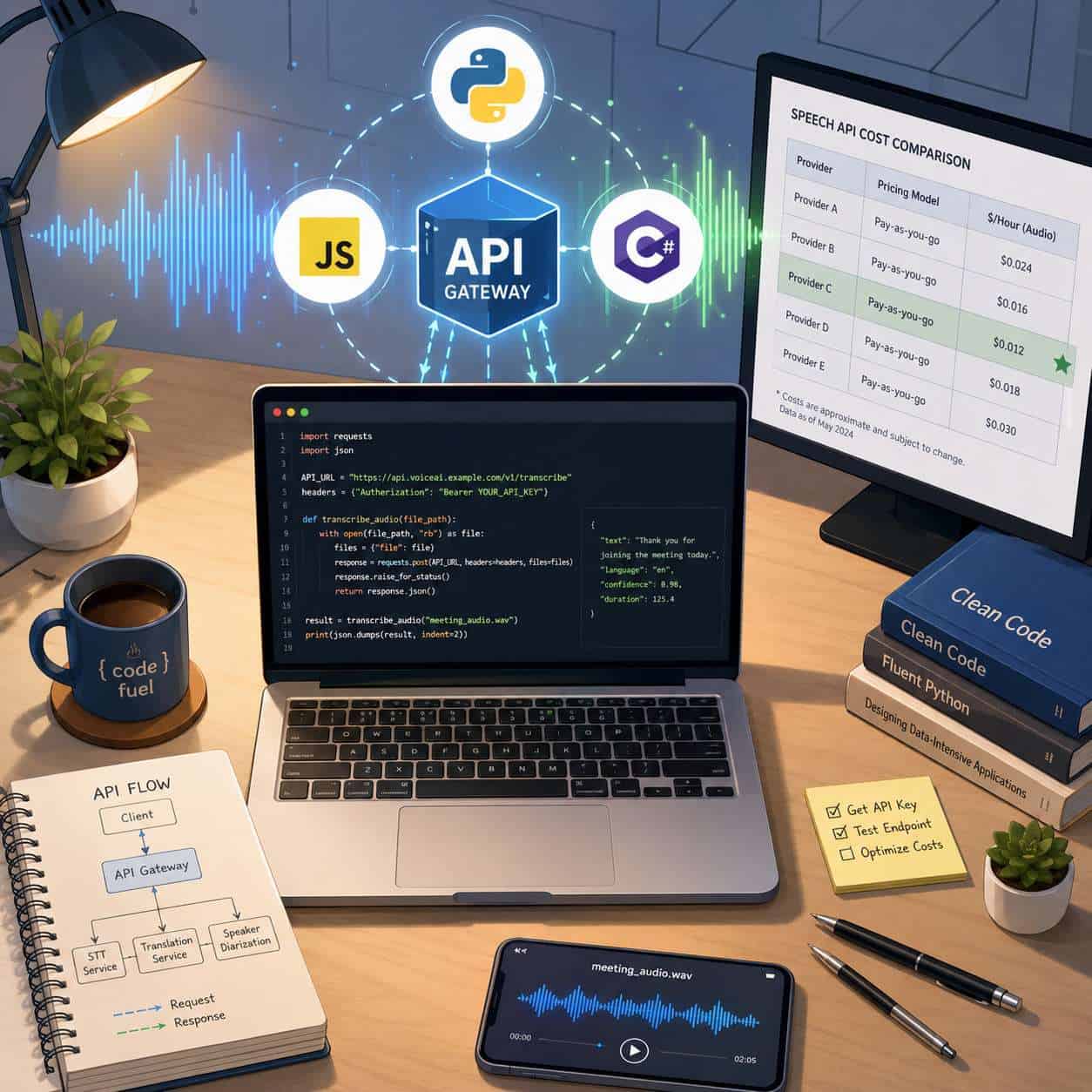
The ElevenLabs API is a REST-based service that converts text into natural-sounding speech using deep learning models trained on large datasets of human voice recordings. You send a POST request with your text and voice settings, and the API returns audio (MP3, PCM, or other formats) that you can stream or save.
Here’s the basic flow:
- Authenticate with your API key in the request header.
- Choose a voice from the library of pre-made voices or your own cloned voice.
- Select a model (Flash v2.5 for speed, Multilingual v2 for language breadth, Eleven v3 for maximum quality).
- Send text to the
/v1/text-to-speech/{voice_id}endpoint. - Receive audio as a streaming response or complete file.
The system also supports WebSocket connections for real-time streaming, which is critical for conversational AI and live applications. Recent updates in May 2026 added features like trust_context, pre_tool_speech, and an agent_response_complete event for cleaner turn management in voice agents [1].
If you’re exploring other AI-powered content generation tools, ElevenLabs fits into a broader ecosystem of generative AI services that developers can combine for full-stack content automation.
How Much Does ElevenLabs Voice Generation Cost per Project?
Pricing is character-based, meaning you pay for the number of text characters you convert to speech, not per minute of audio output. Plans range from a free tier to enterprise contracts [6][9].
| Plan | Monthly Cost (approx.) | Character Quota | Key Features |
|---|---|---|---|
| Free | $0 | ~10,000 chars | Basic voices, watermarked audio |
| Starter | ~$5/mo | ~30,000 chars | Commercial license, voice cloning |
| Creator | ~$22/mo | ~100,000 chars | More voices, higher quality models |
| Pro | ~$99/mo | ~500,000 chars | Priority access, API usage |
| Scale | ~$330/mo | ~2,000,000 chars | Highest limits, enterprise features |
| Enterprise | Custom | Custom | SLA, dedicated support, data residency |
Cost estimation tip: One minute of spoken English is roughly 800–1,000 characters. So a 10-minute podcast episode uses about 8,000–10,000 characters. A full audiobook chapter might run 30,000–50,000 characters.
Common mistake: Developers often underestimate character usage during development and testing. Set up a staging environment with shorter text samples, and monitor your usage dashboard before scaling to production.
For teams building websites alongside voice features, our guide on WordPress plugin development best practices covers how to structure API integrations within plugin architecture.
Which Programming Languages Work Best with ElevenLabs API?
Any language capable of making HTTP requests can call the ElevenLabs API, but official SDKs make Python and JavaScript/TypeScript the easiest starting points. Community libraries also exist for C#, Go, Ruby, and others.
Choose Python if you’re prototyping, working in data science, or building backend services. The elevenlabs Python package handles authentication, streaming, and voice management with minimal boilerplate.
Choose JavaScript/TypeScript if you’re building web apps, Node.js backends, or need browser-side audio playback. The official JS SDK supports both server and client environments.
Choose direct HTTP calls if you’re working in a language without an official SDK, or you need full control over request headers, timeouts, and retry logic.
Here’s a minimal Python example:
<code class="language-python">from elevenlabs import ElevenLabs

client = ElevenLabs(api_key="your_api_key")
audio = client.text_to_speech.convert(
    voice_id="your_voice_id",
    text="Hello from the ElevenLabs API.",
    model_id="eleven_flash_v2_5"
)
</code>
The SDK regenerations in May 2026 aligned with schema changes on May 7, 12, and 17, so make sure you’re running the latest SDK version to avoid breaking changes [1][4][5].
Can I Clone My Own Voice Using ElevenLabs?
Yes. ElevenLabs supports both instant voice cloning (from a short audio sample) and professional voice cloning (from a larger dataset with verification). Instant cloning needs roughly one minute of clean audio. Professional cloning, available on higher-tier plans, works best with 10–30 minutes of varied speech.
Steps for instant voice cloning:
- Record or upload a clean audio file (minimal background noise, consistent volume).
- Call the
/v1/voices/addendpoint with the audio file and a name for the voice. - The API returns a
voice_idyou can use in all subsequent TTS requests.
Important constraints:
- You must have legal rights to clone the voice. ElevenLabs requires consent verification for professional clones.
- Audio quality directly affects clone quality. A phone recording in a noisy room will produce a noticeably worse clone than a studio recording.
- Cloned voices work across all supported languages, though accuracy varies by language.
I cloned my own voice last year for a client demo. The first attempt, recorded on my laptop mic in a home office, sounded roughly 70% like me. After re-recording in a quiet room with a condenser mic and providing 15 minutes of varied speech, the result was close enough that colleagues couldn’t reliably tell the difference in blind tests.
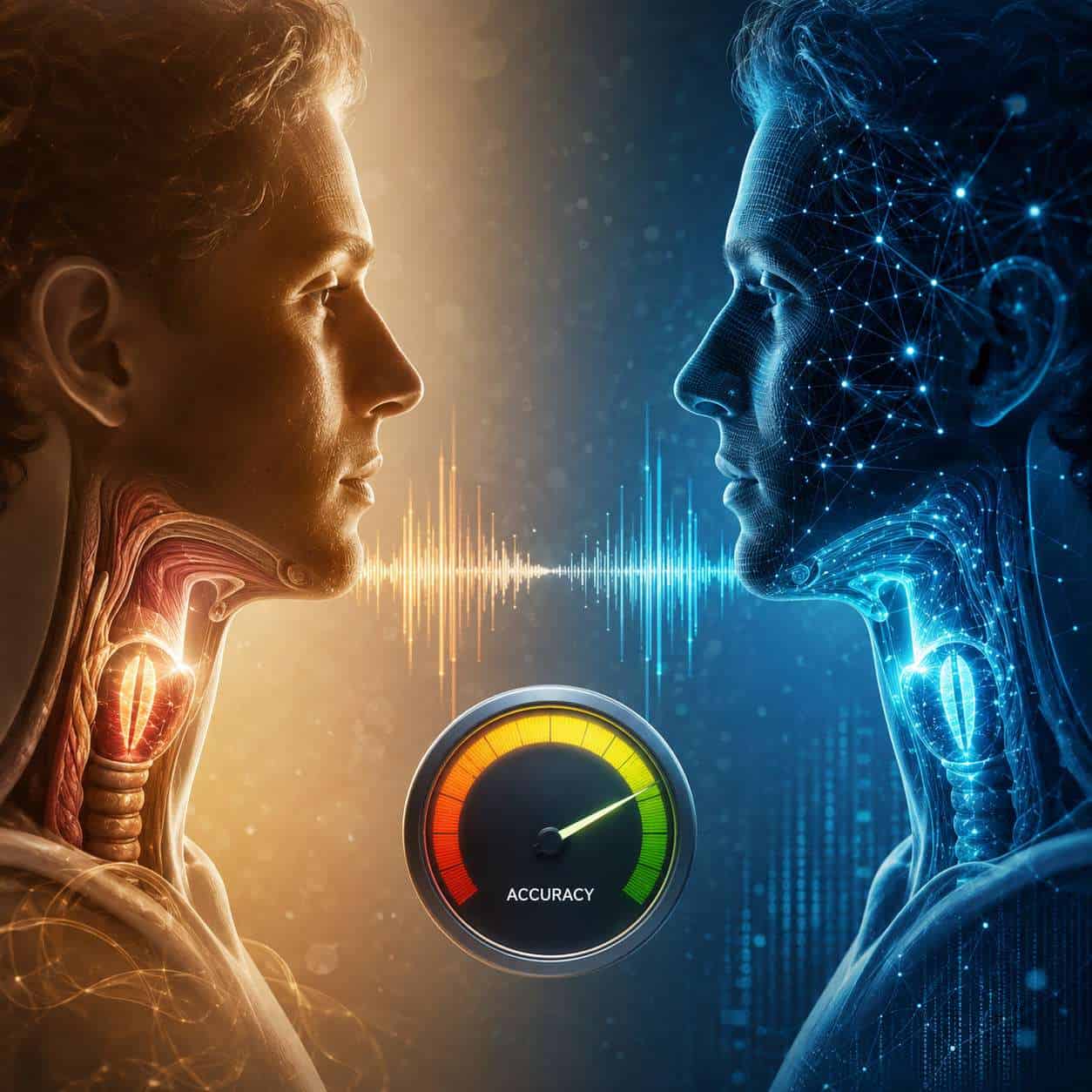
How Accurate Is Voice Cloning Compared to the Original Speaker?
Voice cloning accuracy depends on three factors: input audio quality, amount of training data, and the model used. With professional-grade input (studio recording, 15+ minutes, varied intonation), ElevenLabs clones capture speaker identity, cadence, and tonal characteristics with high fidelity.
Where clones excel: Consistent narration, reading prepared text, and maintaining speaker identity across long-form content.
Where clones struggle: Highly emotional speech, whispering, singing, and reproducing very specific regional accents or speech impediments. The clone also won’t replicate real-time conversational quirks like hesitation patterns or laughter timing.
Independent TTS comparisons in 2026 consistently place ElevenLabs among the top providers for voice similarity, though no synthetic voice is indistinguishable from the original in all contexts.
Is ElevenLabs Good for Game Development or Just Podcasts?
ElevenLabs is used across both game development and podcast production, but the API’s real-time streaming and voice variety make it particularly strong for interactive applications like games. Over 10,000 voices are available through the platform, and the low-latency Flash v2.5 model (~75 ms) enables responsive NPC dialogue.
Game development use cases:
- Dynamic NPC dialogue that changes based on player choices
- Procedurally generated quest narration
- Localization across 70+ languages without hiring voice actors for each
- Prototype voice acting before final studio recordings
Podcast and media use cases:
- Automated narration for news summaries or blog-to-audio conversion
- Multi-voice podcast production with distinct character voices
- Accessibility audio for written content
Choose ElevenLabs for games if you need low-latency responses and multilingual support. Choose it for podcasts if you need consistent, high-quality narration at scale.
The IBM + ElevenLabs collaboration announced in 2026 further signals the platform’s move into enterprise and regulated industries, not just creative content.
If you’re building interactive web experiences alongside voice features, our article on no-coding website design platforms covers tools that pair well with API-driven voice integration.
What Are the API Rate Limits and Usage Restrictions?
Rate limits depend on your subscription tier. Free and Starter plans have the strictest limits, while Scale and Enterprise plans offer significantly higher throughput. When you exceed your rate limit, the API returns a 429 Too Many Requests status code.
General guidelines:
- Free tier: approximately 2–3 concurrent requests
- Pro tier: roughly 10–15 concurrent requests
- Scale/Enterprise: custom limits negotiated per contract
Usage restrictions to know:
- Character quotas reset monthly.
- Unused characters do not roll over on most plans.
- Commercial use requires a paid plan (free tier audio may be watermarked).
- Voice cloning requires consent verification for professional-tier clones.
Edge case: If you’re building a product that serves multiple end users simultaneously (like a customer service bot), you’ll hit concurrency limits faster than character limits. Plan your architecture with a queue system to manage bursts.
What Are the Most Common Mistakes Developers Make with ElevenLabs Integration?
The biggest mistake is treating the API like a simple text-in/audio-out black box without accounting for latency, error states, and cost management.
Top mistakes and how to avoid them:
- Not caching generated audio. If the same text gets converted repeatedly, store the output. This saves both money and API calls.
- Ignoring streaming mode. For real-time applications, using the standard synchronous endpoint instead of WebSocket streaming adds unnecessary latency.
- Sending unprocessed text. URLs, HTML tags, special characters, and abbreviations produce garbled speech. Clean your text before sending it.
- Skipping error handling. The API can return 401 (auth failure), 429 (rate limit), and 500 (server error). Each needs different handling logic.
- Choosing the wrong model. Using Eleven v3 (highest quality, higher latency) for a real-time chatbot wastes time. Use Flash v2.5 for speed-critical paths.
- Hardcoding voice IDs. Voice IDs can change if you delete and recreate voices. Store them in configuration, not in code.
For developers working with AI-powered WordPress chatbots, these same principles apply when adding voice output to conversational interfaces.
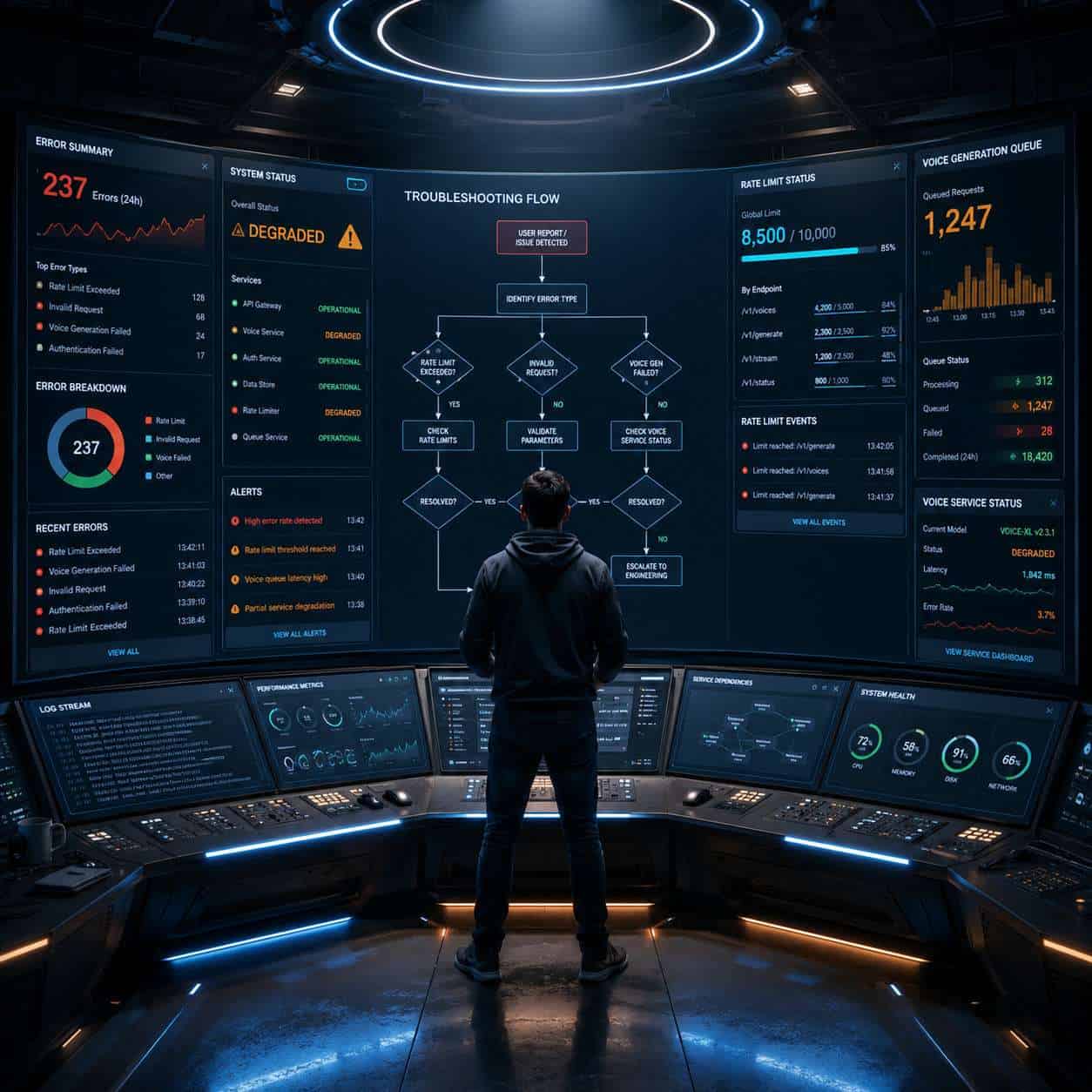
How Do I Handle Voice Generation Errors in My Code?
Wrap every API call in error handling that distinguishes between retryable and non-retryable failures. A 429 (rate limit) is retryable after a delay; a 401 (bad API key) is not.
Recommended error handling pattern:
<code class="language-python">import time
from elevenlabs import ElevenLabs
from elevenlabs.core import ApiError

client = ElevenLabs(api_key="your_key")

def generate_speech(text, voice_id, retries=3):
    for attempt in range(retries):
        try:
            return client.text_to_speech.convert(
                voice_id=voice_id,
                text=text,
                model_id="eleven_flash_v2_5"
            )
        except ApiError as e:
            if e.status_code == 429:
                time.sleep(2 ** attempt)  # exponential backoff
                continue
            raise  # non-retryable error
    raise Exception("Max retries exceeded")
</code>
Key practices:
- Use exponential backoff for rate limit errors (wait 1s, then 2s, then 4s).
- Log all errors with the request payload for debugging.
- Set timeouts on HTTP requests to avoid hanging connections (the
response_timeout_secsparameter added in May 2026 helps with agent workflows) [1]. - Return fallback audio or a text-only response if voice generation fails entirely.
How Does ElevenLabs Compare to Other AI Voice Generation Tools?
ElevenLabs consistently ranks among the top TTS providers for voice quality and naturalness, but it’s not always the cheapest or fastest option for every use case.
| Feature | ElevenLabs | Amazon Polly | Google Cloud TTS | Microsoft Azure TTS |
|---|---|---|---|---|
| Voice quality | Excellent | Good | Very good | Very good |
| Lowest latency | ~75 ms (Flash v2.5) | ~50 ms | ~100 ms | ~80 ms |
| Voice cloning | Yes (instant + pro) | No | Limited | Yes (custom neural) |
| Languages | 70+ | 30+ | 40+ | 100+ |
| Free tier | Yes (limited) | 12-month free tier | Limited free | Limited free |
| Pricing model | Per character | Per character | Per character | Per character |
Choose ElevenLabs if voice quality and cloning are your top priorities. Choose Amazon Polly if you need rock-bottom pricing and are already in the AWS ecosystem. Choose Azure if you need the widest language coverage.
Independent developer comparisons in 2026 place ElevenLabs at the top for naturalness but note that pricing can be higher than cloud-provider alternatives for high-volume use cases.
What Kind of Audio Quality Can I Expect from Different Voice Models?
Audio quality varies significantly across ElevenLabs’ four main models. Flash v2.5 prioritizes speed, while Eleven v3 prioritizes richness and expressiveness.
- Flash v2.5: ~75 ms latency. Good quality for real-time applications. Slight trade-off in emotional range compared to v3.
- Turbo v2.5: ~250–300 ms latency. Better prosody than Flash, suitable for near-real-time use.
- Multilingual v2: Optimized for cross-language performance. Best choice when generating speech in non-English languages.
- Eleven v3: Highest quality. Best for pre-rendered content like audiobooks, marketing videos, and polished narration.
All models output at up to 44.1 kHz sample rate in supported formats. For most web and mobile applications, the default MP3 output is sufficient. For professional audio production, request PCM or WAV format.
Are There Free Tier Options for Testing ElevenLabs?
Yes. ElevenLabs offers a free plan with approximately 10,000 characters per month, enough to generate roughly 10 minutes of speech [6][9]. The free tier includes access to pre-made voices and basic TTS functionality, but audio may include watermarks and commercial use is restricted.
What’s included in free:
- Access to the API with a personal API key
- Pre-made voice library
- Basic model access
- Limited voice cloning (instant only, with restrictions)
What requires a paid plan:
- Commercial usage rights
- Professional voice cloning
- Higher character quotas
- Priority API access and lower latency
The free tier is sufficient for prototyping and proof-of-concept work. I’d recommend starting there, building your integration, then upgrading once you’ve validated the use case.
What Industries Use the ElevenLabs Voice API Most Successfully?
E-learning, gaming, media production, accessibility technology, and enterprise customer service are the five industries seeing the strongest adoption. The IBM partnership specifically targets regulated industries like finance and healthcare through compliance features such as zero data retention and data residency controls.
- E-learning: Automated course narration across languages, reducing production costs by 80%+ compared to human voice actors.
- Gaming: Dynamic NPC dialogue and localization.
- Media: Blog-to-audio conversion, automated news reading, podcast production.
- Accessibility: Screen reader alternatives, voice interfaces for visually impaired users.
- Enterprise: IVR systems, virtual assistants, and customer service bots with natural-sounding voices.
ElevenLabs’ expansion into Australia and New Zealand in May 2026 and the launch of ElevenMusic on April 29, 2026 signal continued diversification beyond core TTS into broader audio AI.
For teams combining voice AI with broader AI-powered content optimization, the API fits naturally into automated content pipelines. And if you’re exploring AI tools for creative workflows, ElevenLabs complements visual AI tools to create full multimedia experiences.
Conclusion
The ElevenLabs API has matured from a novelty voice tool into production-grade infrastructure, backed by $781 million in total funding and $330 million ARR [7][10]. Whether you’re building a game, automating podcast production, or adding voice to an enterprise application, the API offers a clear path from prototype to production.
Your next steps:
- Sign up for the free tier and generate your API key.
- Install the Python or JavaScript SDK and run a basic TTS request.
- Test multiple models (Flash v2.5 for speed, Eleven v3 for quality) with your actual content.
- Implement proper error handling with exponential backoff from day one.
- Cache generated audio to control costs before scaling.
- Monitor your character usage weekly during development to avoid surprise overages.
The voice AI space is moving fast. ElevenLabs’ dense May 2026 changelog alone shows how rapidly the API surface is expanding [1][4][5]. Build your integration with flexibility in mind, and you’ll be well-positioned as new models and features arrive.
FAQ
Q: How long does it take to generate speech from the API? A: The Flash v2.5 model returns first audio bytes in approximately 75 milliseconds. Eleven v3 takes longer but produces higher quality output.
Q: Can I use ElevenLabs-generated audio commercially? A: Yes, but only on paid plans. The free tier restricts commercial use and may watermark audio [6][9].
Q: How many languages does ElevenLabs support? A: Over 70 languages, with the Multilingual v2 model specifically optimized for cross-language speech generation.
Q: Do I need to train a model to use the API? A: No. Pre-made voices are available immediately. Voice cloning is optional and only needed if you want a specific speaker’s voice.
Q: What audio formats does the API return? A: MP3 is the default. PCM, WAV, and other formats are available through request parameters.
Q: Is there a WebSocket option for real-time streaming? A: Yes. The streaming endpoint supports WebSocket connections for real-time audio delivery, which is essential for conversational AI applications.
Q: What happens if I exceed my character quota mid-month? A: You’ll receive a 429 error on subsequent requests. You can upgrade your plan or purchase additional characters depending on your tier.
Q: Can I use the API for phone/IVR systems? A: Yes. Several CPaaS providers have integrated ElevenLabs for telephony applications, and the low-latency models are suitable for real-time phone interactions.
Q: Does ElevenLabs store my text or audio data? A: Enterprise plans offer zero data retention options. Check the specific data handling policies for your plan tier.
Q: How often does the API change? A: Frequently. The May 2026 changelog alone shows multiple SDK regenerations and new endpoints across three separate updates [1][4][5]. Pin your SDK version and test updates before deploying.
Related ElevenLabs guides: get your ElevenLabs API key step-by-step guide, explore open-source voice AI alternatives to ElevenLabs, and see how to integrate ElevenLabs AI voices with Twilio platforms.
References
[1] Changelog – https://elevenlabs.io/docs/changelog [4] elevenlabs – https://elevenlabs.io/docs/changelog/2026/5/18 [5] elevenlabs – https://elevenlabs.io/docs/changelog/2026/5/13 [6] Elevenlabs Pricing – https://www.cekura.ai/blogs/elevenlabs-pricing [7] Series D – https://elevenlabs.io/blog/series-d [9] Elevenlabs Pricing 2026 Plans Credits Commercial Rights Api Costs – https://bigvu.tv/blog/elevenlabs-pricing-2026-plans-credits-commercial-rights-api-costs/ [10] Nvidia Backed Ai Startup Elevenlabs 11 Billion Valuation – https://www.cnbc.com/2026/02/04/nvidia-backed-ai-startup-elevenlabs-11-billion-valuation.html