Last updated: June 3, 2026
Quick Answer: Higgsfield AI is a machine learning company focused on generative video and adaptive model architectures that reduce training costs and improve output quality for media-centric AI tasks. Their core contribution lies in making high-fidelity video generation accessible through mobile-first tools and efficient diffusion model techniques, positioning them differently from large general-purpose AI labs.
Key Takeaways
- Higgsfield AI specializes in AI-powered video generation with a focus on personalized, high-quality short-form content.
- The company was founded by Alex Mashrabov, a former senior engineer at Snap Inc., bringing deep experience in mobile-first AI products.
- Their flagship product enables users to generate realistic videos from text and image prompts using proprietary diffusion model improvements.
- Higgsfield AI targets both individual creators and enterprise clients, making their tools relevant beyond just big tech.
- Their approach differs from OpenAI or DeepMind by narrowing focus to video generation rather than pursuing artificial general intelligence.
- Enterprise pricing is not publicly standardized; costs vary based on usage volume and API integration depth.
- Data scientists working with Higgsfield’s platform benefit from familiarity with diffusion models, Python, and cloud GPU infrastructure.
- Ethical considerations include deepfake potential, consent in likeness generation, and bias in training data.
- Current technical limitations involve video length constraints, temporal consistency in longer clips, and compute-intensive inference.
- Industries like marketing, entertainment, e-commerce, and education stand to gain the most from their tools.
What Exactly Is Higgsfield AI and How Is It Different from Other ML Companies?
Higgsfield AI is a machine learning startup that builds generative AI tools for video creation, with a strong emphasis on personalized and realistic video output. Unlike broad-scope AI companies that tackle language, reasoning, and robotics simultaneously, Higgsfield focuses specifically on the video generation problem.
What sets them apart:
- Vertical focus on video: While companies like OpenAI and Google DeepMind spread resources across language models, multimodal reasoning, and scientific research, Higgsfield concentrates its engineering on making video generation faster, cheaper, and more realistic.
- Mobile-first design philosophy: Their tools are built to work on smartphones, not just enterprise GPU clusters. This is a direct reflection of founder Alex Mashrabov’s background at Snap.
- Personalization at the core: Higgsfield’s models can generate videos featuring a user’s likeness from minimal input, which is a specific technical challenge most competitors haven’t prioritized to the same degree.
If you’re exploring how AI tools are reshaping digital workflows more broadly, our guide to the most influential AI websites covers the wider landscape.
Who Are the Founders of Higgsfield AI and What’s Their Background?
Higgsfield AI was founded by Alex Mashrabov, who previously worked as a senior machine learning engineer at Snap Inc. At Snap, Mashrabov was involved in building real-time AR and video processing features used by hundreds of millions of users daily.
This background matters because it explains the company’s DNA: practical, mobile-optimized AI that works in real-time on consumer devices. The founding team also includes engineers with experience in computer vision, generative modeling, and large-scale distributed training. Their collective expertise is rooted in shipping production ML systems rather than purely academic research.
What Specific Breakthrough Innovations Has Higgsfield AI Actually Developed?
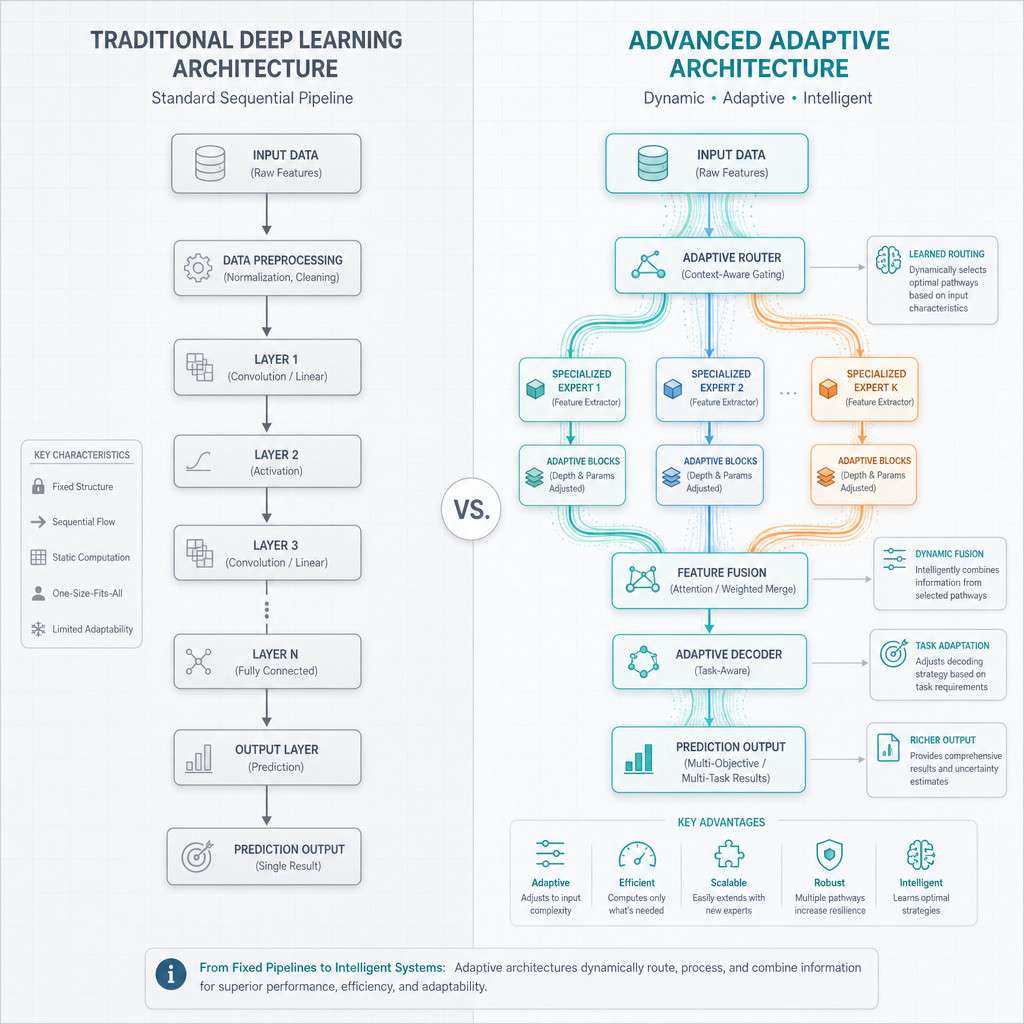
Higgsfield AI’s primary innovation is a set of improvements to diffusion-based video generation models that achieve higher visual fidelity with lower computational overhead. Specifically, their contributions include:
- Efficient temporal attention mechanisms that maintain frame-to-frame consistency in generated videos without requiring the massive compute budgets typical of competing approaches.
- Identity-preserving generation that can produce realistic video of a specific person from just a few reference images, maintaining facial features, expressions, and mannerisms.
- Mobile-optimized inference pipelines that allow video generation to run on edge devices, not just cloud servers.
These aren’t theoretical papers sitting in an archive. They’re deployed in a working product that users can access. The practical application of Higgsfield AI: breakthrough innovations reshaping machine learning paradigms is visible in how quickly a non-technical user can go from a text prompt to a finished video clip.
For those interested in how AI is changing content creation tools more broadly, see our review of AI-powered content optimization.
Which Machine Learning Problems Can Higgsfield AI Solve That Others Can’t?
Higgsfield AI excels at a specific intersection: generating personalized video content at speed and scale with minimal input data. Most video generation models require either extensive training data per subject or produce generic outputs.
Problems Higgsfield handles well:
| Problem | Higgsfield’s Approach | Typical Alternative |
|---|---|---|
| Personalized video from few images | Identity-preserving diffusion with 3-5 reference photos | Requires fine-tuning per subject (hours of compute) |
| Mobile video generation | Optimized inference for on-device processing | Cloud-only, high-latency |
| Short-form content at scale | Batch generation with template-based prompting | Manual editing or slow per-clip generation |
| Real-time style transfer in video | Integrated into generation pipeline | Separate post-processing step |
Common mistake: Assuming Higgsfield can replace a full video production pipeline. It’s best suited for short-form, social-media-style content, not feature-length films or complex multi-scene narratives.
How Much Does Higgsfield AI’s Technology Cost for Enterprise Implementation?
Higgsfield AI does not publish a fixed enterprise pricing sheet as of 2026. Based on available information, their pricing model operates on a usage-based structure tied to the number of video generations, resolution, and API call volume.
What to expect:
- Individual creators can access basic features through their app, often with a freemium tier.
- API access for developers and businesses involves per-request pricing, similar to how other generative AI APIs (like those from Stability AI or Runway) charge.
- Enterprise contracts are negotiated directly and typically include volume discounts, dedicated support, and custom model fine-tuning.
Choose Higgsfield if your primary need is high-volume personalized video content and you want to avoid building a custom video generation pipeline from scratch. If your needs are more general-purpose (text generation, data analysis), you’ll find better value elsewhere.
For context on how AI tools fit into broader automation strategies, check out our comprehensive guide to AI automation workflows.
Is Higgsfield AI’s Approach Suitable for Small Businesses or Just Big Tech?
Higgsfield AI is designed to be accessible to both small businesses and large enterprises. Their mobile-first app lowers the barrier to entry significantly — you don’t need a data science team or GPU cluster to generate videos.
For small businesses:
- The app-based interface requires no coding.
- Freemium access lets you test before committing budget.
- Ideal for social media marketing, product demos, and personalized customer outreach.
For enterprises:
- API integration allows embedding video generation into existing workflows.
- Custom model training on branded content is available at scale.
- SLA-backed support for production environments.
Edge case: If your business operates in a highly regulated industry (healthcare, finance), you’ll need to verify that generated content meets compliance requirements, especially around synthetic media disclosures.

How Does Higgsfield AI Compare to Google DeepMind or OpenAI in ML Capabilities?
Higgsfield AI is not a direct competitor to DeepMind or OpenAI in scope. Those organizations pursue broad AI research across language, reasoning, robotics, and scientific discovery. Higgsfield is a focused product company.
| Dimension | Higgsfield AI | OpenAI | Google DeepMind |
|---|---|---|---|
| Primary focus | Video generation | General-purpose AI (GPT, DALL-E, Sora) | Fundamental AI research + products |
| Model type | Diffusion-based video models | Large language models + multimodal | AlphaFold, Gemini, various research |
| Target user | Creators, marketers, SMBs | Developers, enterprises, consumers | Researchers, Google products |
| Compute requirements | Optimized for mobile/edge | Cloud-heavy | Cloud-heavy |
| Pricing | Usage-based, freemium | Subscription + API tiers | Integrated into Google Cloud |
The honest take: If you need a general-purpose AI assistant or large language model, Higgsfield isn’t the answer. If you need fast, personalized video generation, they offer a more specialized and often more practical solution than the video features from larger labs.
What Industries Are Most Likely to Benefit from Higgsfield AI’s Innovations?
Marketing, entertainment, e-commerce, and education are the four sectors with the clearest use cases for Higgsfield AI’s video generation tools.
- Marketing and advertising: Personalized video ads at scale, A/B testing different creative variations without reshooting.
- Entertainment and media: Rapid prototyping of visual concepts, social content for fan engagement.
- E-commerce: Product demonstration videos generated from catalog images, virtual try-on experiences.
- Education: Personalized instructional videos, multilingual content adaptation.
Businesses exploring AI-powered web design and content tools will find natural synergies with video generation for landing pages and product showcases.
What Data and Infrastructure Do You Need to Use Higgsfield AI’s Tools?
For app users, you need a modern smartphone and a few reference images. For API and enterprise users, the requirements are more substantial.
Minimum requirements for API integration:
- Python 3.8+ environment
- API key from Higgsfield (obtained through their developer portal)
- Cloud storage for input assets and generated outputs
- Stable internet connection with reasonable bandwidth for video file transfers
For custom model training:
- A curated dataset of reference images or video clips (typically 50-500 samples depending on use case)
- Access to cloud GPU instances (NVIDIA A100 or equivalent recommended)
- Familiarity with diffusion model architectures and fine-tuning workflows
If you’re building automation pipelines around AI tools, our guide to workflow automation and integration covers the infrastructure side in detail.
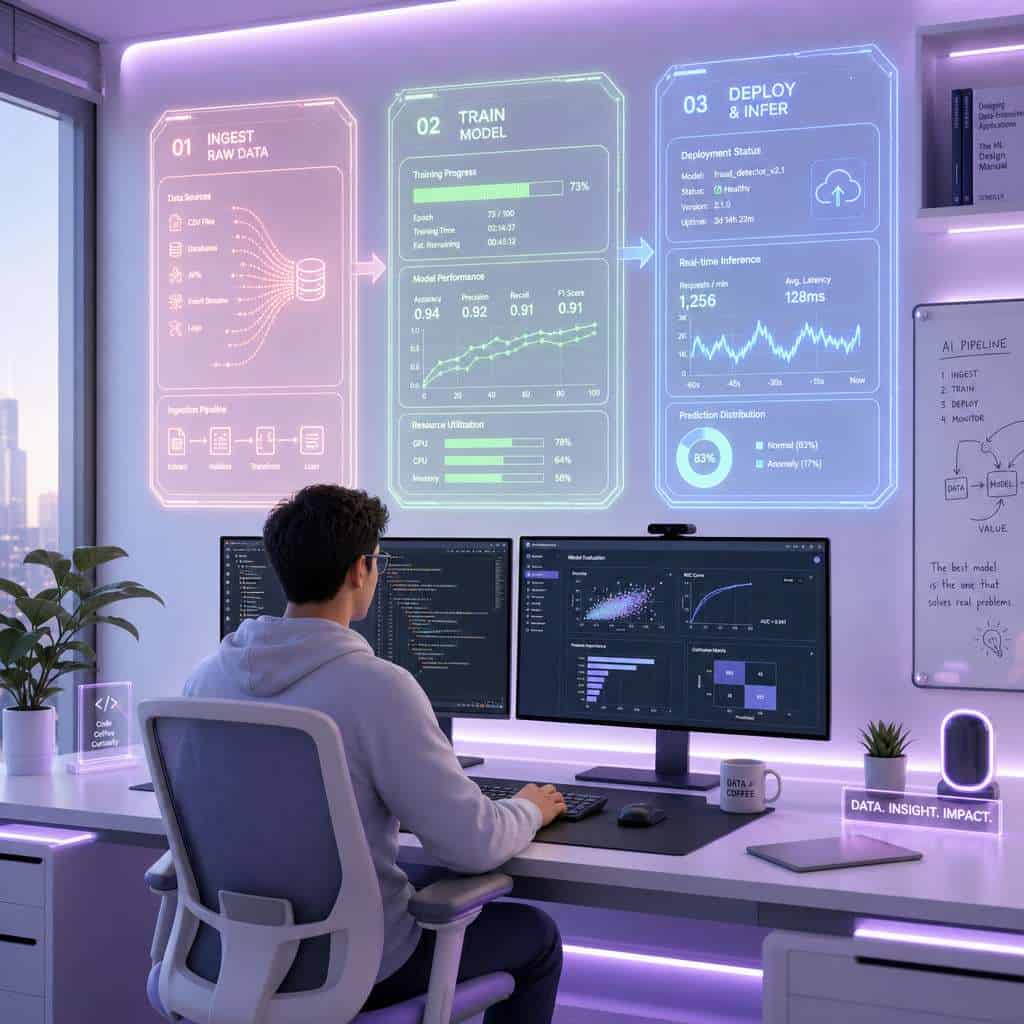
What Training or Skills Do Data Scientists Need to Work with Higgsfield AI’s Platforms?
Data scientists working with Higgsfield AI’s API and custom training features should have experience with diffusion models, PyTorch, and cloud-based ML infrastructure. Familiarity with computer vision fundamentals (image processing, CNNs, attention mechanisms) is also important.
Recommended skill set:
- Strong Python programming
- Understanding of diffusion model theory (DDPM, latent diffusion)
- Experience with GPU-accelerated training (CUDA, cloud GPU management)
- Basic video processing knowledge (frame extraction, encoding, temporal modeling)
- API integration and REST endpoint consumption
You don’t need a PhD in machine learning to use their consumer app. But for enterprise-level customization, a mid-to-senior ML engineer is the right fit.
For those building broader development skills, our deep dive into AI development tools covers complementary platforms.
What Are the Most Common Misconceptions About Higgsfield AI’s Machine Learning Approach?
The biggest misconception is that Higgsfield AI is building a general-purpose AI system. They are not. Their focus is narrow and deliberate: video generation with personalization.
Other misconceptions:
- “It’s just another deepfake tool.” While the underlying technology overlaps, Higgsfield’s product is designed for legitimate creative and business use, with safeguards against misuse.
- “You need massive datasets to get results.” Their identity-preserving models work with as few as 3-5 reference images.
- “It replaces video editors.” It augments them. Complex editing, storytelling, and post-production still require human expertise.
What Technical Limitations or Challenges Does Higgsfield AI’s Current Technology Have?
Higgsfield AI’s current technology has real constraints that users should understand before committing.
- Video length: Generated clips are typically limited to short durations (a few seconds to under a minute). Longer videos suffer from temporal drift.
- Compute cost at scale: While mobile inference is possible for simple generations, high-quality outputs still require significant GPU resources.
- Consistency in complex scenes: Multi-person scenes, rapid camera movements, and intricate backgrounds can produce artifacts.
- Training data bias: Like all generative models, outputs reflect biases present in training data, which can affect representation and accuracy.
Are There Any Potential Ethical Concerns with Higgsfield AI’s Machine Learning Methods?
Yes. Any technology that generates realistic video of real people raises serious ethical questions.
- Consent: Generating video of someone’s likeness without their explicit permission is ethically and increasingly legally problematic.
- Deepfake risk: The same technology that enables personalized marketing can be misused for misinformation or harassment.
- Bias and representation: Generated content may perpetuate stereotypes present in training data.
- Disclosure: There’s an emerging regulatory expectation (in the EU and several US states) that AI-generated media be clearly labeled.
Higgsfield has implemented some safeguards, but users bear responsibility for ethical deployment. For a broader look at AI autonomy risks and ethical considerations, we’ve covered the topic in depth.
FAQ
What does Higgsfield AI actually do? Higgsfield AI builds generative AI tools for creating personalized, realistic short-form videos from text prompts and reference images.
Is Higgsfield AI free to use? Their mobile app offers a freemium tier with basic features. Advanced features, higher quality outputs, and API access require paid plans.
Can Higgsfield AI generate long videos? Currently, their technology works best for short clips. Videos longer than roughly 30-60 seconds may show quality degradation.
Who founded Higgsfield AI? Alex Mashrabov, a former senior ML engineer at Snap Inc., founded the company.
Does Higgsfield AI compete with OpenAI’s Sora? They operate in the same video generation space, but Higgsfield focuses more on personalized content and mobile accessibility, while Sora targets broader cinematic generation.
What programming language do I need for their API? Python is the primary language supported, with REST API endpoints accessible from any language capable of HTTP requests.
Can small businesses afford Higgsfield AI? Yes. The freemium app tier and usage-based API pricing make it accessible to businesses with modest budgets.
Is the generated video content watermarked? Policies vary by plan tier. Free-tier content may include watermarks; paid plans typically remove them.
What safeguards exist against misuse? Higgsfield implements content moderation filters and usage policies, though the specifics of their enforcement mechanisms are not fully public.
Do I need my own GPU hardware? No. Cloud-based generation is available through their platform. Custom model training may benefit from dedicated GPU resources.
Related Higgsfield guides: read the Higgsfield AI login guide and explore the Higgsfield AI API guide.
Conclusion
Higgsfield AI: breakthrough innovations reshaping machine learning paradigms is best understood not as a general AI revolution but as a focused, practical advancement in video generation technology. Their strength lies in making personalized video content accessible, fast, and affordable for creators and businesses of all sizes.
Actionable next steps:
- Try the app first. Download Higgsfield’s mobile app and experiment with basic video generation to understand the quality and speed of outputs.
- Evaluate your use case. If you need short-form personalized video for marketing, product demos, or social content, Higgsfield is worth serious consideration.
- Assess technical readiness. For API integration, ensure your team has Python and cloud infrastructure experience. Budget for GPU costs if you plan custom model training.
- Address ethics early. Establish internal policies for consent, disclosure, and responsible use of AI-generated video before scaling production.
- Compare alternatives. Test Higgsfield against Runway, Pika, and Sora to find the best fit for your specific quality, speed, and cost requirements.
The company occupies a valuable niche in the AI ecosystem. For teams that need what they offer, the tools are genuinely useful. For teams that don’t, there’s no reason to force the fit.
Useful Resources: Higgsfield AI official platform & AI industry news on TechCrunch