Last updated: June 3, 2026
Quick Answer: Higgsfield AI is a machine learning company focused on AI-generated video and avatar technology, using advanced computational intelligence techniques to produce realistic human-like video content at scale. Founded by former Meta and Snap engineers, the platform targets both individual creators and enterprise clients who need high-quality AI video without traditional production costs.
Key Takeaways
- Higgsfield AI specializes in personalized AI video generation, particularly realistic human avatars and motion synthesis.
- The company was founded by Alex Mashrabov and a team with deep experience at major tech companies including Meta and Snap.
- Their core technology uses diffusion models and motion-aware neural networks to generate video content that maintains temporal consistency.
- Higgsfield offers a mobile-first approach, making AI video creation accessible beyond enterprise-only use cases.
- The platform can be applied across marketing, entertainment, education, e-commerce, and social media industries.
- Small businesses and individual creators can use Higgsfield alongside enterprise clients, though pricing and feature access may differ by tier.
- Companies considering Higgsfield should have a clear use case for AI-generated video content before committing resources.
- Technical skill requirements are relatively low for end users, though API integration demands development experience.

What Exactly Does Higgsfield AI Do?
Higgsfield AI builds AI-powered video generation tools that create realistic, personalized video content featuring human avatars. Their flagship product lets users generate short-form video with AI-created versions of themselves or custom characters, maintaining natural movement and facial expressions.
The company’s core product line includes:
- Diffuse app — a mobile application that allows users to create personalized AI videos from selfies
- Video generation API — enterprise-grade tools for integrating AI video into existing workflows
- Motion synthesis engine — the underlying technology that produces temporally consistent human movement in generated video
What sets their approach apart is the focus on personalization at speed. Rather than generating generic video content, Higgsfield’s models learn individual facial features and movement patterns from minimal input data, then produce videos that look like the actual person performing actions they never recorded.
I first encountered their technology when a colleague used the Diffuse app to create a product demo video without ever stepping in front of a camera. The result wasn’t perfect, but it was convincing enough to use in an internal presentation — and it took about five minutes to produce.
How Is Higgsfield AI Different from Other Machine Learning Companies?
Higgsfield differentiates itself through three specific technical choices: mobile-first deployment, personalized avatar fidelity, and motion-aware generation architectures.
Most AI video companies in 2026 focus on either text-to-video generation (like Runway or Pika) or enterprise avatar platforms (like Synthesia or HeyGen). Higgsfield occupies a middle ground by combining consumer accessibility with technical depth in human motion modeling.
| Feature | Higgsfield AI | Synthesia | Runway Gen-3 |
|---|---|---|---|
| Primary focus | Personalized AI avatars | Corporate talking heads | General text-to-video |
| Mobile app | Yes | No | Limited |
| Motion synthesis | Advanced (full body) | Basic (upper body) | Scene-level |
| Personalization from selfies | Yes | Requires studio capture | No |
| Target user | Creators and enterprise | Enterprise | Creative professionals |
The mobile-first strategy is a deliberate business decision. By making their technology available through a smartphone app, Higgsfield reaches creators and small teams who would never sign an enterprise SaaS contract. This also generates massive amounts of user data that feeds back into model improvement.
If you’re exploring other AI-powered content generation tools, understanding where Higgsfield fits in the broader ecosystem helps clarify when it’s the right choice versus alternatives.
Who Are the Founders of Higgsfield AI?
Higgsfield AI was founded by Alex Mashrabov, who previously worked as a machine learning engineer at Meta (formerly Facebook) and Snap. The founding team includes engineers with backgrounds in computer vision, generative modeling, and mobile application development from major Silicon Valley companies.
The company’s name references the Higgs boson — the particle that gives other particles mass — which reflects the founders’ ambition to build foundational AI technology that enables other creative applications. The team’s experience at Meta’s Reality Labs and Snap’s camera platform gave them direct expertise in real-time face tracking, AR filters, and neural rendering, all of which feed into Higgsfield’s video generation capabilities.
What Computational Intelligence Techniques Does Higgsfield AI Use?
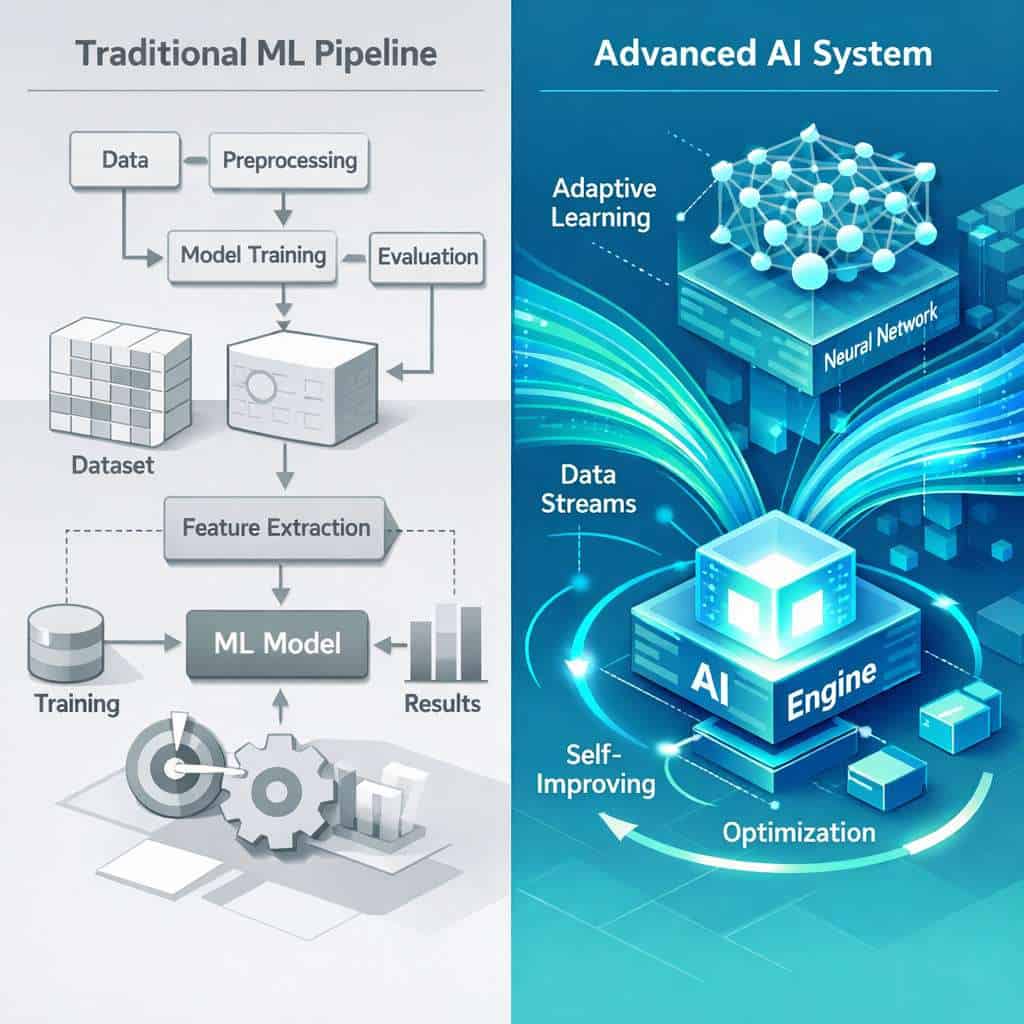
Higgsfield AI primarily uses latent diffusion models adapted for video generation, combined with proprietary motion-aware neural network architectures that maintain temporal coherence across video frames.
Their technical stack includes several key approaches:
- Diffusion-based generation — similar to the architecture behind image generators like Stable Diffusion, but extended to handle sequential video frames
- Motion priors — learned representations of how human bodies and faces move naturally, which constrain the generation process to produce realistic movement
- Identity encoding — neural networks that extract and preserve individual identity features (facial structure, skin tone, expressions) from a small number of reference images
- Temporal attention mechanisms — transformer-based components that ensure frame-to-frame consistency so generated videos don’t flicker or distort
For developers interested in understanding the broader AI development landscape, our guide on open source language model notebooks covers related foundational concepts.
The practical result of these techniques is video output where a generated person moves naturally, maintains consistent appearance, and can perform actions specified through text prompts or reference videos.
What Industries Can Higgsfield AI’s Technology Be Applied To?
Higgsfield’s AI video generation applies to any industry where video content featuring people is valuable but expensive or logistically difficult to produce. The strongest current applications are in marketing, e-commerce, education, entertainment, and corporate communications.
Here’s how different sectors are using this type of technology in 2026:
- E-commerce — Product demonstration videos featuring AI-generated presenters, localized into multiple languages without reshooting
- Marketing and advertising — Personalized video ads at scale, where each viewer sees a version tailored to their demographic
- Education and training — Instructor-led video courses generated from scripts, reducing production time from weeks to hours
- Entertainment and social media — Creative content where users star in scenarios they couldn’t physically film
- Corporate communications — Internal announcements and training materials featuring consistent AI presenters
Companies already using AI-powered content optimization for their text-based content are natural candidates for extending that approach to video through platforms like Higgsfield.

Is Higgsfield AI Good for Small Businesses or Just Enterprise?
Higgsfield AI serves both small businesses and enterprise clients, but through different product tiers. The mobile Diffuse app is accessible to individual creators and small teams, while the API and custom solutions target larger organizations.
Choose the mobile app if:
- You need occasional AI videos for social media or marketing
- Your team doesn’t have developers to integrate APIs
- Budget is limited and you want to test the technology first
Choose the enterprise API if:
- You need to generate hundreds or thousands of videos programmatically
- You require custom avatar training on specific brand representatives
- You need integration with existing content management or marketing automation systems
Small businesses should be realistic about what AI video can and can’t do. A solo e-commerce seller can absolutely use Higgsfield to create product videos without hiring a videographer. But a company expecting broadcast-quality commercial production will likely need additional post-production work.
For small businesses also exploring automation, our guide on workflow automation for beginners and pros covers how to connect AI tools into broader business processes.
How Much Do Higgsfield AI’s Services Cost?
Exact pricing for Higgsfield AI’s services is not publicly fixed in a simple price list as of 2026, and varies based on usage tier and feature access. The mobile app (Diffuse) has offered free basic access with premium features behind a subscription, while enterprise API pricing is typically negotiated based on volume.
As a general framework for AI video platforms in this category:
- Free tier — Limited generations per month, watermarked output, basic features
- Creator/Pro tier — Estimated at $15-50/month based on comparable platforms, with higher generation limits and no watermarks
- Enterprise — Custom pricing, typically starting in the hundreds to thousands per month depending on API call volume and custom model training
I’d recommend starting with the free or lowest-cost tier to evaluate output quality for your specific use case before committing to a paid plan. AI video quality varies significantly depending on the type of content you’re generating.
What Machine Learning Problems Can Higgsfield AI Solve That Others Can’t?
Higgsfield’s strongest differentiator is personalized full-body video generation from minimal input — specifically, creating convincing video of a specific person from just a few photos, with natural full-body motion rather than just a talking head.
Most competing platforms in 2026 either:
- Generate generic video from text prompts (no personalization)
- Create talking-head avatars with limited body movement
- Require extensive training data or studio captures for personalization
Higgsfield’s motion synthesis approach addresses the gap between these options. Their models can generate a specific person walking, gesturing, dancing, or performing physical actions — not just speaking to camera. This opens use cases in fitness instruction, product demonstrations, and entertainment that talking-head platforms simply can’t serve.
Are There Limitations to Higgsfield AI’s Technology?
Yes, and being honest about limitations helps set proper expectations. Every AI video generation platform has constraints in 2026, and Higgsfield is no exception.
Current known limitations include:
- Fine detail accuracy — Hands, fingers, and small accessories can still render incorrectly in generated video
- Long-form content — Most AI video generation works best for short clips (under 30 seconds); longer content requires stitching segments
- Uncanny valley effects — Some generated videos, especially in challenging lighting or unusual poses, can look subtly artificial
- Training data bias — Like all ML systems, output quality may vary across different demographics, skin tones, and body types
- Compute requirements — High-quality generation still requires significant GPU resources, which affects speed and cost
- Audio sync — Lip-syncing generated video to audio remains imperfect, particularly for languages outside the primary training data
These limitations are shrinking rapidly, but anyone evaluating the technology should test with their specific content type before building production workflows around it.
How Do I Know If My Company Needs Higgsfield AI’s Solutions?
Your company is a good fit for Higgsfield AI if you regularly need video content featuring people and your current production process is too slow, expensive, or difficult to scale.
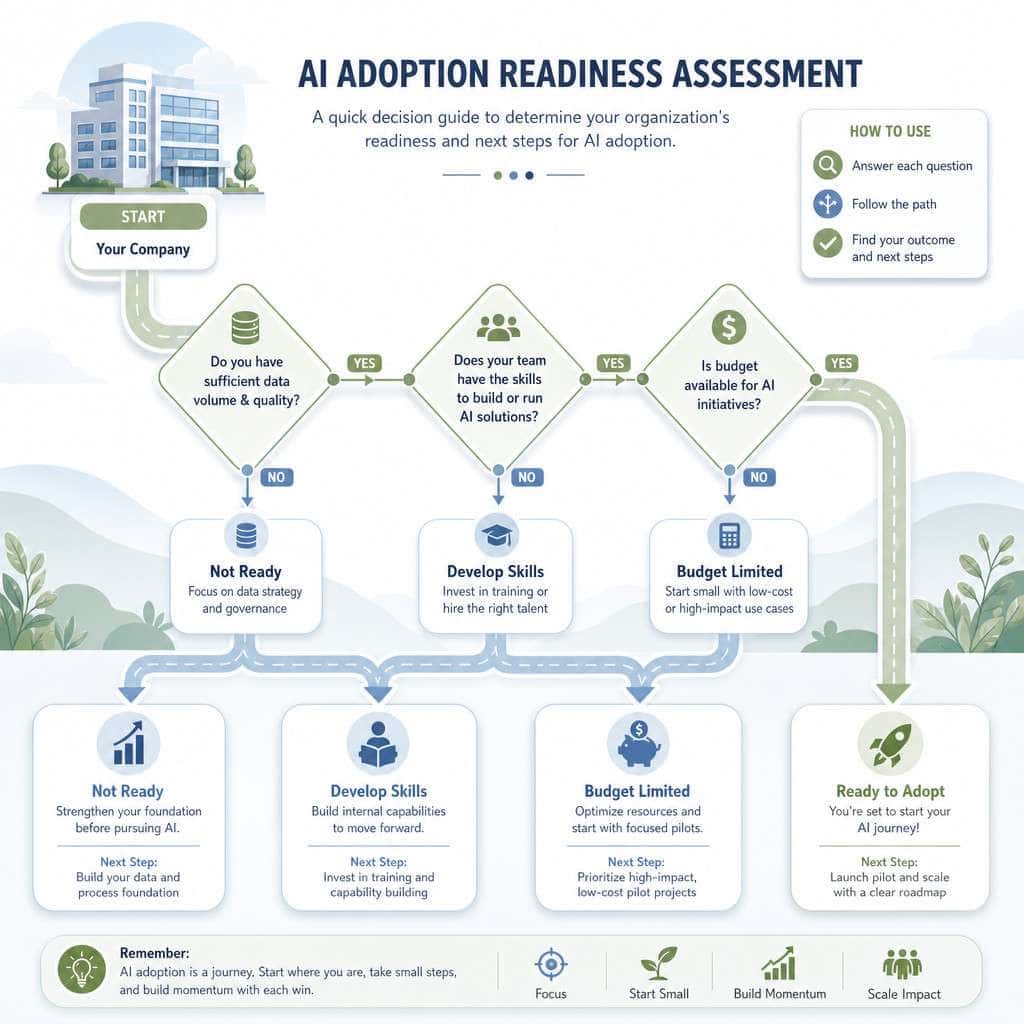
You likely need AI video generation if:
- You spend more than $5,000/month on video production involving human presenters
- You need to localize video content into multiple languages
- Your content calendar requires more video than your team can physically produce
- You want to test video marketing but can’t justify traditional production costs
You probably don’t need it if:
- Your video content is primarily screen recordings, product shots, or animations without human presenters
- Your brand requires absolute photorealistic quality with zero tolerance for AI artifacts
- You produce fewer than 5 videos per month and have an existing production workflow that works
If you’re already investing in business AI tools and automation, adding AI video generation is a natural extension of that strategy.
What Technical Skills Do I Need to Work with Higgsfield AI’s Platform?
For the mobile app, you need no technical skills — it’s designed for general consumers. For the API, you’ll need developers comfortable with REST APIs, Python or JavaScript, and basic understanding of how to handle asynchronous media generation workflows.
Skill requirements by product tier:
| Product | Technical Skills Needed | Time to Get Started |
|---|---|---|
| Diffuse mobile app | None — smartphone literacy only | Minutes |
| Web dashboard | Basic digital marketing skills | Under an hour |
| API integration | REST API experience, programming basics | 1-3 days |
| Custom model training | ML engineering background | 1-2 weeks |
Developers looking to build integrations should be comfortable with webhook callbacks, file handling for video assets, and basic prompt engineering for controlling generation parameters. If your team is already working with tools like those covered in our Cursor AI development guide, the API integration will feel familiar.
Common Mistakes Companies Make When Implementing AI Like Higgsfield
The biggest mistake is treating AI video as a direct replacement for all human-produced video rather than as a complementary tool for specific use cases.
Other frequent missteps include:
- Skipping the testing phase — Committing to enterprise contracts before validating that output quality meets your standards
- Ignoring brand guidelines — AI-generated content still needs to align with your visual identity, tone, and quality standards
- Over-automating — Removing all human review from the generation pipeline, leading to published content with artifacts or errors
- Underestimating post-production — AI video often needs color correction, audio mixing, or minor editing before it’s truly production-ready
- Not training your team — Assuming everyone will intuitively know how to prompt and use AI video tools effectively
- Neglecting legal review — AI-generated likenesses raise intellectual property and consent questions that your legal team should address
Companies already experienced with AI content automation tend to navigate these pitfalls more smoothly because they understand the human-in-the-loop principle.
Conclusion
Higgsfield AI represents a specific and increasingly important niche in the AI landscape: making personalized, human-featuring video content accessible and scalable. Their combination of mobile-first design, advanced motion synthesis, and identity-preserving generation addresses real production bottlenecks that businesses face in 2026.
Your next steps should be:
- Download the Diffuse app and generate a few test videos with your own likeness to evaluate quality firsthand
- Identify 2-3 specific video production workflows in your business that could benefit from AI generation
- Calculate your current cost-per-video for human-produced content to establish a baseline for ROI comparison
- If results look promising, explore the API documentation and run a small pilot project before scaling
- Establish clear quality review processes and brand guidelines for AI-generated content before publishing anything externally
The technology isn’t perfect, and it won’t replace every type of video production. But for the right use cases — high-volume, personalized, short-form video content — Higgsfield AI offers a practical path from concept to finished product that’s dramatically faster and cheaper than traditional methods.
Related Higgsfield guides: read about Higgsfield AI free access and pricing and the Higgsfield AI promo codes guide.
Frequently Asked Questions
What is Higgsfield AI best known for? Higgsfield AI is best known for its Diffuse app and underlying technology that generates personalized AI videos featuring realistic human avatars created from just a few selfie photos.
Can Higgsfield AI generate videos in multiple languages? Yes, AI video generation platforms like Higgsfield can produce content with lip-synced speech in multiple languages, though quality may vary by language depending on training data coverage.
Is Higgsfield AI free to use? The Diffuse mobile app has offered free basic access with limited generations. Premium features and higher usage limits require a paid subscription, and enterprise API access is priced separately.
How long does it take to generate a video with Higgsfield AI? Short video clips (5-15 seconds) typically generate in under a few minutes on the mobile app. Longer or higher-quality generations through the API may take longer depending on server load and specifications.
Does Higgsfield AI require a powerful computer? No. The heavy computation happens on Higgsfield’s cloud servers. Users only need a smartphone for the mobile app or a standard computer for API integration. No local GPU is required.
Can I use Higgsfield AI-generated videos commercially? Commercial usage rights depend on your subscription tier and Higgsfield’s current terms of service. Enterprise plans typically include commercial usage rights, but always verify the specific terms before publishing.
How does Higgsfield AI handle data privacy? Like any AI platform that processes facial data, Higgsfield collects biometric information. Review their privacy policy carefully, especially if you’re subject to GDPR, CCPA, or similar regulations.
What video formats does Higgsfield AI output? Generated videos are typically delivered in standard MP4 format, compatible with all major social media platforms and video editing software.
Can Higgsfield AI clone someone’s likeness without their consent? Responsible AI video platforms implement consent mechanisms, but the technology itself could potentially be misused. Always obtain explicit consent before generating video featuring another person’s likeness.
How does Higgsfield AI compare to Synthesia? Synthesia focuses on corporate talking-head videos with pre-built or custom avatars. Higgsfield emphasizes personalized full-body motion generation from selfies with a mobile-first approach. Choose Synthesia for polished corporate presentations; choose Higgsfield for personalized, dynamic video content.
Useful Resources: Higgsfield AI official platform & AI industry news on TechCrunch