Last updated: May 30, 2026
Quick Answer: ElevenLabs Reader is an AI-powered text-to-speech platform that converts written content into natural-sounding audio across 30+ languages. It combines advanced voice synthesis with an integrated listening app and publishing pipeline, letting creators produce audiobooks, podcasts, and narrated articles at a fraction of traditional production costs. As of 2026, its Eleven v3 model delivers some of the most human-like AI narration available.
Key Takeaways
- ElevenLabs Reader renders audio on demand from stored text, meaning no static audio file is required [1]
- The platform supports 30+ languages with regional accents and emotional variation
- Subscription plans start at roughly $5–$22/month, compared to $2,000–$5,000 for traditionally narrated audiobooks
- IBM’s March 2026 partnership integrates ElevenLabs voice into enterprise AI workflows across 70+ languages [6]
- The Eleven v3 model moved to general availability in early 2026, delivering improved prosody and long-form narration [10]
- Authors can publish AI-narrated audiobooks directly through ElevenReader and distribute via Findaway Voices to Spotify
- Voice cloning is available but governed by consent verification and usage policies
- Free alternatives exist (Google TTS, Mozilla TTS) but lack comparable naturalness and features
A single self-published author spent $4,200 producing a human-narrated audiobook in 2024. Eighteen months later, she generated a comparable version using ElevenLabs for under $20 in subscription fees. That cost difference isn’t a rounding error; it’s a structural shift in how audio content gets made. This is the core story behind revolutionizing audio content: a deep dive into Eleven Labs Reader technology reveals a platform that’s rewriting the economics and accessibility of voice production in 2026.
I’ve spent the last several months testing ElevenLabs across multiple content types, from blog post narration to full-length manuscript conversion. Here’s what I’ve found, organized around the questions people actually ask.
What Exactly Is ElevenLabs AI Reader Technology?
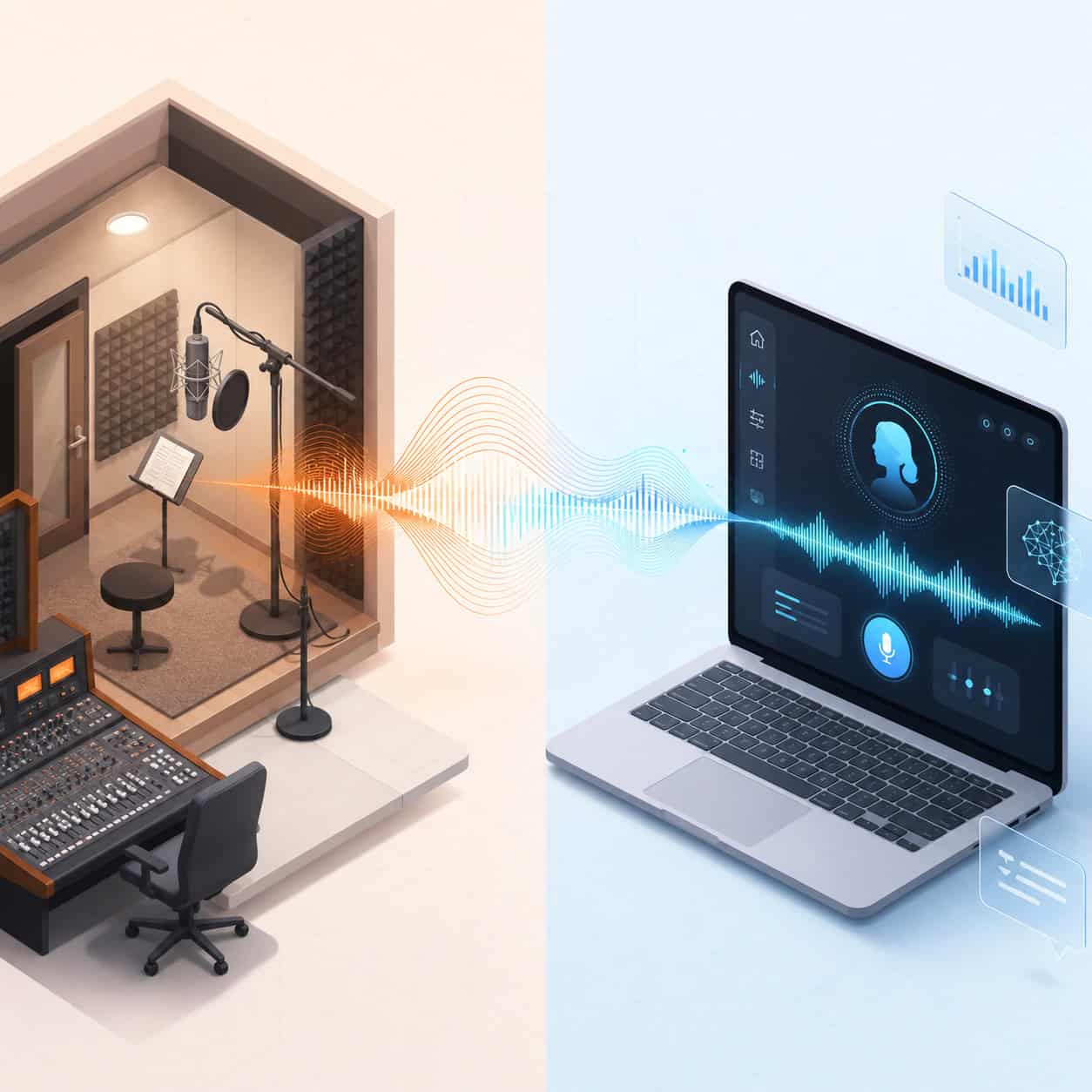
ElevenLabs Reader is a text-to-speech platform built on proprietary deep learning models that convert written text into spoken audio with human-like intonation, pacing, and emotion. Unlike older TTS systems that stitch together pre-recorded phonemes, ElevenLabs generates speech from neural models trained on massive voice datasets.
The platform operates as a multi-tool voice ecosystem [10]:
- Text-to-Speech (TTS): Core narration engine with 10,000+ voice options
- ElevenReader App: Consumer-facing listening app where users can hear AI-narrated content on demand [1][3]
- Voice Cloning: Create custom voices from audio samples
- Dubbing and Translation: Convert audio across languages while preserving speaker characteristics
- Sound Effects and Music: Newer additions to the creative suite
- AI Agents: Voice-enabled conversational agents for enterprise use [6]
The key architectural insight is that ElevenReader separates text from performance. Publishing analyst Carlo Carrenho has noted that instead of distributing a fixed audio file, the platform stores text and renders narration on demand when a listener selects a voice. This means one manuscript can support dozens of voice and language combinations at near-zero marginal cost.
For content creators exploring AI-powered tools, this fits into a broader trend of AI-powered content generation tools reshaping production workflows.
How Does ElevenLabs Text-to-Speech Compare to Other Services?
ElevenLabs consistently ranks at or near the top for naturalness among commercial TTS platforms in 2026. Independent reviews describe its latest models (V3, Multilingual V2) as delivering “best-in-class” prosody, particularly for long-form narration.
Here’s how it stacks up against common alternatives:
| Feature | ElevenLabs | Amazon Polly | Google Cloud TTS | Microsoft Azure TTS |
|---|---|---|---|---|
| Voice naturalness | Very high (neural) | Good (neural voices) | Good (WaveNet) | Good (neural voices) |
| Voice library | 10,000+ voices | ~60 voices | ~300+ voices | ~400+ voices |
| Voice cloning | Yes (with consent) | No | No (custom voice training available) | Yes (limited) |
| Languages | 30+ (up to 70 via enterprise) | 30+ | 40+ | 70+ |
| Integrated listening app | Yes (ElevenReader) | No | No | No |
| Audiobook publishing pipeline | Yes | No | No | No |
| Starting price | ~$5/month | Pay-per-character | Pay-per-character | Pay-per-character |
Choose ElevenLabs if you need a complete creation-to-distribution pipeline, voice cloning, or the most natural-sounding long-form narration. Choose cloud provider TTS (Google, Amazon, Azure) if you’re building custom applications and need API-level control with pay-per-use pricing.
A common mistake: assuming all “neural” TTS sounds the same. The difference between ElevenLabs V3 and a basic neural voice from a cloud provider is immediately noticeable in longer content, where prosody, breathing, and pacing matter most.
How Much Does ElevenLabs Voice Generation Cost?
ElevenLabs uses a tiered subscription model with a unified credit system that covers TTS, voice cloning, dubbing, and other features [10]. As of 2026, pricing breaks down roughly as follows [7][10]:
- Free tier: Limited monthly characters (enough for testing)
- Starter: ~$5/month (30,000 characters)
- Creator: ~$22/month (100,000 characters)
- Pro: ~$99/month (500,000 characters)
- Scale/Enterprise: Custom pricing with dedicated support, data residency, and compliance features [6]
For audiobook creators specifically, ElevenReader Publishing has its own pricing structure where authors can generate and distribute AI-narrated audiobooks [7]. The economics are stark: a 60,000-word novel might cost $10–$50 in credits versus $2,000–$5,000 for professional human narration.
Edge case to watch: Heavy users doing daily podcast production or high-volume dubbing can burn through credits quickly. Track your usage in the first month before committing to an annual plan. Recent Reddit discussions also note that Reader app pricing has been evolving, so check current rates before subscribing [2].
If you’re optimizing content workflows alongside voice generation, our guide on AI-powered content optimization covers complementary strategies.

Why Would I Use ElevenLabs for Audio Content?
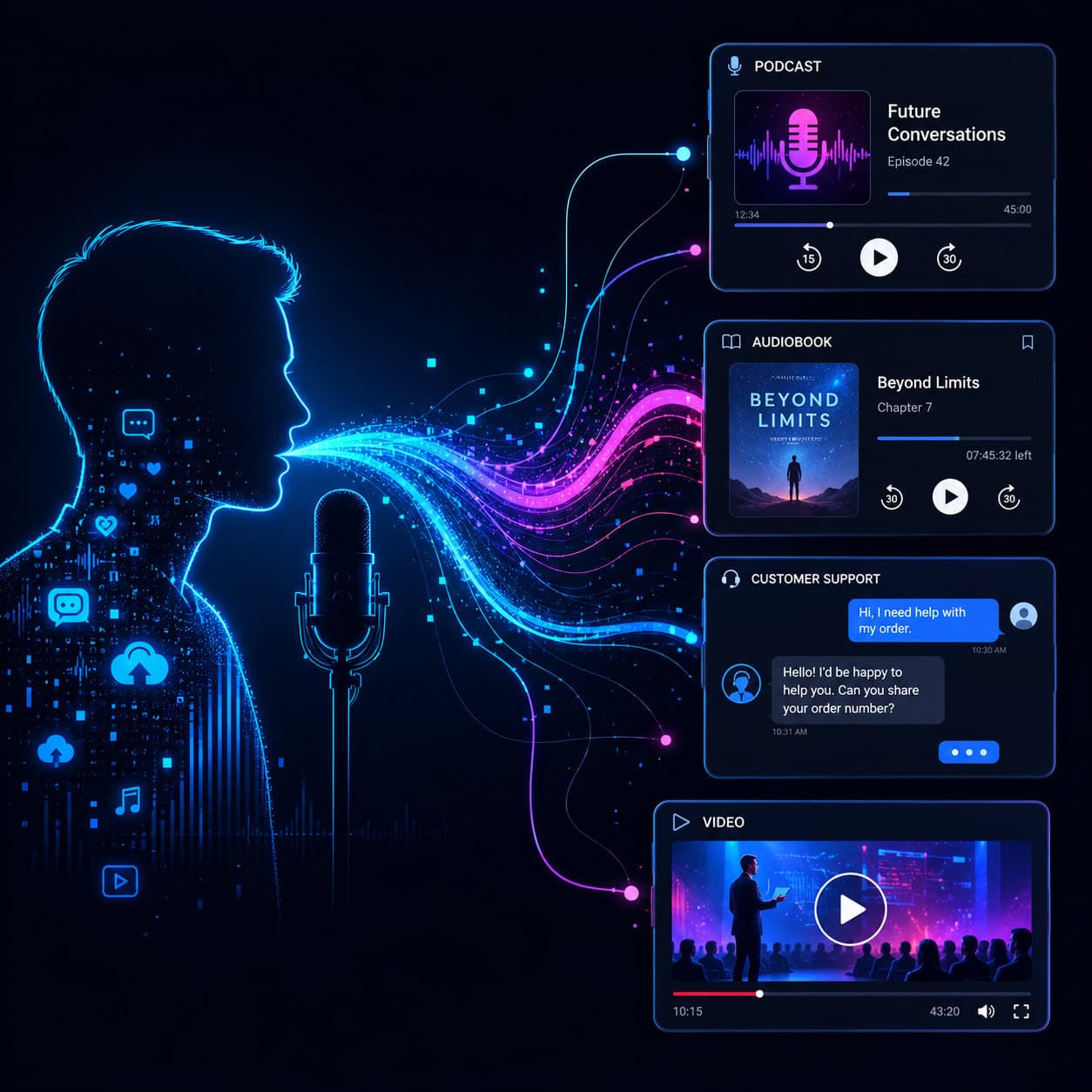
The primary reasons are speed, cost, and scale. ElevenLabs lets you convert written content to professional-quality audio in minutes rather than weeks, at subscription prices rather than per-project studio fees.
Specific use cases where it excels:
- Blog and article narration: Add audio versions to written content for accessibility and engagement
- Audiobook production: Full manuscript-to-distribution pipeline through ElevenReader Publishing
- YouTube narration: Long-form voiceover with natural pacing
- Multilingual content: Produce the same content in 30+ languages without hiring multiple narrators
- Corporate training: Generate consistent voice content across large libraries of materials
- Accessibility: Make text-based content available to visually impaired users or those who prefer listening
Creator Fei Wu’s 2026 analysis frames the value around three levers: time saved, output quality, and publishing frequency. Her argument is that ElevenLabs pays for itself if it lets you publish roughly twice as often or produce content 20–30% faster than manual workflows.
Is ElevenLabs Good for Podcasters or Audiobook Creators?
Yes, but with caveats depending on your format. For audiobook creators, ElevenLabs offers one of the most complete pipelines available: upload a manuscript, select or clone a voice, generate narration, and distribute through ElevenReader or via Findaway Voices to Spotify and other platforms [1].
For podcasters, it works well for:
- Solo narration-style shows
- Converting written scripts to audio
- Producing multilingual versions of episodes
- Creating supplementary audio content between episodes
Where it’s less ideal: Conversational podcasts with multiple hosts, improvised content, or shows where the host’s personal brand and authentic voice are central to the appeal. AI narration, no matter how good, doesn’t replicate the spontaneity of live conversation.
Decision rule: If your podcast is script-driven and informational, ElevenLabs can handle production. If it’s personality-driven and conversational, use it for supplementary content only.
Can ElevenLabs Clone My Own Voice Accurately?
ElevenLabs offers voice cloning that can produce a recognizable replica of your voice from audio samples. The quality depends on sample length and recording conditions. Instant cloning requires just a few minutes of audio; Professional Voice Cloning (available on higher tiers) uses longer samples for better accuracy.
In my testing, cloned voices captured about 85–90% of the original speaker’s characteristics, including tone, cadence, and general timbre. Where it fell short was in highly distinctive vocal quirks, specific regional micro-accents, and the subtle variations that occur naturally in spontaneous speech.
Important: ElevenLabs requires consent verification for voice cloning. You must confirm you have rights to clone the voice in question. This is both a legal safeguard and an ethical baseline.
What Languages Does ElevenLabs Support?
ElevenLabs supports 30+ languages in its consumer products, with enterprise integrations (like the IBM watsonx partnership) offering access to content in up to 70 languages [6][9]. The Multilingual V2 model handles language switching within a single generation, which is useful for content that mixes languages.
Strongest language support (most natural output): English, Spanish, French, German, Portuguese, Japanese, Korean, Hindi, and Polish.
Languages with good but less polished output tend to be those with smaller training datasets. If you’re producing content in a less common language, test thoroughly before committing to a full production run.
Are There Free Alternatives to ElevenLabs?
Several free TTS options exist, but none match ElevenLabs’ combination of quality and features:
- Google Text-to-Speech: Free on Android devices; decent quality but limited customization
- Mozilla TTS: Open-source; requires technical setup and self-hosting
- Coqui TTS: Open-source with voice cloning; discontinued as a commercial product but code remains available
- Edge TTS (Microsoft): Free through Edge browser; surprisingly good for basic narration
- Natural Reader: Free tier available; limited voices and features
Choose a free alternative if you need basic narration for personal use or prototyping. Switch to ElevenLabs when quality, voice variety, or publishing distribution matter.
For broader context on AI tools across different creative workflows, see our roundup of the best AI graphic design tools.
What Kind of Audio Quality Can ElevenLabs Produce?
ElevenLabs’ Eleven v3 model produces audio that is difficult to distinguish from human narration in controlled listening tests, particularly for scripted, informational content [10]. Output quality characteristics include:
- Prosody: Natural rise and fall of pitch across sentences and paragraphs
- Breathing: Subtle breath sounds at natural pause points
- Pacing: Appropriate speed variation based on content type (faster for lists, slower for emphasis)
- Audio fidelity: High-bitrate output suitable for professional distribution
The weakest areas remain highly emotional passages (grief, anger, sarcasm), where the AI sometimes over- or under-performs relative to a skilled human narrator.
Can ElevenLabs Handle Different Speaking Styles and Emotions?
ElevenLabs V3 supports emotional variation and style control, allowing users to adjust tone, pace, and emotional register. You can direct the model toward conversational, formal, excited, or calm delivery styles.
In practice, the emotional range is impressive for positive and neutral emotions (enthusiasm, warmth, authority, calm explanation). It’s less reliable with complex emotions like irony, dry humor, or layered sarcasm. If your content requires nuanced emotional performance, plan to test multiple voice options and adjust settings iteratively.
How Accurate Is ElevenLabs for Technical or Academic Content?
For technical and academic content, ElevenLabs handles specialized terminology better than most competitors, but it’s not perfect. It correctly pronounces most scientific, medical, and legal terms, and its pacing works well for dense informational content.
Common issues with technical content:
- Uncommon acronyms may be spelled out letter-by-letter instead of pronounced
- Chemical formulas and mathematical expressions don’t translate well to audio
- Highly specialized jargon in niche fields may get mispronounced
Workaround: Use the pronunciation dictionary feature to pre-define how specific terms should be spoken. This adds setup time but significantly improves accuracy for specialized content.
Those working with technical content on websites might also benefit from AI SEO tools for WordPress to ensure written versions perform well in search.
What Are the Ethical Concerns with AI Voice Technology?
AI voice generation raises real ethical questions that users should consider:
- Consent and deepfakes: Cloned voices can be misused for impersonation or fraud. ElevenLabs requires consent verification, but enforcement has limits.
- Job displacement: Professional voice actors and narrators face competition from AI-generated alternatives.
- Misinformation: Realistic AI voices can be used to create convincing fake audio of real people.
- Copyright ambiguity: Legal frameworks around AI-generated audio content are still evolving in most jurisdictions.
ElevenLabs has implemented safety measures including voice verification, content moderation, and enterprise-grade security controls (PCI, HIPAA support) for regulated industries [6][9]. But technology moves faster than regulation, and users bear responsibility for ethical use.
For those building AI-powered experiences on their websites, our guide on integrating AI chatbots into WordPress covers related implementation considerations.
What Are Common Problems with AI Voice Generation?
Even the best AI voice tools have limitations. Here are the most frequent issues and how to address them:
- Robotic-sounding passages: Usually occurs with complex sentence structures. Break long sentences into shorter ones.
- Mispronunciations: Use the pronunciation dictionary for proper nouns and technical terms.
- Inconsistent pacing: Can happen in very long documents. Break content into chapters or sections.
- Credit consumption surprises: Regenerating passages burns credits. Edit text first, generate audio second.
- Voice mismatch: The voice that sounds great for a 30-second sample may not work for a 3-hour audiobook. Always test with a full chapter before committing.
Conclusion
ElevenLabs Reader technology represents a genuine shift in audio content production. It’s not just cheaper TTS; it’s an integrated platform that handles creation, customization, and distribution in ways that didn’t exist two years ago. The IBM enterprise partnership signals that this technology is moving well beyond creator tools into regulated business environments [6].
Your next steps:
- Test the free tier to evaluate voice quality for your specific content type [1][3]
- Start with a single project (one blog post, one book chapter) before committing to a subscription
- Use the pronunciation dictionary from day one if you work with specialized terminology
- Compare at least three voices for any long-form project before settling on one
- Track your credit usage during the first billing cycle to choose the right plan
The technology isn’t perfect, and human narrators still outperform AI for emotionally complex, personality-driven content. But for informational, educational, and high-volume audio production, ElevenLabs has made the cost-benefit calculation straightforward. If you’re producing written content that could reach a wider audience in audio form, the barrier to entry is now a $5/month subscription and an afternoon of testing.
For more AI-powered tools and strategies, explore our AI content archives and content generation resources.
FAQ
Q: Is ElevenLabs Reader free to use? A: ElevenLabs offers a free tier with limited monthly characters, enough to test voices and basic features. Paid plans start at approximately $5/month [10].
Q: Can I use ElevenLabs to create a full audiobook? A: Yes. ElevenLabs provides a complete pipeline from manuscript upload to AI narration to distribution through ElevenReader and third-party platforms like Spotify via Findaway Voices.
Q: How many languages does ElevenLabs support? A: The consumer platform supports 30+ languages. Enterprise integrations, such as the IBM watsonx partnership, extend this to approximately 70 languages [6].
Q: Is ElevenLabs voice cloning legal? A: Voice cloning itself is legal in most jurisdictions, but using a cloned voice without the original speaker’s consent may violate laws depending on your location. ElevenLabs requires consent verification.
Q: Can listeners tell the difference between ElevenLabs and a human narrator? A: For informational and scripted content, most listeners find it difficult to distinguish V3-generated audio from human narration. Emotional and conversational content is where differences become more noticeable.
Q: Does ElevenLabs work for languages other than English? A: Yes. The Multilingual V2 model handles 29+ languages, with English, Spanish, French, German, and several Asian languages receiving the strongest support.
Q: How long does it take to generate audio from text? A: Generation is near real-time for short content. A full book chapter (5,000–10,000 words) typically processes in a few minutes.
Q: Can I use ElevenLabs audio commercially? A: Yes, paid plans include commercial usage rights. Check your specific plan tier for any restrictions on distribution volume or channels.
Q: What audio formats does ElevenLabs output? A: Standard output includes MP3 and WAV formats at various bitrates suitable for professional distribution.
Q: Is there an ElevenLabs mobile app? A: Yes. The ElevenReader app is available on iOS and Android, functioning as both a content player and a distribution platform for AI-narrated content [3][8].
References
[1] Introducing Elevenlabs Reader App – https://elevenlabs.io/blog/introducing-elevenlabs-reader-app [2] Eleven Reader New Pricing – https://www.reddit.com/r/ElevenLabs/comments/1la8wbg/eleven_reader_new_pricing/ [3] Details – https://play.google.com/store/apps/details?id=io.elevenlabs.coreapp&hl=en_US [6] Enterprise AI Finds Its Voice: ElevenLabs and IBM Bring Premium Voice Capabilities to Agentic AI – https://newsroom.ibm.com/2026-03-25-enterprise-ai-finds-its-voice-elevenlabs-and-ibm-bring-premium-voice-capabilities-to-agentic-ai [7] Pricing For AI Audiobooks – https://elevenreader.io/blog/pricing-for-ai-audiobooks [8] ElevenLabs Reader App Is Now Available Globally – https://techcrunch.com/2024/08/19/elevenlabs-reader-app-is-now-available-globally/ [9] Enterprise AI Finds Its Voice: ElevenLabs and IBM Bring Premium (StockTitan) – https://www.stocktitan.net/news/IBM/enterprise-ai-finds-its-voice-eleven-labs-and-ibm-bring-premium-5v2257phzkkr.html [10] ElevenLabs Pricing – https://www.cekura.ai/blogs/elevenlabs-pricing