Last updated: May 30, 2026
Quick Answer: ElevenLabs Voice ID is a unique alphanumeric identifier assigned to every voice on the ElevenLabs platform, serving as both a technical handle for API-driven speech generation and, increasingly, a consent and authenticity marker for voice cloning. It enables developers, creators, and businesses to programmatically select and generate speech from specific voices, while newer initiatives like the AILAS partnership attach rights and licensing data to each Voice ID to combat misuse.
Key Takeaways
- Every voice on ElevenLabs (default, cloned, or community-shared) receives a unique Voice ID string used across the API and integrations [1].
- Voice cloning requires as little as one minute of clean audio, though 30+ minutes produces noticeably better results.
- ElevenLabs offers a free tier; paid plans start at $5/month (as of 2026), with voice cloning available on paid tiers.
- The AILAS partnership introduced authenticated Voice IDs that confirm a voice was consensually registered for AI use [6].
- Default legacy voices and their Voice IDs are scheduled to expire on December 31, 2026.
- Third-party platforms like Retell AI use their own internal identifiers that don’t map directly to ElevenLabs Voice IDs, causing common integration confusion [4].
- A February 2026 partnership with the UK government is researching societal and security implications of AI voice technology.
- Competitors include Resemble AI, Amazon Polly, Google Cloud TTS, and PlayHT, each with different strengths [7].
- Voice cloning technology is legal in most jurisdictions when you clone your own voice or have explicit consent, but regulations vary by country.
What Exactly Is ElevenLabs Voice ID and How Does It Work?
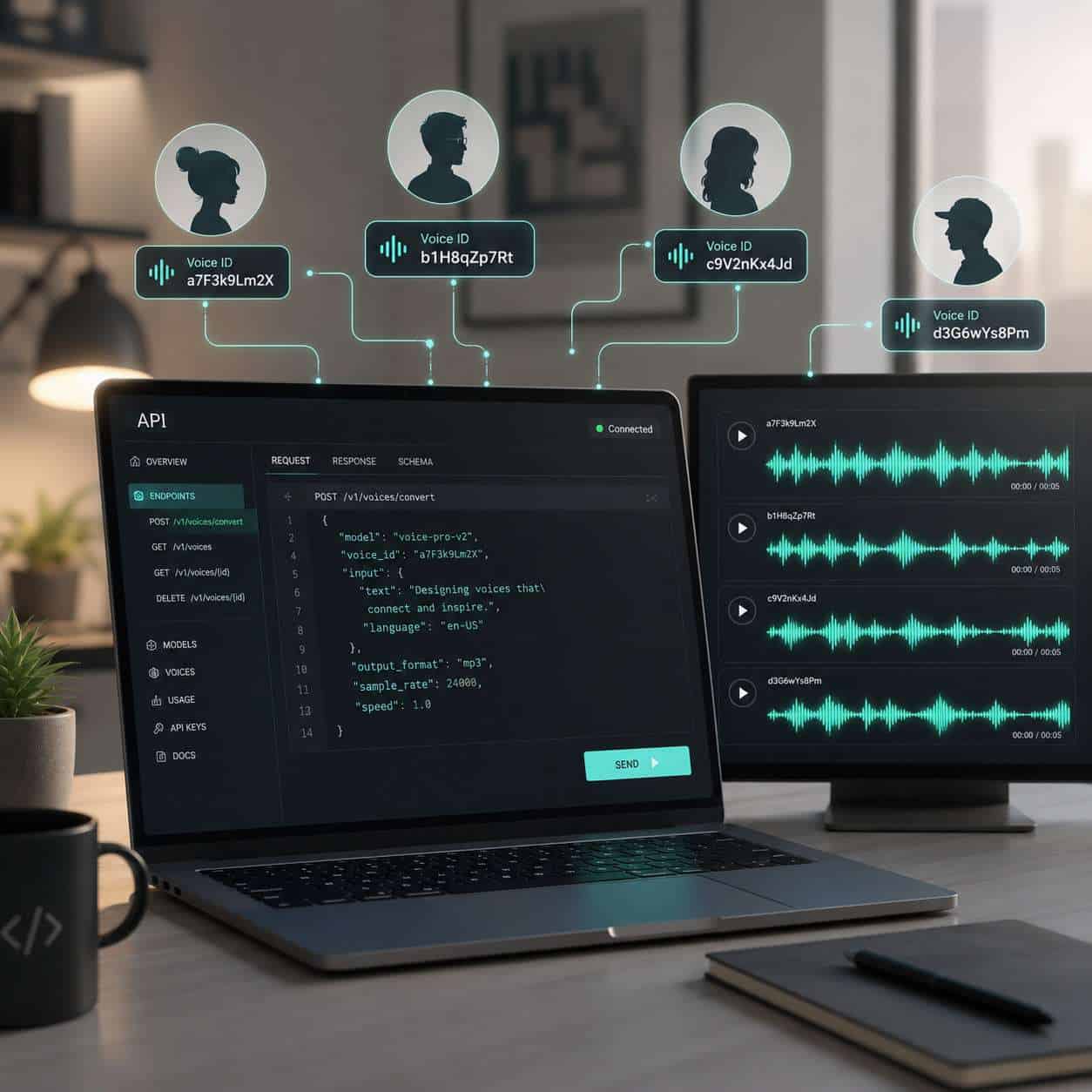
An ElevenLabs Voice ID is a stable alphanumeric string (like 21m00Tcm4TlvDq8ikWAM for the default voice “Rachel”) that uniquely identifies a voice within the ElevenLabs ecosystem [1]. When you make an API call to generate speech, you pass this ID to specify exactly which voice should speak your text.
Here’s how the system works in practice:
- Voice creation or selection. You either clone your own voice by uploading audio samples, select a default voice, or browse the Voice Library marketplace.
- Voice ID assignment. The platform assigns a unique identifier to that voice. You can find it in the Voices UI under the three-dots menu or via the “List voices” API endpoint.
- Speech generation. You pass the Voice ID into your API request (or select it in the UI), along with your text, and ElevenLabs returns synthesized audio in that voice.
- Integration. Third-party tools reference these Voice IDs as configuration parameters. For example, Blotato’s 2026 documentation instructs users to “pass in the Voice ID you want to use in your API request.”
A common mistake: confusing platform-specific internal identifiers with actual ElevenLabs Voice IDs. In an April 2026 support thread, Retell AI clarified that identifiers like 11labs-Paola are internal to their system and don’t correspond to public ElevenLabs Voice IDs [4]. Always copy the ID directly from ElevenLabs when setting up integrations.
If you’re exploring how AI tools can streamline your workflows beyond voice, check out our comprehensive guide to AI-powered content generation tools.
How Much Does Voice Cloning Cost with ElevenLabs?
ElevenLabs offers voice cloning starting on its paid plans, which begin at $5/month for the Starter tier (as of early 2026). The free tier provides limited text-to-speech with default voices but does not include custom voice cloning.
| Plan | Approximate Monthly Cost | Voice Cloning Access | Character Quota |
|---|---|---|---|
| Free | $0 | No custom cloning | ~10,000 characters |
| Starter | $5 | Instant Voice Cloning | ~30,000 characters |
| Creator | $22 | Instant + Professional | ~100,000 characters |
| Pro | $99 | Full access + higher quality | ~500,000 characters |
| Scale | $330+ | Enterprise features | ~2,000,000 characters |
Instant Voice Cloning uses a short sample (under 5 minutes) and is available on lower tiers. Professional Voice Cloning requires 30+ minutes of audio and produces higher-fidelity results, but it’s gated behind higher plans and includes a verification step.
The Voice Library marketplace also lets community members publish Professional Voice Clones and earn rewards when others use them [1], creating an additional revenue stream for voice actors and creators.
Can ElevenLabs Clone My Own Voice or Only Other Voices?
Yes, ElevenLabs is specifically designed to let you clone your own voice. In fact, cloning your own voice is the primary intended use case and the most straightforward path through their consent verification process.
For Instant Voice Cloning, you upload a short audio clip of yourself speaking. For Professional Voice Cloning, you submit longer recordings and go through a verification step that confirms you are the owner of the voice [9]. This verification process exists precisely to prevent unauthorized cloning of other people’s voices.
You can clone other voices only if you have explicit, documented consent from the voice owner. ElevenLabs requires users to confirm they have rights to any voice they upload. The AILAS partnership strengthens this by attaching authenticated IDs to voices that have been consensually registered [6].
What Kind of Voice Data Do I Need to Create a Good Clone?
For a high-quality voice clone, you need clean, consistent audio recordings with minimal background noise. The more data you provide, the better the result.
Minimum requirements for Instant Voice Cloning:
- At least 1 minute of audio (though 3-5 minutes is recommended)
- Clear speech without music or heavy background noise
- Consistent microphone distance and volume
For Professional Voice Cloning (best results):
- 30 minutes to 3 hours of diverse speech
- Multiple speaking styles (conversational, reading, emphatic)
- High-quality recording equipment (condenser mic, treated room)
- WAV or FLAC format preferred over compressed MP3
Common mistakes people make when trying to clone voices:
- Using audio with background music or ambient noise
- Recording in echoey, untreated rooms
- Submitting too little audio and expecting Professional-grade quality
- Mixing multiple speakers in the same training data
- Using heavily compressed or low-bitrate audio files
A quick decision rule: if your audio sounds good enough for a podcast, it’s probably good enough for voice cloning. If you’d be embarrassed to publish it, re-record.
How Accurate Is ElevenLabs Compared to Other AI Voice Platforms?
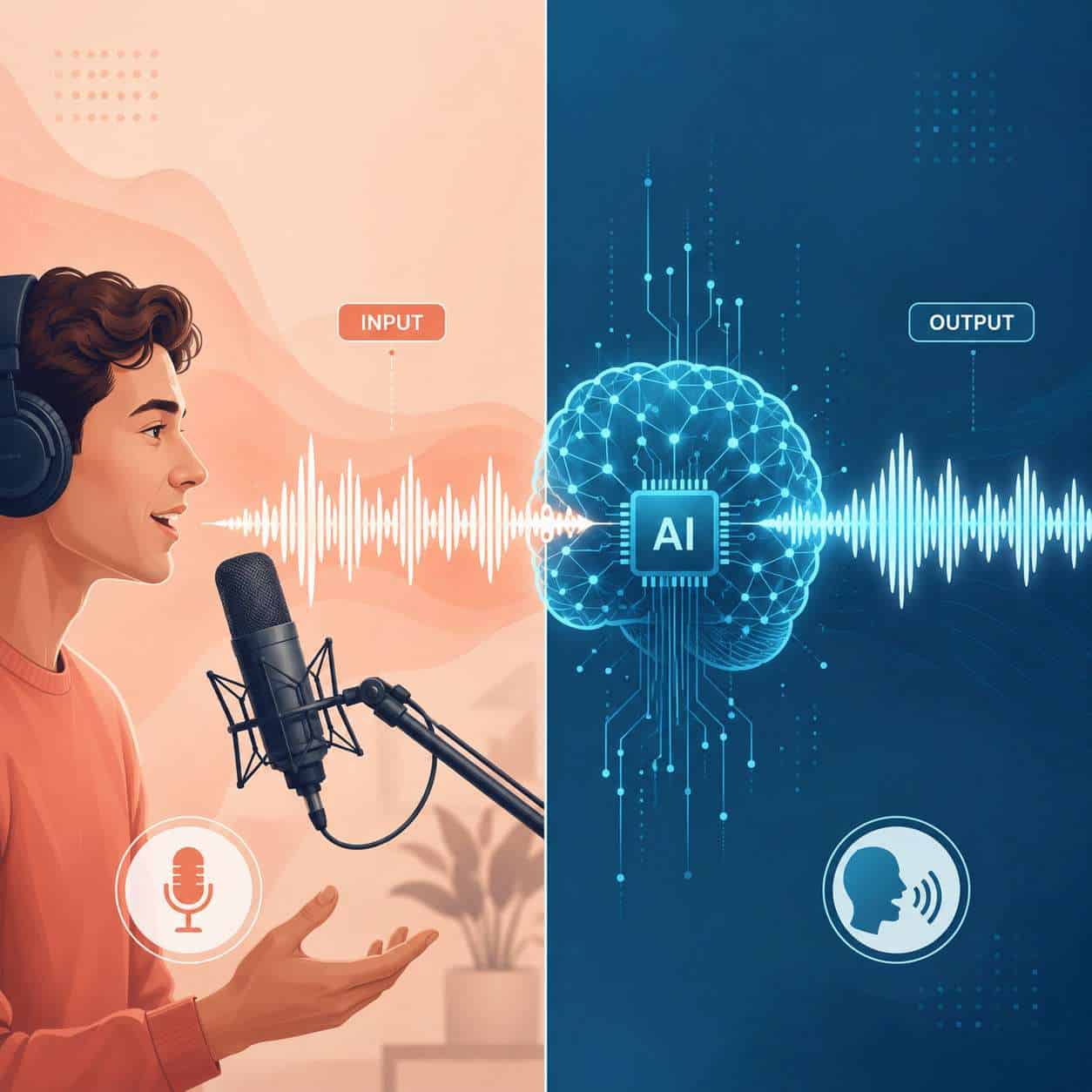
ElevenLabs consistently ranks among the most natural-sounding AI voice platforms in independent comparisons, particularly for English-language output. Its neural voice synthesis produces speech with natural prosody, breathing patterns, and emotional range that many users find difficult to distinguish from human speech.
A detailed comparison by Resemble AI [7] acknowledges ElevenLabs’ strengths in voice quality and ease of use while noting that Resemble AI offers advantages in real-time voice conversion and on-premise deployment options.
Key accuracy factors across platforms:
- Naturalness: ElevenLabs excels at producing human-like speech with appropriate pauses and intonation
- Multilingual support: ElevenLabs supports 29+ languages, though quality varies by language
- Clone fidelity: Professional Voice Clones on ElevenLabs closely match the source voice’s timbre and cadence
- Latency: The platform offers a low-latency streaming mode suitable for real-time applications
For those building AI-enhanced websites and applications, our guide on AI-powered content optimization covers how to integrate these tools into broader content strategies.
What Are the Best Alternatives to ElevenLabs for AI Voice Generation?
Several platforms compete with ElevenLabs, each with distinct strengths. The best choice depends on your specific use case, budget, and technical requirements [10].
| Platform | Best For | Starting Price | Key Differentiator |
|---|---|---|---|
| Resemble AI | Enterprise, on-premise | Custom pricing | Real-time voice conversion, data privacy [7] |
| PlayHT | Content creators | $31/month | Large voice library, WordPress plugin |
| Amazon Polly | AWS ecosystem users | Pay-per-use | Deep AWS integration, SSML support |
| Google Cloud TTS | Developers | Pay-per-use | WaveNet voices, broad language support |
| Microsoft Azure TTS | Enterprise apps | Pay-per-use | Custom Neural Voice, Office integration |
| Murf AI | Video production | $23/month | Built-in video editor |
Choose ElevenLabs if you prioritize voice quality and ease of use. Choose Resemble AI if you need on-premise deployment or real-time voice conversion. Choose Amazon Polly or Google Cloud TTS if you’re already in those cloud ecosystems and want pay-per-use pricing.
If you’re evaluating AI tools more broadly, our roundup of the best AI graphic design tools covers the visual side of AI-powered content creation.
Is ElevenLabs Voice ID Legal, or Could It Be Used for Fraud?
Voice cloning itself is legal in most jurisdictions when you clone your own voice or have the voice owner’s consent. However, using cloned voices to impersonate someone without permission, commit fraud, or bypass security systems is illegal virtually everywhere.
ElevenLabs has implemented several safeguards:
- Consent verification for Professional Voice Clones, requiring proof of voice ownership [9]
- AILAS partnership that attaches authenticated IDs to voices, confirming they were consensually registered for AI use [6]
- Usage policies that prohibit impersonation, fraud, and harassment
- A UK government research partnership (announced February 2026) studying the societal and security implications of AI voice technology
The legal landscape is evolving. A March 2026 policy report titled “When Voice Is No Longer Proof” specifically called out platforms like ElevenLabs as drivers of realistic voice cloning that undermine traditional voice-based authentication. This is pushing organizations toward multi-factor verification rather than relying on voice alone.
What Are the Privacy Risks of Voice Cloning Technology?
The primary privacy risk is that a person’s voice, once cloned, can be used to generate speech they never actually said. This creates risks for identity theft, social engineering attacks, and erosion of trust in audio evidence.
Specific risks include:
- Voice phishing (vishing): Attackers could clone a CEO’s voice to authorize fraudulent wire transfers
- Biometric bypass: Legacy voice-based authentication systems are increasingly vulnerable as synthetic speech improves
- Non-consensual content: Someone’s voice could be used in content they never approved
- Data exposure: Voice samples uploaded to cloud platforms could theoretically be breached
Biometric security researchers warn that commercial voice APIs from ElevenLabs, OpenAI, xAI, and others are expanding the “attack surface” for speaker biometrics. The consensus among security professionals is that voice alone should no longer be treated as a reliable authentication factor.
How to protect yourself:
- Never share high-quality voice recordings publicly unless necessary
- Enable multi-factor authentication on financial accounts (don’t rely on voice verification)
- Establish verbal code words with family members for phone-based identity confirmation
Can ElevenLabs Detect If a Voice Is Artificially Generated?
ElevenLabs has invested in detection capabilities, though the company positions its primary safety approach around consent and authentication rather than purely detection-based methods. The AILAS Voice ID system embeds authenticity indicators directly into the Voice Library, marking voices that were consensually registered and authorized for AI use [6].
CEO Mati Staniszewski described this as “the first time a major AI voice platform will display voice authenticity indicators at this scale.” The approach focuses on proving a voice is authorized rather than trying to detect fakes after the fact, which is a fundamentally different (and arguably more practical) strategy.
That said, the broader AI safety community is developing detection tools, and ElevenLabs’ UK government partnership includes research into how well people can recognize when they’re speaking to an AI agent.
Which Industries Use ElevenLabs Voice Technology Most?
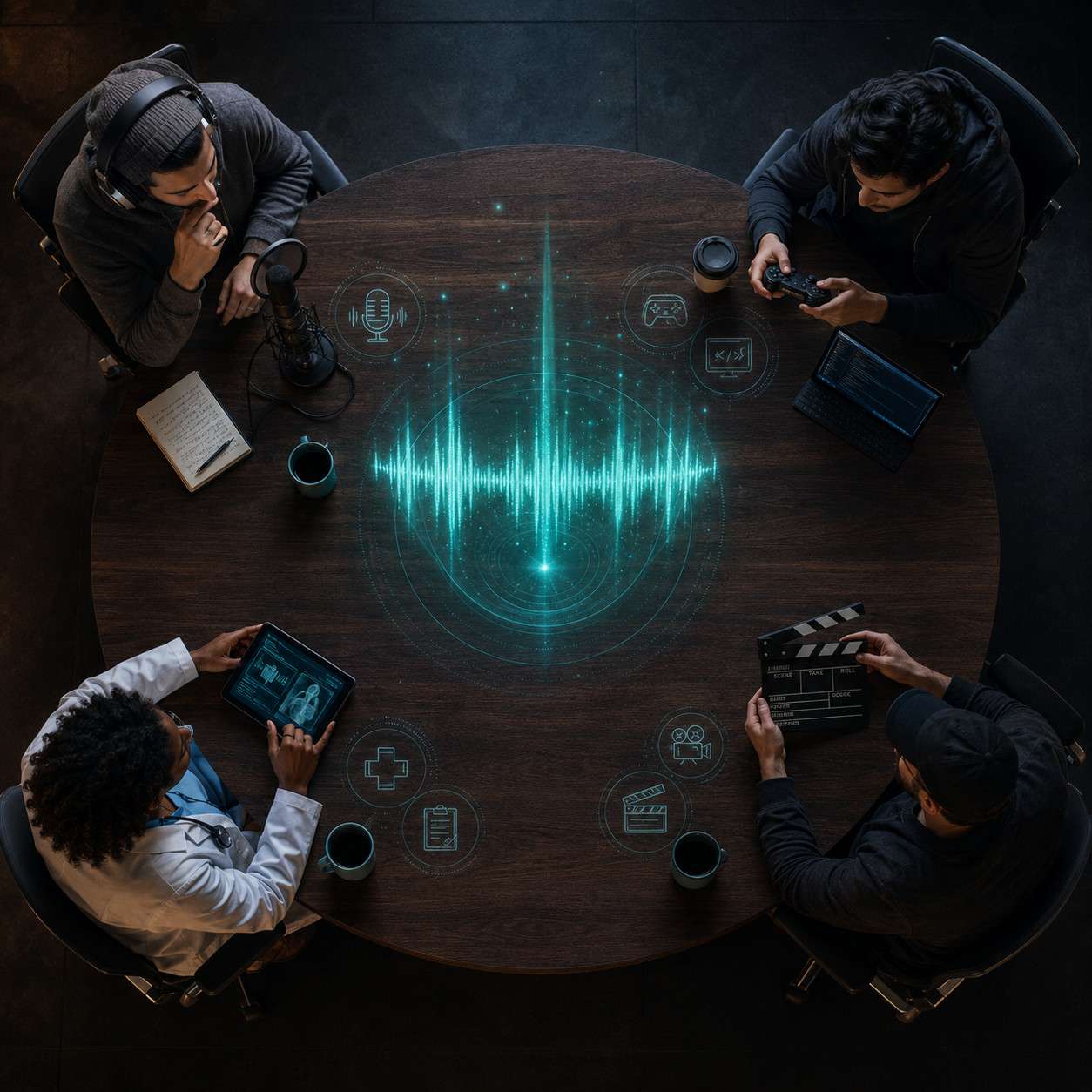
Media production, gaming, education, and customer service are the four industries with the heaviest adoption of ElevenLabs voice technology. Content creators and podcasters represent a large and fast-growing user segment as well.
Industry breakdown:
- Media and entertainment: Dubbing, audiobook narration, podcast production
- Gaming: NPC dialogue, dynamic character voices, localization
- Education and e-learning: Course narration, accessibility features, multilingual content
- Customer service: AI phone agents, IVR systems, chatbot voices
- Accessibility: Screen readers, assistive technology for visually impaired users
- Marketing: Video ads, social media content, personalized audio messages
For content creators exploring AI website builders or no-code platforms, integrating ElevenLabs voice output into web experiences is becoming increasingly common through simple API calls.
Is ElevenLabs Voice ID Good for Podcasters and Content Creators?
ElevenLabs is one of the most popular AI voice tools among podcasters and content creators in 2026, and for good reason. It handles common creator needs well: intro/outro narration, translating episodes into other languages, generating voice content from scripts, and creating consistent character voices.
Where it shines for creators:
- Fast turnaround on voice generation from text
- High-quality output that doesn’t sound robotic
- Voice Library access to hundreds of community voices [1]
- Multi-language support for reaching global audiences
Where it falls short:
- Character limits on lower-tier plans can be restrictive for long-form content
- Cloned voices, while impressive, still occasionally miss subtle emotional nuances
- Real-time voice generation has latency that may not suit live applications
If you’re a podcaster considering ElevenLabs, start with the Starter plan to test Instant Voice Cloning with your own voice. Upgrade to Creator or Pro only after you’ve confirmed the output quality meets your standards. Also explore our guide to AI SEO tools to optimize the content you create alongside your audio.
Are There Any Limitations to ElevenLabs Voice Generation?
Yes. Despite being a leading platform, ElevenLabs has notable limitations that users should understand before committing.
- Character quotas: Each plan has monthly character limits. Heavy users (audiobook producers, large-scale customer service deployments) can burn through quotas quickly.
- Language quality variance: While 29+ languages are supported, English output is noticeably better than many other languages.
- Default voice expiration: Legacy default voices and their Voice IDs are scheduled to retire on December 31, 2026, which will break integrations that depend on those specific IDs.
- No offline mode: All processing happens in the cloud. There’s no on-premise option (unlike Resemble AI) [7].
- Voice ID fragmentation: Third-party platforms often create their own internal identifiers that don’t map to ElevenLabs Voice IDs, causing integration headaches [4].
- Emotional control: While improving, fine-grained control over emotion, emphasis, and pacing is still limited compared to manual voice acting.
- Consent verification gaps: Instant Voice Cloning has lighter verification than Professional Voice Cloning, which some critics argue leaves room for misuse.
For teams building complex web projects that integrate voice AI, our automation resources cover complementary tools and workflows.
Conclusion
ElevenLabs Voice ID has evolved from a simple technical identifier into something more significant: a framework for managing voice identity, consent, and rights in an era where synthetic speech is nearly indistinguishable from the real thing. Whether you’re a developer integrating voice into an application, a content creator producing multilingual podcasts, or a business deploying AI phone agents, understanding how Voice IDs work is now a practical necessity.
Your next steps:
- If you’re new to ElevenLabs: Sign up for the free tier, explore default voices, and test the API with a simple text-to-speech call.
- If you want to clone your voice: Start with Instant Voice Cloning on the Starter plan ($5/month) using 3-5 minutes of clean audio.
- If you’re building integrations: Always copy Voice IDs directly from ElevenLabs rather than relying on third-party platform identifiers.
- If you’re concerned about security: Implement multi-factor authentication across your organization and stop relying on voice-only verification.
- If you’re a voice actor: Explore the AILAS authenticated Voice ID system to protect your rights while participating in the AI voice marketplace [6].
The technology will keep advancing. The organizations and creators who understand Voice ID now, both its capabilities and its risks, will be best positioned to use it responsibly and effectively.
FAQ
What is an ElevenLabs Voice ID?
It’s a unique alphanumeric string (e.g., 21m00Tcm4TlvDq8ikWAM) that identifies a specific voice on the ElevenLabs platform, used in API calls and integrations to generate speech [1].
Can I use ElevenLabs for free? Yes. The free tier offers approximately 10,000 characters per month with default voices, but custom voice cloning requires a paid plan starting at $5/month.
How long does it take to clone a voice? Instant Voice Cloning takes minutes. Professional Voice Cloning, which requires 30+ minutes of audio and a verification step, can take several hours to process.
Will my Voice ID stop working? If you’re using default legacy voices, yes. Those Voice IDs are scheduled to expire on December 31, 2026. Custom cloned voices are not affected by this timeline.
Is it legal to clone someone else’s voice? Only with their explicit consent. ElevenLabs requires users to confirm they have rights to any voice they upload, and Professional Voice Cloning includes a verification process [9].
What is the AILAS partnership? AILAS is a collaboration that introduces authenticated IDs in the ElevenLabs Voice Library, confirming that a voice was consensually registered and authorized for AI use by its owner [6].
Can ElevenLabs voices be used commercially? Yes, on paid plans. However, voices from the Voice Library may have specific licensing restrictions set by their creators [1].
Why doesn’t my Voice ID work in a third-party tool? Many platforms (like Retell AI) use internal identifiers that differ from ElevenLabs Voice IDs. Always verify you’re using the actual ElevenLabs Voice ID, not a platform-specific alias [4].
How does ElevenLabs compare to Resemble AI? ElevenLabs is generally considered easier to use with higher out-of-the-box voice quality. Resemble AI offers advantages in real-time voice conversion and on-premise deployment [7].
What audio format should I use for voice cloning? WAV or FLAC are preferred for their lossless quality. MP3 works but may reduce clone fidelity, especially at low bitrates.
Is ElevenLabs safe to use? The platform implements consent verification, usage policies, and the AILAS authenticity system. However, as with any powerful technology, misuse is possible, and users should follow ethical guidelines.
Can I earn money from my cloned voice? Yes. The Voice Library marketplace allows you to publish Professional Voice Clones and earn rewards when other users generate speech with your voice [1].
Explore more ElevenLabs voice synthesis guides: ElevenLabs AI voice synthesis with cutting-edge cloning technology, how ElevenLabs is revolutionizing voice synthesis, and a comprehensive overview of ElevenLabs cutting-edge voice technology.
References
[1] Voice Library – https://elevenlabs.io/docs/eleven-creative/voices/voice-library [4] community.retellai – https://community.retellai.com/t/elevenlabs-voice-id/2491 [6] Ailas – https://elevenlabs.io/blog/ailas [7] Resemble Ai Vs Elevenlabs – https://www.resemble.ai/resemble-ai-vs-elevenlabs [9] Voice Verification – https://www.reddit.com/r/ElevenLabs/comments/1isq8zt/voice_verification/ [10] Elevenlabs Alternatives – https://www.ringly.io/blog/elevenlabs-alternatives