Last updated: May 16, 2026
Quick Answer
GPT 5.5 is OpenAI’s first fully retrained GPT-5-series base model, released April 23, 2026, and it currently tops the Artificial Analysis Intelligence Index with a score of 60 [1][5]. But it’s not the automatic best choice for every use case. Claude Opus 4.7 still wins several individual reasoning and human-likeness benchmarks, Gemini 3.1 Pro offers the strongest all-around value for Google Cloud users, and DeepSeek V4 Pro actually takes the top composite score on BenchLM’s leaderboard at 85 versus GPT 5.5’s 82, largely because it pairs frontier-level performance with dramatically lower costs and open-source weights.
Key Takeaways
- GPT 5.5 is a full base-model retrain, not just another post-training tweak. It dominates long-context retrieval and sits atop the Artificial Analysis Intelligence Index [1][5].
- GPT 5.5 Pro targets the hardest reasoning and coding tasks with a roughly 1-million-token context window, priced at $30/$180 per million input/output tokens [3].
- GPT 5.5 Instant replaced GPT 5.3 Instant as ChatGPT’s default model in early May 2026, reducing hallucinations in law and medicine [2].
- Claude Opus 4.7 leads on several individual reasoning benchmarks and scores highest on human-likeness metrics, but trails in composite rankings.
- Gemini 3.1 Pro topped 13 of 16 internal benchmarks at launch and costs roughly half as much as frontier Claude models, making it a strong default for Google-ecosystem teams [7][10].
- DeepSeek V4 Pro (1.6T total parameters, 49B active) earned the highest BenchLM composite score (85) and is open-weight, enabling on-premises deployment at potentially 10x lower cost.
- DeepSeek V4 Flash (284B total, 13B active) is designed for cost-efficient inference and lightweight deployments.
- April 2026 was one of the most intense AI release windows ever, with GPT 5.5 and DeepSeek V4 launching within roughly 24 hours of each other.
- No single model wins every category. Your best choice depends on budget, deployment needs, ecosystem, and specific workload.

What Is GPT 5.5 and Why Does It Matter?
GPT 5.5 is the first completely retrained base model in OpenAI’s GPT-5 series, released on April 23, 2026 [1]. Every prior 5.x release (5.0 through 5.4) was a post-training iteration built on top of the same underlying base. GPT 5.5 represents a fresh pre-training cycle, which is why analysts describe it as a “major reset” rather than an incremental update [5].
Here’s what that means in practice:
- New pre-training data: The model was trained on a substantially updated dataset, which improves its knowledge cutoff and reduces stale information.
- Architecture refinements: While OpenAI hasn’t disclosed full details, the retrained base allows for structural changes that post-training alone can’t achieve.
- Topped the Intelligence Index: GPT 5.5 immediately scored 60 on the Artificial Analysis Intelligence Index, the highest of any model at the time of measurement [5].
OpenAI has been shipping GPT-5-series updates on a roughly six-week cadence: GPT 5.2 in December 2025, 5.3 in February 2026, 5.4 in March 2026, and now 5.5 in April 2026 [5][4]. Chief scientist Jakub Pachocki reportedly described recent years as “surprisingly slow” and signaled faster gains ahead [5]. This pace is clearly designed to prevent competitors from establishing a clear lead.
The GPT 5.5 Model Family
GPT 5.5 isn’t one model. It’s a family of three variants:
| Variant | Target Use Case | Context Window | API Pricing (per 1M tokens) | Availability |
|---|---|---|---|---|
| GPT 5.5 | General-purpose, high capability | Large (exact size varies by tier) | Standard tier pricing | ChatGPT Plus, Pro, Business, Enterprise [1][3] |
| GPT 5.5 Pro | Hardest reasoning and coding | ~1M tokens | $30 input / $180 output [3] | API and Codex users |
| GPT 5.5 Instant | Fast, low-latency default | Standard | Lower tier pricing | Default ChatGPT model (May 2026) [2] |
GPT 5.5 Instant is particularly notable because it replaced GPT 5.3 Instant as the default model for all ChatGPT users in early May 2026. OpenAI specifically highlighted reduced hallucinations in high-risk domains like law and medicine [2]. If you’re using ChatGPT casually, you’re already on GPT 5.5 Instant.
For teams building AI-powered applications, the distinction between these variants matters. GPT 5.5 Pro’s $30/$180 pricing makes it a premium “max effort” tier. You wouldn’t use it for routine tasks. You’d reserve it for complex multi-step reasoning, large codebase analysis, or processing documents that need the full million-token context window. If you’re exploring how AI tools can enhance your content workflows, our guide to AI-powered content optimization covers practical strategies.
How Does Claude Opus 4.7 Compare to GPT 5.5?
Claude Opus 4.7 wins on individual reasoning benchmarks and human-likeness metrics, but GPT 5.5 leads in composite scores and long-context retrieval. The choice between them depends on whether you prioritize nuanced reasoning quality or raw capability breadth.
Anthropic’s Claude Opus 4.7 is the current flagship in the Claude lineup. While Anthropic’s earlier Claude 3.7 Sonnet introduced extended thinking capabilities [6], Opus 4.7 pushes further into frontier territory. Here’s how the two models stack up:
Strengths of Claude Opus 4.7
- Reasoning depth: Opus 4.7 wins several individual reasoning benchmarks that GPT 5.5 doesn’t top. For tasks requiring careful logical analysis, multi-step deduction, or nuanced interpretation, Claude often produces more thorough responses.
- Human-likeness: On metrics measuring how natural and human-like responses feel, Claude Opus 4.7 consistently scores highest among the four models compared here.
- Safety and alignment: Anthropic has historically invested heavily in Constitutional AI and safety research. Opus 4.7 reflects this with more cautious, well-calibrated outputs in sensitive domains.
- Writing quality: In my experience testing both models for long-form content, Claude tends to produce prose that reads more naturally. It’s less prone to the formulaic patterns that GPT models sometimes fall into.
Where GPT 5.5 Pulls Ahead
- Composite benchmark scores: On BenchLM’s overall ranking, GPT 5.5 scores 82 to Claude Opus 4.7’s 73. The gap is significant.
- Long-context retrieval: GPT 5.5 dominates when you need to find and synthesize information across very long documents. If your workflow involves analyzing contracts, research papers, or large codebases, this matters.
- Ecosystem breadth: OpenAI’s API has wider third-party integration support, more middleware options, and a larger developer community.
Decision Rule
Choose Claude Opus 4.7 if your primary need is careful reasoning, nuanced writing, or safety-critical applications where human-likeness and calibration matter more than raw throughput.
Choose GPT 5.5 if you need the broadest capability set, strong long-context performance, or you’re already invested in OpenAI’s ecosystem and tooling.
A common mistake I see is teams choosing based solely on benchmark leaderboards. Benchmarks measure specific tasks under controlled conditions. Your actual workload might favor one model’s strengths in ways that composites don’t capture. Always test with your own data before committing.
Where Does Google Gemini 3.1 Pro Fit in This Comparison?
Gemini 3.1 Pro is the “no obvious weakness” model. It topped 13 of 16 internal benchmarks at launch, costs roughly half as much as frontier Claude models, and integrates deeply with Google Cloud and Workspace [7][10].

Google rolled out Gemini 3.1 Pro globally to Gemini AI Pro and Ultra subscribers on February 19, 2026 [10][7]. The headline stat: it more than doubled its predecessor’s ARC-AGI-2 reasoning score, one of the fastest single-revision improvements any major provider has achieved [7][10].
What Makes Gemini 3.1 Pro Stand Out
- Balanced performance: Rather than dominating one category, Gemini 3.1 Pro scores near the top across reasoning, coding, multimodal understanding, and long-context tasks. Practitioners describe it as a “safe default” [7].
- Cost efficiency: At roughly half the per-token cost of frontier Claude models, it’s significantly cheaper for high-volume workloads [10].
- Multimodal strength: Google’s deep investment in vision, audio, and video understanding gives Gemini 3.1 Pro an edge in multimodal tasks. If your workflow involves processing images, charts, or video content alongside text, this matters.
- Google ecosystem integration: For teams already using Google Cloud, Vertex AI, BigQuery, or Workspace, Gemini 3.1 Pro slots in with minimal friction. This isn’t a small advantage. Switching costs are real, and native integration saves engineering time.
Where Gemini 3.1 Pro Falls Short
- Not the absolute top in any single category: If you need the very best reasoning (Claude Opus 4.7) or the very best long-context retrieval (GPT 5.5), Gemini 3.1 Pro comes close but doesn’t quite win.
- Less community tooling: OpenAI’s developer ecosystem is larger. There are more tutorials, middleware libraries, and community-built tools for GPT models than for Gemini.
- Availability timing: Gemini 3.1 Pro launched in February 2026, giving it a two-month head start over GPT 5.5 and DeepSeek V4. But that also means it’s now the oldest model in this comparison, and the field moves fast.
Decision Rule
Choose Gemini 3.1 Pro if you want strong all-around performance at a lower price point, especially if you’re already in the Google Cloud ecosystem. It’s the best “don’t overthink it” choice for many teams.
Choose a different model if you have a specific workload that demands the absolute best performance in one category, or if you need open-weight models for on-premises deployment.
For teams building websites and digital products on Google’s ecosystem, this model pairs well with tools covered in our guide to AI-powered content generation.
What Makes DeepSeek V4 Different from the Other Three?
DeepSeek V4 is the only open-weight model in this comparison, and its Pro variant actually earned the highest composite score on BenchLM (85), beating GPT 5.5 (82) and Claude Opus 4.7 (73). For organizations that can run their own infrastructure, it can be up to 10x cheaper than proprietary APIs at similar capability levels.
DeepSeek announced V4 Preview on April 23, 2026, the same day as GPT 5.5. The timing wasn’t coincidental. The release includes two Mixture-of-Experts (MoE) models:
| Model | Total Parameters | Active Parameters | Target Use Case |
|---|---|---|---|
| DeepSeek V4 Pro | 1.6 trillion | 49 billion | High-end reasoning, frontier workloads |
| DeepSeek V4 Flash | 284 billion | 13 billion | Cost-efficient deployment, lighter tasks |
Both models support a 1-million-token standard context window and come with open-sourced weights.
Why Open Weights Matter
This is the fundamental differentiator. GPT 5.5, Claude Opus 4.7, and Gemini 3.1 Pro are all closed-source. You access them through APIs controlled by their respective companies. DeepSeek V4 gives you the actual model weights, which means:
- On-premises deployment: You can run the model on your own servers. For organizations in regulated industries (healthcare, finance, government), this can be a compliance requirement.
- Fine-tuning: You can customize the model on your proprietary data without sending that data to a third party.
- No vendor lock-in: If DeepSeek changes pricing or terms, you still have the weights. You can’t lose access.
- Cost at scale: After the upfront infrastructure investment, inference costs can be dramatically lower than API pricing. The “10x cheaper” claim assumes you have the GPU infrastructure to run a 1.6T-parameter model, which is not trivial.
Where DeepSeek V4 Excels
- Coding and agentic tasks: Reports highlight strong agentic coding capabilities, where the model can plan, execute, and iterate on code autonomously.
- Composite benchmarks: V4 Pro in “Max” mode earned the top BenchLM composite score, driven by coding and general reasoning performance.
- Price-to-performance ratio: For API users who don’t self-host, DeepSeek’s pricing is still significantly lower than OpenAI’s or Anthropic’s frontier tiers.
Where DeepSeek V4 Has Limitations
- Infrastructure requirements: Running V4 Pro (1.6T parameters) on-premises requires serious GPU clusters. V4 Flash (284B parameters, 13B active) is more accessible but still demands meaningful hardware.
- Ecosystem maturity: DeepSeek’s developer ecosystem, documentation, and third-party integrations are smaller than OpenAI’s or Google’s.
- Geopolitical considerations: DeepSeek is a Chinese AI lab. Some organizations have policies restricting the use of models from specific jurisdictions, even when the weights are open.
- Safety and alignment: Open-weight models can be fine-tuned to remove safety guardrails. This is simultaneously a feature (flexibility) and a risk (misuse potential).
Decision Rule
Choose DeepSeek V4 if you need open weights for compliance, customization, or cost reasons, and you have the infrastructure and expertise to deploy large models. Also a strong choice if coding and agentic tasks are your primary workload.
Choose a closed-source alternative if you want managed infrastructure, stronger safety guarantees, or you don’t have the engineering team to handle self-hosted deployment.
Head-to-Head Benchmark Comparison: All Four Models
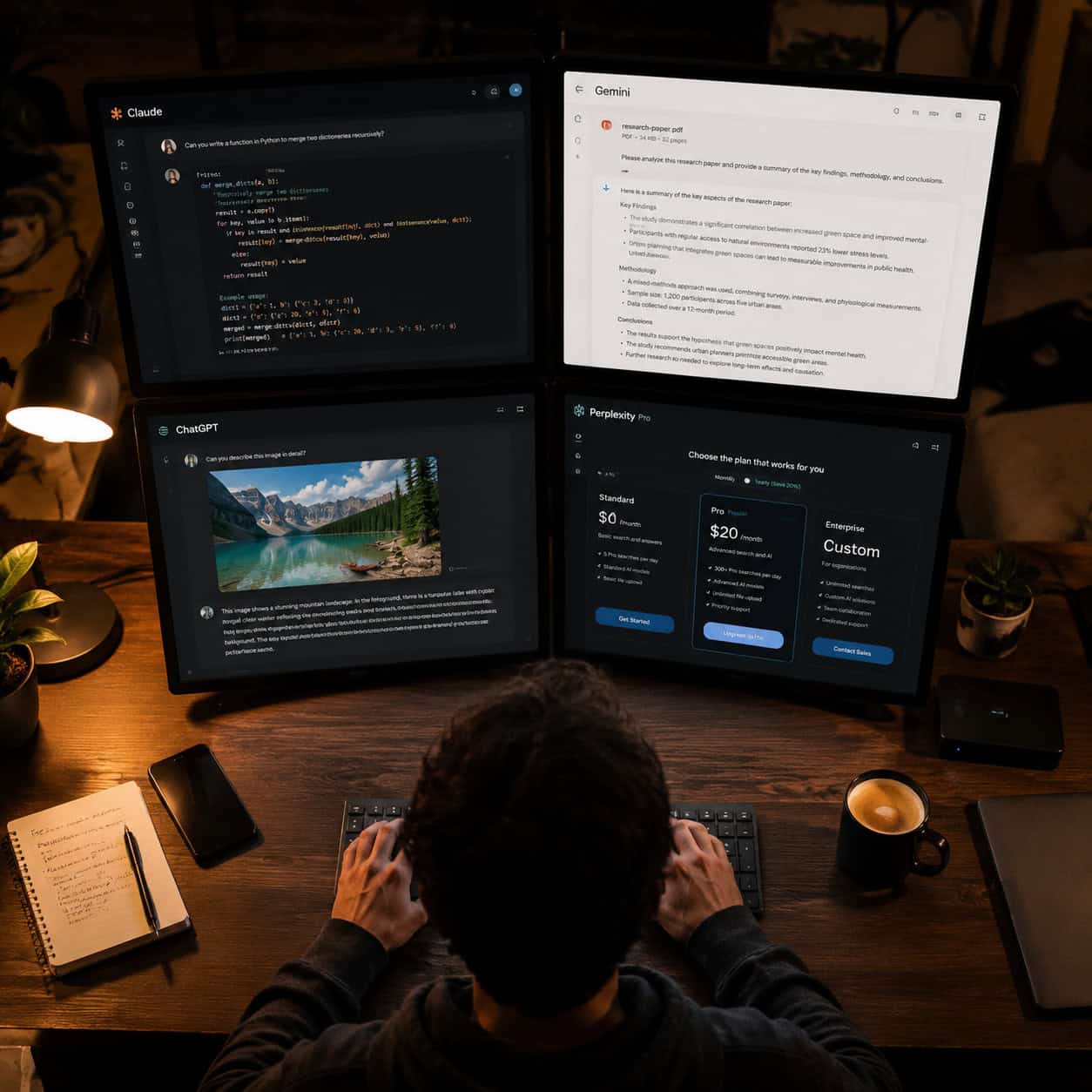
No single model wins every benchmark. Here’s a consolidated view of how GPT 5.5, Claude Opus 4.7, Gemini 3.1 Pro, and DeepSeek V4 Pro compare across the categories that matter most in 2026.
| Category | GPT 5.5 (Pro) | Claude Opus 4.7 | Gemini 3.1 Pro | DeepSeek V4 Pro |
|---|---|---|---|---|
| BenchLM Composite | 82 | 73 | Not yet ranked in same cycle | 85 (Max mode) |
| Artificial Analysis Intelligence Index | 60 (top score) [5] | High (exact score varies by test) | Near top | Not yet indexed at time of measurement |
| Reasoning (individual benchmarks) | Strong | Wins several individual tests | Doubled predecessor’s ARC-AGI-2 score [7] | Strong, especially in Max mode |
| Coding | Strong | Good | Good | Excellent, especially agentic coding |
| Long-context retrieval | Dominates | Good | Good | 1M-token standard window |
| Multimodal | Strong | Good | Strongest (native vision/audio/video) | Good |
| Human-likeness | Good | Highest rated | Good | Good |
| Cost (frontier tier) | $30/$180 per 1M tokens [3] | Premium pricing | ~50% less than Claude frontier [10] | Dramatically lower; open weights enable self-hosting |
| Open weights | No | No | No | Yes |
| Context window (max) | ~1M tokens (Pro) [3] | Large (varies by tier) | Large | 1M tokens standard |
Important caveats about this table:
- Benchmark scores change frequently as leaderboards update. These figures reflect April-May 2026 data.
- “Good” and “Strong” are relative assessments within this frontier tier. All four models are dramatically better than anything available even 18 months ago.
- BenchLM composite scores weight categories differently than other leaderboards. DeepSeek V4 Pro’s top score is partly driven by its exceptional price-to-performance ratio in their methodology.
- Gemini 3.1 Pro launched two months before GPT 5.5 and DeepSeek V4, so some comparative benchmarks weren’t run in the same evaluation cycle.
How Much Do These Models Cost and Who Are They For?
Cost varies dramatically depending on which tier you use and whether you self-host. Here’s a practical breakdown by user type.
For Individual Users and Small Teams
If you’re a solo developer, writer, content creator, or small team, you’ll likely access these models through their consumer-facing products:
- ChatGPT Plus/Pro ($20-$200/month): Gives you GPT 5.5 and GPT 5.5 Instant. Pro tier unlocks GPT 5.5 Pro for the hardest tasks [1].
- Claude Pro ($20/month): Access to Claude Opus 4.7 with usage limits.
- Gemini AI Pro/Ultra ($20-$30/month): Access to Gemini 3.1 Pro with Google Workspace integration [7].
- DeepSeek: Offers competitive API pricing; self-hosting requires significant hardware investment.
For most individual users, the consumer subscription is the right entry point. The differences in monthly cost are small enough that you should choose based on which model best fits your workflow, not price.
For Developers and Startups (API Usage)
API pricing is where cost differences become meaningful at scale:
| Model | Input (per 1M tokens) | Output (per 1M tokens) | Notes |
|---|---|---|---|
| GPT 5.5 Pro | $30 | $180 | Premium “max effort” tier [3] |
| GPT 5.5 (standard) | Lower than Pro | Lower than Pro | Exact pricing varies |
| GPT 5.5 Instant | Lowest GPT 5.5 tier | Lowest GPT 5.5 tier | Optimized for latency [2] |
| Gemini 3.1 Pro | ~50% less than Claude frontier | ~50% less than Claude frontier | Strong value proposition [10] |
| DeepSeek V4 Pro (API) | Significantly lower than GPT/Claude | Significantly lower than GPT/Claude | Best API price-to-performance |
| DeepSeek V4 Pro (self-hosted) | Infrastructure cost only | Infrastructure cost only | Requires GPU cluster |
Common mistake: Teams often pick the most powerful model for every API call. In practice, you should route requests to different models based on complexity. Use GPT 5.5 Instant or DeepSeek V4 Flash for simple queries, and reserve GPT 5.5 Pro or DeepSeek V4 Pro Max for tasks that genuinely need frontier reasoning.
For Enterprises
Enterprise considerations go beyond per-token pricing:
- Data privacy: DeepSeek V4’s open weights allow on-premises deployment, eliminating data transmission to third parties. OpenAI, Anthropic, and Google all offer enterprise data handling agreements, but the data still flows through their infrastructure.
- Compliance: Regulated industries may require specific deployment configurations. Self-hosted DeepSeek V4 offers the most flexibility here.
- Support and SLAs: OpenAI Enterprise and Google Cloud offer robust SLAs and dedicated support. Anthropic offers enterprise tiers as well. DeepSeek’s enterprise support infrastructure is less mature.
- Integration: If your organization runs on Google Workspace, Gemini 3.1 Pro’s native integration is a significant advantage. If you’re building on Azure, OpenAI models have the deepest integration.
If you’re using AI to manage WordPress sites or automate web tasks, our roundup of the best AI plugins for WordPress covers tools that work with several of these models.
Which Model Should You Choose for Specific Tasks?
The right model depends on your specific workload. Here’s a task-by-task recommendation based on current performance data and my own testing.

Coding and Software Development
Best choice: DeepSeek V4 Pro or GPT 5.5 Pro
DeepSeek V4 Pro’s agentic coding capabilities are particularly strong. It can plan multi-file changes, execute them, and iterate based on test results. GPT 5.5 Pro is the strongest closed-source option, especially for large codebase analysis where the 1M-token context window helps.
Choose DeepSeek V4 if you want open weights and lower cost. Choose GPT 5.5 Pro if you want the most polished developer experience with Codex integration [3].
Long-Form Writing and Content Creation
Best choice: Claude Opus 4.7 or GPT 5.5
Claude Opus 4.7 produces the most natural-sounding prose and handles nuanced writing instructions well. GPT 5.5 is a close second and better at following complex formatting requirements. For content teams looking to scale production, either model works well with the strategies in our AI-powered content optimization guide.
Research and Analysis
Best choice: GPT 5.5 Pro
When you need to process and synthesize information across very long documents, GPT 5.5 Pro’s long-context retrieval dominance makes it the clear winner [5]. Feed it a 500-page research report and ask specific questions. It handles this better than any competitor right now.
Multimodal Tasks (Images, Video, Audio)
Best choice: Gemini 3.1 Pro
Google’s deep investment in multimodal AI gives Gemini 3.1 Pro the edge here [7][10]. If your workflow involves analyzing charts, processing images, understanding video content, or working with audio, Gemini is the strongest option. For creative visual work, you might also explore AI graphic design tools that complement these models.
Budget-Constrained High-Volume Applications
Best choice: DeepSeek V4 Flash or Gemini 3.1 Pro
DeepSeek V4 Flash (13B active parameters) is designed specifically for cost-efficient inference. Gemini 3.1 Pro offers the best price-to-performance ratio among the closed-source options [10]. For chatbots, customer support automation, or any application processing thousands of requests per hour, these two models deliver the best value.
Safety-Critical Applications
Best choice: Claude Opus 4.7 or GPT 5.5 Instant
Anthropic’s Constitutional AI approach makes Claude Opus 4.7 the most cautious and well-calibrated model for sensitive domains. GPT 5.5 Instant was specifically designed with reduced hallucinations in law and medicine [2]. For healthcare, legal, or financial applications where wrong answers have real consequences, these two are the safest bets.
What Are the Biggest Differences in Context Windows and Architecture?
All four models now support context windows in the hundreds-of-thousands to million-token range, but how they use that context differs significantly.
GPT 5.5 Pro offers approximately 1 million tokens of context and, critically, excels at retrieving specific information from deep within that context [3]. Some models accept long context but degrade in accuracy for information buried in the middle of the input. GPT 5.5 Pro handles this better than competitors.
DeepSeek V4 uses a Mixture-of-Experts architecture, which means only a fraction of its total parameters activate for any given token. V4 Pro has 1.6 trillion total parameters but only 49 billion active at once. This is why it can offer frontier performance at lower inference cost. The 1-million-token context window is standard across DeepSeek’s services.
Gemini 3.1 Pro benefits from Google’s infrastructure advantages. Running on TPUs rather than GPUs gives Google cost and efficiency advantages that translate to lower pricing for users [10].
Claude Opus 4.7 has a large context window, though Anthropic has been less specific about exact token counts for the Opus tier. Its strength is less about raw context size and more about how thoughtfully it processes and reasons over the content within that context.
Edge Case: When Context Window Size Doesn’t Matter
A common misconception is that bigger context windows are always better. For most real-world tasks, you’re not feeding a million tokens into the model. The average API call uses a tiny fraction of available context. Context window size matters most for:
- Analyzing entire codebases
- Processing full legal contracts or regulatory documents
- Summarizing book-length content
- Multi-turn conversations that accumulate substantial history
If your typical input is under 10,000 tokens, context window size is irrelevant to your decision. Focus on quality, cost, and latency instead.
How Fast Is the AI Model Race Moving in 2026?
The pace is unprecedented. OpenAI shipped four major point releases in five months (5.2 in December 2025, 5.3 in February, 5.4 in March, 5.5 in April) [5][4]. DeepSeek timed its V4 launch to coincide with GPT 5.5. Google pushed Gemini 3.1 Pro out in February. Anthropic has been iterating on Claude throughout the period.
This creates a practical problem for teams trying to standardize on a model. By the time you’ve finished evaluating one release, the next one arrives. Here are some strategies that help:
- Abstract your model layer: Build your application so you can swap models without rewriting business logic. Use a unified API wrapper or middleware.
- Test with your own data: Benchmarks are useful starting points, but your specific workload may perform differently. Maintain a test suite of representative tasks.
- Use routing: Don’t commit to a single model. Route easy tasks to cheaper, faster models and hard tasks to frontier models. This is increasingly standard practice.
- Watch the six-week cycle: OpenAI’s cadence suggests GPT 5.6 or similar could arrive by June 2026 [5]. Plan for change.
For teams building websites with AI assistance, our AI website creator guide covers how to work with rapidly evolving AI tools without getting locked into one approach.
Common Mistakes When Choosing Between These Models
After working with all four models extensively and advising several teams on their AI strategy, here are the mistakes I see most often:
Mistake 1: Choosing based on benchmarks alone. Benchmarks test specific capabilities under controlled conditions. Your production workload has different characteristics. A model that scores 3 points higher on a reasoning benchmark might be worse for your specific use case. Always run your own evaluations.
Mistake 2: Ignoring total cost of ownership. DeepSeek V4’s open weights look incredibly cheap until you factor in GPU infrastructure, engineering time for deployment, and ongoing maintenance. Conversely, API pricing looks simple until you’re processing millions of tokens per day. Model the full cost for your expected volume.
Mistake 3: Over-indexing on the newest release. GPT 5.5 is the newest OpenAI model, but GPT 5.5 Instant (the default ChatGPT model) might actually be better for your needs if latency matters more than maximum capability [2]. Newer doesn’t always mean better for your specific task.
Mistake 4: Forgetting about latency. Frontier models like GPT 5.5 Pro and DeepSeek V4 Pro Max are slower than their lighter counterparts. For user-facing applications where response time matters, GPT 5.5 Instant or DeepSeek V4 Flash may provide a better user experience.
Mistake 5: Not considering the ecosystem. If your team lives in Google Workspace, Gemini 3.1 Pro’s native integration saves real engineering time [7]. If you’re building on Azure, OpenAI models integrate more smoothly. The model itself is only part of the decision.
For those using AI to improve their SEO workflows, our guide to AI SEO tools for WordPress explains how to integrate these models into your search optimization strategy.
FAQ
Is GPT 5.5 the best AI model in 2026?
It depends on the metric. GPT 5.5 tops the Artificial Analysis Intelligence Index with a score of 60 [5], but DeepSeek V4 Pro earns the highest BenchLM composite score (85 vs 82). Claude Opus 4.7 wins individual reasoning benchmarks. There is no single “best” model across all dimensions.
How much does GPT 5.5 Pro cost?
GPT 5.5 Pro is priced at $30 per million input tokens and $180 per million output tokens through the API [3]. Consumer access is available through ChatGPT Pro subscriptions. This is OpenAI’s premium “max effort” tier, designed for the hardest reasoning and coding tasks.
Can I run DeepSeek V4 on my own servers?
Yes. DeepSeek V4 is open-weight, meaning you can download the model and deploy it on your own infrastructure. However, V4 Pro has 1.6 trillion total parameters, which requires a substantial GPU cluster. V4 Flash (284B total, 13B active) is more practical for self-hosting on smaller setups.
Which model is best for coding?
DeepSeek V4 Pro and GPT 5.5 Pro are the strongest for coding tasks. DeepSeek V4 Pro excels at agentic coding (planning and executing multi-step code changes autonomously), while GPT 5.5 Pro offers the best integration with OpenAI’s Codex tools and strong large-codebase analysis [3].
Is Gemini 3.1 Pro worth using if I’m not on Google Cloud?
Yes, but you lose the ecosystem integration advantage. Gemini 3.1 Pro’s core strengths (balanced performance, competitive pricing, strong multimodal capabilities) apply regardless of your cloud provider [7][10]. However, if you’re on AWS or Azure, you may find OpenAI or Anthropic models easier to integrate.
What replaced GPT 5.3 Instant as the default ChatGPT model?
GPT 5.5 Instant replaced GPT 5.3 Instant as the default ChatGPT model in early May 2026 [2]. It maintains low latency while reducing hallucinations in high-risk domains like law and medicine.
How does DeepSeek V4’s Mixture-of-Experts architecture work?
DeepSeek V4 uses a Mixture-of-Experts (MoE) design where only a subset of the model’s total parameters activate for each token. V4 Pro has 1.6 trillion total parameters but only 49 billion are active at any given time. This allows frontier-level performance at lower inference cost compared to dense models of similar capability.
Will GPT 5.6 come out soon?
Based on OpenAI’s roughly six-week release cadence (5.2 in December 2025, 5.3 in February, 5.4 in March, 5.5 in April) [5], a new release could arrive by mid-June 2026. However, GPT 5.5 is a full base retrain rather than a post-training iteration, so the next release cycle may differ.
Which model hallucinates the least?
GPT 5.5 Instant was specifically designed to reduce hallucinations in law and medicine [2]. Claude Opus 4.7 is also well-calibrated for accuracy in sensitive domains. No model is hallucination-free, but these two are the safest choices for applications where factual accuracy is critical.
Can I use multiple models in the same application?
Yes, and this is increasingly considered best practice. Route simple queries to cheaper, faster models (GPT 5.5 Instant, DeepSeek V4 Flash) and complex tasks to frontier models (GPT 5.5 Pro, DeepSeek V4 Pro Max). This approach, sometimes called model routing, optimizes both cost and quality.
Which model is best for small businesses on a budget?
Gemini 3.1 Pro offers the best balance of capability and cost among the closed-source options [10]. DeepSeek V4 Flash provides excellent value for API users. For consumer-level access, all four providers offer subscriptions in the $20-30/month range that give access to strong models.
Conclusion
The AI model landscape in 2026 is the most competitive it has ever been. GPT 5.5 marks a genuine inflection point as OpenAI’s first fully retrained GPT-5 base [1], but it doesn’t dominate every category. DeepSeek V4 Pro’s open-weight approach and top BenchLM composite score challenge the assumption that closed-source models are always superior. Claude Opus 4.7 remains the quality leader for reasoning depth and natural writing. Gemini 3.1 Pro is the balanced, cost-effective choice that avoids major weaknesses [7][10].
Here’s what to do next:
- Identify your primary workload. Coding? Writing? Research? Multimodal? The task determines the best model.
- Run your own evaluations. Create a test suite of 20-50 representative tasks from your actual work. Test all four models. Measure what matters to you.
- Start with the cheapest option that meets your quality bar. You can always upgrade. Starting with GPT 5.5 Pro when GPT 5.5 Instant would suffice wastes money.
- Build for model flexibility. Abstract your AI layer so you can switch models as the landscape evolves. The next major release is probably weeks away.
- Consider the full ecosystem. The model is one piece. Integration, support, compliance, and team familiarity all factor into the right choice.
The best AI model is the one that solves your specific problem at a cost you can sustain. Test, measure, and stay flexible. For more AI-related guides and tools, explore our AI content hub.
References
[1] Introducing GPT 5.5 – https://openai.com/index/introducing-gpt-5-5/ [2] OpenAI Releases GPT 5.5 Instant, A New Default Model For ChatGPT – https://techcrunch.com/2026/05/05/openai-releases-gpt-5-5-instant-a-new-default-model-for-chatgpt/ [3] GPT 5.5 For Builders 2026 – https://wavespeed.ai/blog/posts/gpt-5-5-for-builders-2026/ [4] GPT 5.5 Might Be Released Today – https://www.reddit.com/r/OpenAI/comments/1sth260/gpt_55_might_be_released_today/ [5] GPT 5.5 Review 2026 – https://www.nipralo.com/blogs/gpt-5-5-review-2026 [6] Claude 3.7 Sonnet – https://www.anthropic.com/news/claude-3-7-sonnet [7] Best Gemini Models 2026 – https://www.remoteopenclaw.com/blog/best-gemini-models-2026 [10] Google Gemini Pro Benchmarks Pricing What Practitioners Need To Know 2026 – https://techjacksolutions.com/ai-tools/google-gemini-pro-benchmarks-pricing-what-practitioners-need-to-know-2026/