Last updated: May 22, 2026
Quick Answer
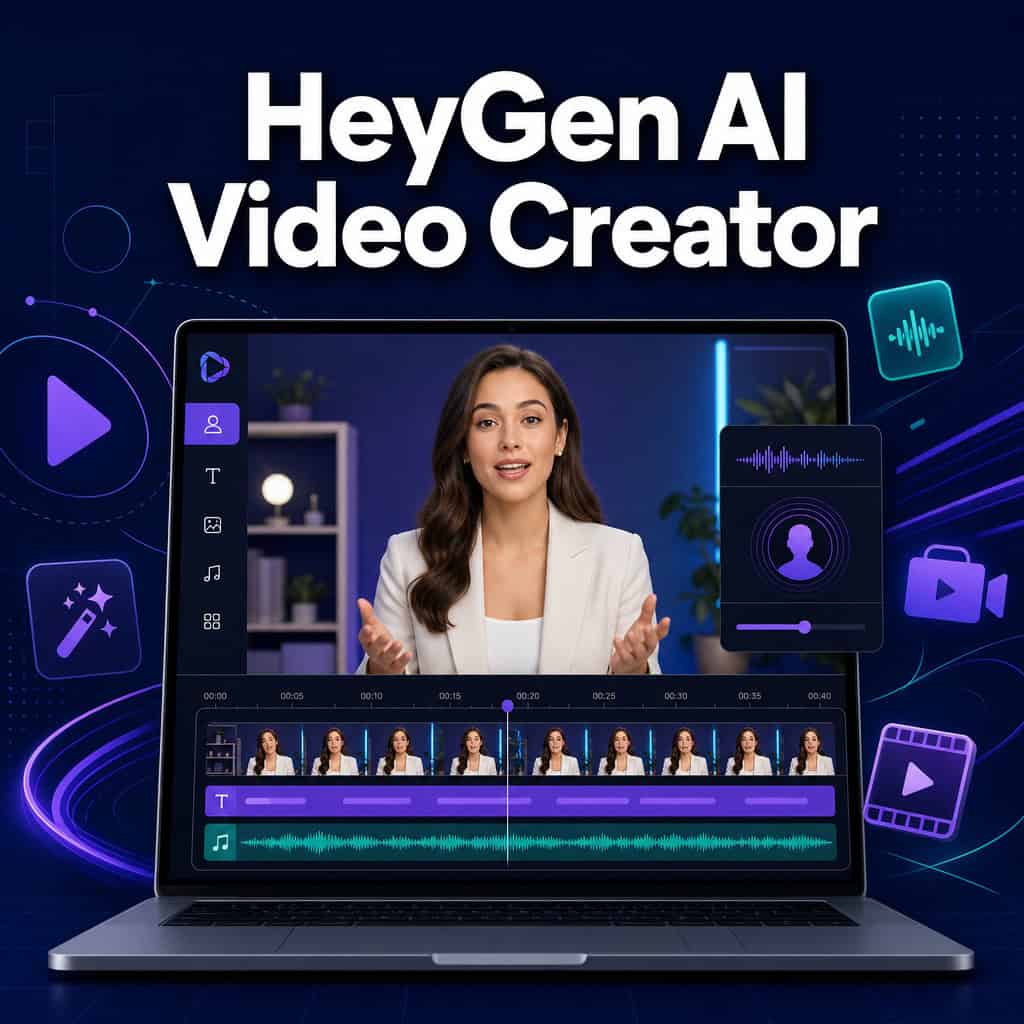
HeyGen is an AI video creator that turns text scripts into professional videos using realistic AI avatars and voiceovers, no camera or editing skills required. It supports 175+ languages, offers both preset and custom avatars, and is used primarily for marketing, training, and business communication. Plans start at around $24/month, with a free tier available for testing.
Key Takeaways
- HeyGen generates videos from text using AI avatars that lip-sync to natural-sounding voiceovers in over 175 languages.
- You can create a personal AI avatar from a 15-second webcam recording as of January 2026 [1].
- Pricing ranges from a free tier (with watermark) to Enterprise plans; Business plans unlock interactive video and advanced features.
- The March 2026 update added Brand Systems, interactive video with branching paths, 4K upscaling, and 100+ visual styles [1].
- Developers can now access HeyGen’s API on a pay-as-you-go basis starting at $5 [1].
- HeyGen is best suited for marketing videos, training content, sales outreach, and multilingual localization.
- It’s beginner-friendly but has limitations around complex animations, long-form content, and avatar realism in certain edge cases.
- Free alternatives exist (Canva AI, InVideo) but lack HeyGen’s avatar depth and multilingual capabilities.
- Sacra estimated HeyGen reached roughly $95 million ARR by September 2025, signaling strong market traction.

What Is HeyGen and How Does It Actually Work?
HeyGen is a browser-based AI video platform that converts written scripts into finished videos featuring AI-generated avatars. You don’t need a camera, microphone, or video editing software.
Here’s the basic workflow:
- Write or paste a script. You can type it manually or use HeyGen’s built-in AI script assistant.
- Choose an avatar. Pick from 100+ stock avatars or create your own from a webcam recording.
- Select a voice and language. HeyGen matches lip movements to the chosen language automatically.
- Customize the scene. Add backgrounds, text overlays, brand elements, and music.
- Generate and export. HeyGen renders the video, typically in minutes.
The January 2026 update introduced Video Agent 2.0, which acts more like a creative director than a simple generator. It shows you a full blueprint of avatar placement, visuals, and scenes before rendering, and you can make conversational edits like “make scene 3 shorter” [1]. This is a meaningful shift from the older black-box approach where you’d submit a script and hope for the best.
For teams already using AI-powered content generation tools, HeyGen fits naturally into the content pipeline as the video layer.
How Much Does HeyGen Cost Compared to Other AI Video Tools?
HeyGen offers a free tier plus three paid plans. Here’s how they compare to major competitors as of 2026:
| Feature | HeyGen Free | HeyGen Creator (~$24/mo) | HeyGen Business (~$108/mo) | Synthesia (Starter ~$22/mo) | Colossyan (~$28/mo) |
|---|---|---|---|---|---|
| Video credits/month | 3 videos (watermarked) | ~15 min | ~30 min | 10 min | 5 min |
| Custom avatar | Limited | Yes | Yes | Yes (paid add-on) | Yes |
| Languages | 175+ | 175+ | 175+ | 140+ | 70+ |
| Interactive video | No | No | Yes | No | No |
| Brand Kit | No | Basic | Full Brand Systems | Basic | No |
| API access | No | No | Yes | Enterprise only | No |
HeyGen’s pricing sits in the mid-range for AI video tools. The Creator plan works for solopreneurs and small teams. The Business plan is where you unlock interactive video, SCORM export, and the full Brand Systems feature introduced in March 2026 [1].
For developers, HeyGen now offers pay-as-you-go API access with top-ups starting at just $5, removing the old requirement for a full subscription [1]. This makes it accessible for testing integrations without committing to a monthly plan.
Choose HeyGen if you need multilingual video at scale or interactive training content. Choose Synthesia if you want a slightly lower entry price and don’t need branching video paths.
Can HeyGen Create Videos in Multiple Languages?
Yes, and this is one of HeyGen’s strongest features. The platform supports over 175 languages and dialects, with AI-powered lip-sync that matches mouth movements to the target language.
You can:
- Translate existing videos into new languages while keeping the same avatar
- Create new videos directly in any supported language
- Clone your voice in another language so it still sounds like you
This makes HeyGen particularly useful for global marketing teams and companies producing training materials across regions. I’ve seen teams use it to localize a single product demo into 12 languages in an afternoon, a task that would take weeks with traditional dubbing.
If you’re building a multilingual web presence, pairing HeyGen videos with a well-optimized site can boost engagement significantly. Our guide on AI-powered content optimization covers the broader strategy.
Is HeyGen Good for YouTube or Marketing Videos?
HeyGen works well for short-form marketing videos, product explainers, social media ads, and personalized outreach. It’s less ideal for long-form YouTube content where viewers expect natural human presence and dynamic camera work.
Where HeyGen excels in marketing:
- Product demos and feature walkthroughs
- Personalized sales videos at scale (using variables to swap names/companies)
- Social media clips for LinkedIn, Instagram, and TikTok
- Email marketing videos embedded in campaigns
- Landing page explainer videos
Where it falls short for YouTube:
- Long-form content (10+ minutes) can feel repetitive with a static avatar
- Viewers on YouTube often prefer authentic human creators
- Limited B-roll integration and dynamic editing
The March 2026 update added 100+ curated visual styles that control typography, color, motion pacing, and transitions [1]. This means the same script and avatar can look completely different across campaigns, which is genuinely useful for marketing teams running multi-brand content.
For teams already auto-sharing content to social media, HeyGen videos slot directly into that distribution workflow.

What Kinds of Videos Can I Make with HeyGen?
HeyGen supports a wide range of video types, though some work better than others.
Best results:
- Corporate training and onboarding videos
- Product explainers and tutorials
- Sales prospecting videos (personalized at scale)
- Internal communications and company updates
- Multilingual marketing campaigns
- Interactive compliance training (with branching paths on Business plan)
Decent results:
- Social media content and ads
- Customer testimonials (using custom avatars)
- Event invitations and announcements
Not recommended:
- Narrative storytelling or cinematic content
- Live-action style videos requiring physical environments
- Content requiring complex multi-person interactions
The interactive video feature from March 2026 deserves special mention. It adds in-video quizzes, branching paths, and CTA buttons with SCORM export [1]. Training teams can build “choose-your-own-adventure” compliance modules where a single video branches into multiple paths based on viewer responses.
Does HeyGen Work for Business Presentations?
Yes, HeyGen is a strong fit for business presentations, especially when you need to deliver the same message across teams, time zones, or languages without scheduling a live meeting.
Common business use cases include:
- Quarterly updates delivered by a CEO’s digital twin
- Product launches with consistent messaging across regions
- Client proposals with personalized avatar introductions
- Training modules with interactive elements
The March 2026 Brand Systems feature lets you paste a company URL, and HeyGen automatically extracts your logo, typography, and color palette [1]. This brand kit then applies across all templates and projects, so every video stays on-brand without manual configuration.
For enterprise teams, the same update added granular admin controls over workspace access, download permissions, public publishing, and feature-level restrictions like custom avatar creation [1]. This addresses real compliance and brand safety concerns that large organizations have with AI-generated content.
If you’re building professional presentations alongside your videos, our Canva design capabilities guide covers complementary tools for static assets.
Can I Use My Own Avatar or Just Preset Ones?
You can use both. HeyGen offers 100+ preset avatars, but the real power is in creating your own.
As of January 2026, HeyGen rebuilt its avatar creation flow. You can now create a usable personal avatar in about 15 seconds from a single webcam recording [1]. The system captures your appearance, voice, motion style, and consent verification in one pass. The older process took several minutes and had high drop-off rates.
Avatar options:
- Stock avatars: 100+ diverse options, ready to use immediately
- Instant avatar: Created from a short webcam clip, good enough for quick projects
- Studio avatar: Higher quality, requires a longer recording session
- Photo avatar: Generate a talking head from a still image
You can improve your instant avatar later by adding more footage, so you’re not locked into the quality of your first recording.
HeyGen’s CEO has stated that the platform uses consent verification, dynamic verbal passcodes, and human review to prevent unauthorized deepfakes, which is increasingly important as AI video scrutiny grows.
Is HeyGen Good for Beginners or Do I Need Video Editing Skills?
HeyGen is designed for people with zero video editing experience. If you can write an email, you can make a HeyGen video.
The interface is template-driven. You pick a template, type your script, choose an avatar, and click generate. Video Agent 2.0 takes this even further by letting you describe what you want in plain language and then showing you a creative blueprint before rendering [1].
What beginners should know:
- No timeline editing is required (though it’s available if you want it)
- Templates handle layout, transitions, and pacing
- The AI script assistant can help if you’re stuck on what to write
- Preview is available before final rendering, so you can catch issues early
That said, getting good results still requires thought about scripting, pacing, and visual choices. The tool removes technical barriers, not creative ones.
For beginners exploring other no-code creative tools, our roundup of the best no-coding website design platforms covers the broader landscape.
What Are the Common Mistakes People Make When Using HeyGen?

Even with a simple tool, there are patterns that lead to poor results. Here are the most frequent mistakes I’ve seen:
Writing scripts like blog posts. AI avatars read scripts verbatim. Write conversationally, use short sentences, and include natural pauses. A 500-word wall of text will sound robotic no matter how good the avatar is.
Ignoring avatar selection. Choosing an avatar that doesn’t match your brand’s tone or audience creates a disconnect. A casual startup shouldn’t use a formal corporate avatar, and vice versa.
Skipping the preview. Always preview before final render. Pronunciation issues, awkward pauses, and visual glitches are common and easy to fix before export.
Overloading scenes with text. The avatar is your presenter. If you fill the screen with bullet points, viewers don’t know where to look. Keep on-screen text minimal.
Using one language setting for global audiences. HeyGen’s translation is strong, but idioms and cultural references don’t always translate well. Review localized versions with native speakers when possible.
Neglecting Brand Systems. Since March 2026, there’s no excuse for off-brand colors and fonts. Paste your URL once and let Brand Systems handle consistency [1].
Creating videos that are too long. AI avatar videos work best under 3 minutes. Engagement drops sharply after that. Break longer content into a series.
What Are the Limitations of HeyGen’s AI Video Generation?
HeyGen is powerful but not without constraints. Being honest about these helps you decide if it’s the right tool.
Current limitations:
- Avatar realism: While significantly improved (especially with Avatar 3/4 models), avatars can still look slightly uncanny in close-up shots or during complex facial expressions. Hand gestures are limited and sometimes repetitive.
- Long-form content: Videos beyond 3-5 minutes tend to feel monotonous with a single avatar presenter.
- Complex scenes: You can’t easily create multi-person conversations, physical product demonstrations, or dynamic camera movements.
- Rendering time: Complex videos with multiple scenes can take 10-20 minutes to render, though simple clips are faster.
- Credit system: All plans use credits, and high-quality features like 4K upscaling and precise rendering consume credits faster [1].
- Internet dependency: It’s fully cloud-based, so no offline editing is possible.
How Realistic Are the AI-Generated Avatars in HeyGen?
HeyGen’s avatars are among the most realistic in the AI video space, but “realistic” still has limits. The latest Avatar 3 and 4 models produce natural lip-sync, subtle head movements, and reasonable eye contact. In a typical business video viewed on a phone or laptop, most viewers won’t immediately flag the presenter as AI.
Where realism breaks down:
- Extreme close-ups reveal texture and movement artifacts
- Emotional range is limited; avatars handle neutral and friendly tones well but struggle with anger, surprise, or sadness
- Body language is constrained to upper-body gestures
- Custom avatars vary in quality based on the source recording; better input footage produces better results
The 4K enhancement feature from March 2026 helps with visual quality, using Topaz Starlight Precise 2.5 to upscale videos with two quality modes [1]. This can make older or lower-quality avatar renders look noticeably better.
Does HeyGen Have a Free Trial or Can I Test It Before Paying?
Yes. HeyGen offers a free tier that lets you create up to 3 videos with a watermark. This is enough to test the core workflow, try different avatars, and evaluate output quality before committing to a paid plan.
You can also:
- Create an instant avatar for free to see how custom avatars work
- Test the AI script assistant
- Explore templates and the basic editor
The free tier doesn’t include interactive video, Brand Systems, or API access. But for evaluating whether HeyGen fits your needs, it’s sufficient.
For developers, the $5 pay-as-you-go API option [1] is essentially a low-risk trial for technical integrations.
Are There Free Alternatives to HeyGen?
Several tools offer free tiers for AI video creation, though none match HeyGen’s full feature set [7][10]:
- Canva AI: Includes basic AI video features in its free plan. Good for simple social media clips but lacks realistic avatars. Our Canva AI design assistant guide covers what’s possible.
- InVideo AI: Free tier with watermark. Focuses on stock footage compilation rather than avatar-based videos.
- Synthesia (free trial): Limited free demo, not a true free tier. Avatar quality is comparable to HeyGen.
- D-ID: Offers a small number of free credits. Good for quick talking-head clips from photos.
- Lumen5: Free plan for text-to-video using stock media. No avatar functionality.
Choose HeyGen over free alternatives if you need custom avatars, multilingual support, interactive video, or brand consistency at scale. Free tools work for occasional, simple video needs.
If you’re exploring the broader AI creative tool ecosystem, our overview of the best AI graphic design tools provides additional context.
Conclusion
HeyGen has matured from a simple avatar video tool into a full AI video production platform. The 2026 updates, particularly Brand Systems, interactive video, and the rebuilt avatar creation flow, address real pain points around brand consistency, engagement, and speed [1].
Here’s what to do next:
- Sign up for the free tier and create a test video to evaluate avatar quality and the editing workflow.
- Create an instant avatar from your webcam to see how custom avatars look and sound.
- Try the Video Agent 2.0 by describing a video in plain language and reviewing the creative blueprint it generates.
- If you’re on a team, test Brand Systems by pasting your company URL and checking whether it captures your brand accurately.
- Compare output against your current video production process in terms of time, cost, and quality.
HeyGen won’t replace a professional video production team for high-end content. But for the 90% of business video that needs to be good enough, fast, and scalable, it’s one of the strongest options available in 2026.
FAQ
How long does it take to create a video with HeyGen? A simple 1-2 minute video can be created and rendered in under 15 minutes. Complex multi-scene videos with custom branding may take 30-45 minutes including rendering time.
Can I edit a HeyGen video after it’s generated? Yes. You can re-enter the editor, adjust scripts, swap avatars, change scenes, and re-render. Video Agent 2.0 also supports conversational edits like “shorten scene 3” [1].
Is HeyGen safe to use for corporate content? HeyGen includes consent verification for custom avatars, admin controls for enterprise workspaces, and content policies that prohibit political or election-specific content. The March 2026 update added granular permissions for brand safety [1].
What video formats does HeyGen export? HeyGen exports in MP4 format. The 4K enhancement feature can upscale to 4K resolution, and frame interpolation supports up to 120 fps [1].
Can I use HeyGen videos commercially? Yes. Paid plans include commercial usage rights for generated videos. Check the specific terms for stock avatar licensing if you’re using preset avatars in advertising.
Does HeyGen integrate with other tools? Yes. HeyGen’s API integrates with platforms like Claude, Manus, and OpenAI environments. It also supports SCORM export for LMS integration on Business and Enterprise plans [1].
How many avatars can I create on HeyGen? The number depends on your plan. Creator plans allow multiple custom avatars, while Enterprise plans offer unlimited avatar creation with admin controls over who can create them [1].
Is HeyGen’s voice cloning accurate? Voice cloning quality depends on input audio. With clean, well-recorded source material, the cloned voice is recognizable and natural-sounding across languages. Background noise or poor microphone quality degrades results.
What happened to HeyGen’s pricing recently? HeyGen introduced pay-as-you-go API pricing starting at $5 in March 2026, making developer access more flexible. Core subscription plans remain monthly or annual [1].
Can I cancel my HeyGen subscription anytime? Yes. Monthly plans can be cancelled anytime. Annual plans are billed upfront and typically don’t offer mid-term refunds.
See also: HeyGen.
References
[1] HeyGen March 2026 Release – https://www.heygen.com/blog/heygen-march-2026-release [4] What’s New at HeyGen: April 2026 (YouTube) – https://www.youtube.com/watch?v=yF-6cCjVPho [7] HeyGen Alternatives – https://www.heygen.com/alternatives [10] Ranked Top HeyGen Competitors – https://akool.com/blog-posts/ranked-top-heygen-competitors