Last updated: May 10, 2026
Quick Answer: Replit is a browser-based IDE that lets you write, run, and deploy Java applications without installing anything locally. It supports Java 10+ out of the box, includes AI-powered coding assistance through Replit Agent, and offers real-time collaboration, making it one of the fastest ways to go from zero to a working Java project in 2026 [2].
Key Takeaways
- Replit runs Java directly in your browser with zero local setup required — no JDK installation, no PATH configuration, no IDE downloads [2].
- Replit Agent (powered by Claude Opus 4.7 as of April 2026) can generate, debug, and refactor Java code from natural language prompts.
- The free tier includes basic Java workspaces; pAId plans ($7–25/month) add more compute, storage, and AI credits.
- Real-time multiplayer editing makes Replit better than most alternatives for pair programming and teaching Java.
- Workspace Security Center 2.0 (launched May 2026) scans Java dependencies for vulnerabilities and suggests Agent-powered fixes [1].
- App Monitoring (May 2026) provides uptime checks and downtime alerts for deployed Java applications.
- For complex enterprise Java projects, you may still need a local IDE like IntelliJ IDEA — Replit works best for small-to-medium projects, learning, and rapid prototyping.
What Is Replit and Why Use It for Java Development?
Replit is a cloud-based development environment that supports over 50 programming languages, including Java [2]. You open a browser tab, select Java as your language, and start coding immediately. The platform handles compilation, execution, and even deployment.
Here’s why Java developers specifically benefit from Replit:
- No JDK setup. Java’s local setup process (downloading the JDK, configuring environment variables, choosing an IDE) discourages many beginners. Replit eliminates all of it.
- Nix-based environments. Replit uses Nix under the hood, so you can customize your Java version and add system-level dependencies when needed.
- Instant previews. Web-based Java applications render in a preview pane beside your code, so you see changes without switching windows.
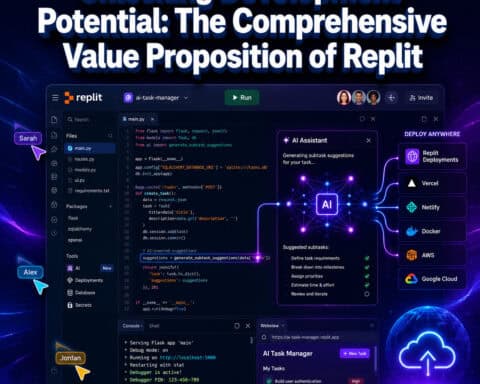
- Built-in AI assistance. Replit Agent can scaffold entire Java projects from a text description, then iterate based on your feedback.
Choose Replit if you’re learning Java, building prototypes, or collaborating with others remotely. Choose IntelliJ or Eclipse if you need advanced refactoring tools, large-scale project management, or enterprise framework support like Spring Boot with complex configurations.

If you’re exploring other development approaches, our guide to no-coding website design platforms covers alternatives that skip code entirely.
How Do You Set Up a Java Project on Replit?
Create a working Java project on Replit in under two minutes. Here’s the step-by-step process:
- Create an account at replit.com (free tier works fine to start).
- Click “Create Repl” and select Java from the language dropdown [2].
- Name your project — Replit generates a
Main.javafile automatically with a basicHello Worldtemplate. - Click the Run button (green play icon). Replit compiles and executes your code in the console pane.
- Add files by right-clicking in the file tree. Organize packages using folder structures like
src/com/yourapp/.
Customizing Your Java Environment
Replit’s default Java setup covers most use cases, but you can go further:
- Add dependencies by editing the
replit.nixfile or using Replit’s package manager to include libraries like Gson, JUnit, or Apache Commons. - Configure the run command in
.replitto change compilation flags or run specific classes. - Use Replit Secrets (environment variables) to store API keys and database credentials securely — never hardcode them in your Java source files.
Common mistake: New users often try to create multiple main methods across files without updating the run configuration. Replit only executes the class specified in your .replit config file. Update the run field to point to the correct class.
For those interested in how AI tools can assist your broader development workflow, check out our guide to AI-powered content generation tools.
How Does Replit Agent Help with Java Coding?
Replit Agent is an AI assistant that can build, edit, and debug Java applications based on natural language instructions. As of April 17, 2026, it runs on Claude Opus 4.7, which significantly improved its Java code generation accuracy.
Here’s what Agent can do for Java projects:
- Scaffold projects. Describe what you want (“Build a REST API in Java that manages a to-do list with CRUD operations”), and Agent generates the file structure, classes, and boilerplate.
- Debug errors. Paste a stack trace or highlight broken code, and Agent explains the issue and suggests fixes.
- Refactor code. Ask Agent to convert a monolithic class into smaller, testable modules.
- Write tests. Request JUnit test cases for specific methods, and Agent generates them with assertions.
Andrew Ng, the well-known AI educator, has publicly recommended what he calls “modular prompting” for building Java apps with Replit Agent — breaking problems into small, testable modules rather than asking the AI to build everything at once. This approach produces more reliable code and makes debugging far easier [5].
Agent Power mode (available on paid plans) gives you access to the most capable AI model and works best for complex Java tasks like multi-file refactoring or implementing design patterns.
Edge case to watch: Agent sometimes generates Java code that compiles but doesn’t follow best practices, like using raw types instead of generics or ignoring exception handling. Always review generated code before shipping it.
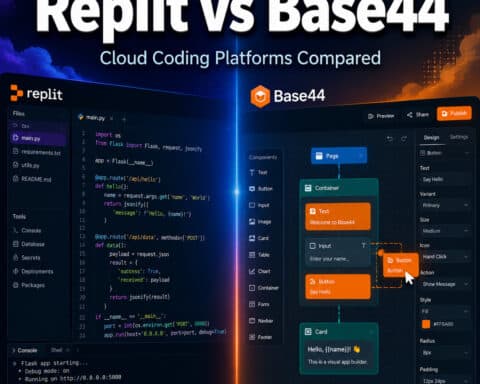
How Does Replit Compare to Other Cloud Java IDEs?
Replit isn’t the only browser-based option for Java development. Here’s how it stacks up against the main alternatives in 2026:
| Feature | Replit | GitHub Codespaces | Cursor |
|---|---|---|---|
| Setup required | None (browser only) | Minimal (GitHub account) | Local install required |
| Java support | Built-in, Java 10+ [2] | Full JDK via devcontainers | Full JDK locally |
| AI assistance | Replit Agent (Claude Opus 4.7) | GitHub Copilot | Codebase-aware AI editing |
| Real-time collaboration | Yes, multiplayer editing | Limited (Live Share add-on) | No native multiplayer |
| Starting price | Free tier available | $9/month | $20/month |
| Best for | Learning, prototyping, collaboration | Complex Git workflows, enterprise | Power users who prefer local dev |
| Deployment | One-click deploy included | Requires separate hosting | No built-in deployment |

Decision rule: Pick Replit if you want the fastest path from idea to deployed Java app with AI help and collaboration. Pick GitHub Codespaces if your team already lives in GitHub and needs deep Git integration. Pick Cursor if you prefer a local IDE experience with AI features and don’t need browser access.
Rocket.new (a 2026 newcomer) handles prompt-to-app generation well for Java backends and supports Figma imports, but Replit’s free tier and Java-specific templates give it an edge for most developers. If you’re interested in design-to-code workflows, our Figma to code plugins guide covers that bridge in detail.
What Security Features Does Replit Offer for Java Projects?
Security matters even for learning projects, and Replit has added serious tooling in 2026.
Workspace Security Center 2.0 (launched May 8, 2026) scans your Java project’s dependencies for known vulnerabilities. It flags issues by severity and can trigger Agent-powered fixes — meaning the AI will update your pom.xml or dependency files and patch the vulnerable code paths automatically [1].
Security Agent (available since April 24, 2026, for paid users) performs whole-codebase reviews on Java projects. It uses static analysis and threat modeling to find exploitable issues like SQL injection, insecure deserialization, or hardcoded credentials.
App Monitoring (May 1, 2026) tracks the uptime of your deployed Java applications. It sends email alerts when downtime is detected and can trigger Agent to investigate the cause of outages.
Security Best Practices for Java on Replit
Based on community-tested approaches [4]:
- Use Replit Secrets for all credentials — never commit API keys to your repo.
- Enable GitHub integration and use branching strategies (main for production, dev for testing).
- Maintain separate environments — don’t test against production data.
- Run Security Agent scans before deploying any update.
- Review Agent-generated code for common Java vulnerabilities like unchecked input or improper resource handling.
For broader website security strategies, our WordPress plugin development best practices guide covers similar principles in a different context.

What Are the Limitations of Using Replit for Java?
Replit is excellent for many Java use cases, but it has clear boundaries:
- Performance ceiling. Complex Java applications (large Spring Boot projects, heavy data processing) can hit Replit’s compute limits, especially on the free tier.
- Limited framework support. While basic Java web frameworks work, enterprise setups with Maven multi-module projects or Gradle build scripts can be finicky.
- Internet dependency. No internet means no coding. Local IDEs don’t have this constraint.
- AI credit limits. Free users get limited Agent interactions per day. Heavy Java development with Agent requires a paid plan.
- Debugging tools. Replit’s debugger is functional but lacks the depth of IntelliJ IDEA’s breakpoint conditions, watch expressions, and memory analysis.
Who should NOT use Replit for Java: Teams building production enterprise applications, developers working with large codebases (100,000+ lines), or anyone needing offline access.
How Can You Learn Java Effectively Using Replit’s Resources?
Replit offers structured learning paths through its education platform [3]. For Java specifically:
- Start with Replit’s Learn hub — it includes interactive Java tutorials that run directly in the browser [3].
- Use 100 Days of Code style challenges, building one small Java project daily.
- Fork community templates — search Replit’s template library for Java projects like calculators, chat apps, or API clients, then modify them.
- Practice with Agent — describe a feature you want to add, let Agent generate it, then study the code to understand the patterns.
For supplementary learning, the book “Mastering Java: A Comprehensive Guide to Development” is available on Apple Books and covers foundational concepts that pair well with Replit’s hands-on environment [10].
If you’re also learning design alongside development, our Figma for beginners guide can help you build full-stack skills, and our AI-powered content optimization guide shows how AI tools extend beyond coding.
FAQ
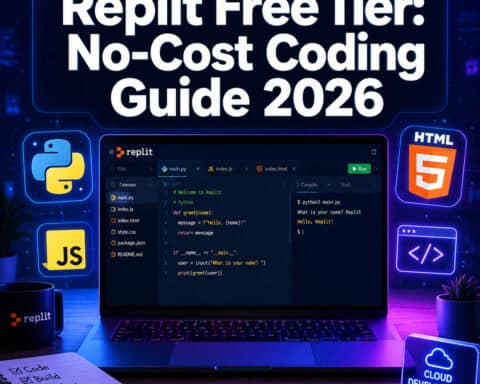
Can I run Java on Replit for free? Yes. Replit’s free tier supports Java projects with basic compute resources. You can write, compile, and run Java programs without paying. AI Agent usage is limited on the free plan [2].
What version of Java does Replit support? Replit supports Java 10 and above by default [2]. You can customize the Java version through the Nix configuration file if you need a specific release.
Can I deploy Java web applications on Replit? Yes. Replit supports one-click deployment for Java web apps. The May 2026 App Monitoring feature also tracks uptime and alerts you to outages.
Is Replit good enough for professional Java development? For small-to-medium projects, prototyping, and collaborative work, yes. For large enterprise Java applications, a local IDE like IntelliJ IDEA is still the better choice due to performance and tooling depth.
Can multiple people code Java together on Replit? Yes. Replit’s multiplayer feature allows real-time collaborative editing, similar to Google Docs. This makes it particularly strong for pair programming and teaching.
How does Replit Agent compare to GitHub Copilot for Java? Replit Agent can build entire projects from prompts and deploy them, while Copilot focuses on inline code suggestions. Agent is more autonomous; Copilot is more of a typing assistant.
Is my Java code on Replit private? Free tier Repls are public by default. Paid plans allow private Repls. Always use Replit Secrets for sensitive data regardless of your plan.
Can I use Maven or Gradle with Replit? Basic Maven and Gradle support exists through Nix configuration, but complex multi-module builds may require workarounds. Simple dependency management works well.
Does Replit support Java debugging? Yes, Replit includes a basic debugger with breakpoints and variable inspection. It’s sufficient for learning and small projects but less powerful than IntelliJ’s debugger.
Conclusion
Mastering Java development with Replit comes down to understanding what the platform does well and where its limits are. For learning Java, building prototypes, collaborating in real time, and deploying small applications, Replit is hard to beat in 2026. The zero-setup environment, AI Agent powered by Claude Opus 4.7, and new security tools like Workspace Security Center 2.0 make it a genuinely capable development platform.
Your next steps:
- Create a free Replit account and build your first Java project today [2].
- Experiment with Replit Agent — start with small, modular prompts rather than asking it to build an entire app at once.
- Explore the Learn hub for structured Java tutorials [3].
- If you’re on a paid plan, run Security Agent on your projects before deploying.
- When your projects outgrow Replit’s compute limits, transition to a local IDE while keeping Replit for collaboration and quick prototyping.
The best way to master Java on Replit is to start building. Pick a project, open a browser tab, and write your first line of code.
References
[1] Watch – https://www.youtube.com/watch?v=8nXAvKzqbw0 [2] Java10 – https://replit.com/languages/java10 [3] learn.replit – https://learn.replit.com [4] Replit Learnings Best Practices After A Month Of – https://www.reddit.com/r/replit/comments/1kpuudj/replit_learnings_best_practices_after_a_month_of/ [5] Watch – https://www.youtube.com/watch?v=56DshkgB6cE&vl=en [10] Id6478559873 – https://books.apple.com/us/book/mastering-java-a-comprehensive-guide-to-development/id6478559873