Last updated: June 9, 2026
Quick Answer: ChatGPT is a large language model built on transformer architecture, trained by OpenAI to generate human-like text by predicting the most contextually appropriate next word or phrase. It does not “understand” language the way humans do — it identifies statistical patterns across billions of text samples. Knowing how it actually works helps you use it far more effectively and avoid costly mistakes.
Key Takeaways
- ChatGPT runs on GPT-4-class transformer models that process language through layers of self-attention mechanisms, not rule-based logic.
- Transformers learn by predicting missing or next tokens in text — a process called masked and causal language modeling.
- ChatGPT Plus costs $20/month as of 2026 (OpenAI’s published pricing); the free tier still exists with capability limits.
- The model can produce confident-sounding but factually wrong answers — a behavior called hallucination.
- ChatGPT excels at drafting, summarizing, brainstorming, and code generation; it struggles with real-time data, precise math, and legally sensitive advice.
- It should never receive passwords, proprietary source code, patient records, or other sensitive data.
- Ethical concerns include bias in training data, intellectual property questions, and environmental costs of large-scale training.
- You do not need programming skills to use ChatGPT effectively, but basic Python knowledge unlocks the API for automation and custom builds.
What Exactly Is ChatGPT and How Does It Work
ChatGPT is a conversational AI assistant developed by OpenAI, powered by a large language model (LLM) from the GPT (Generative Pre-trained Transformer) family. It generates responses by predicting the most statistically likely sequence of words given your input, drawing on patterns learned from a massive dataset of internet text, books, and code.
The process works in three broad stages:
- Pre-training — The model reads enormous amounts of text and learns to predict the next word in a sequence.
- Fine-tuning — OpenAI refines the model on curated conversation data to make it more helpful and coherent.
- RLHF (Reinforcement Learning from Human Feedback) — Human raters score model outputs, and those scores guide further improvement.
The result is a system that can hold context across a long conversation, follow instructions, and produce surprisingly fluent text — without any genuine comprehension of meaning.
For a broader look at AI tools built on similar foundations, see this comprehensive guide to AI-powered content generation tools.
How Transformer Models Like GPT Actually Understand Language

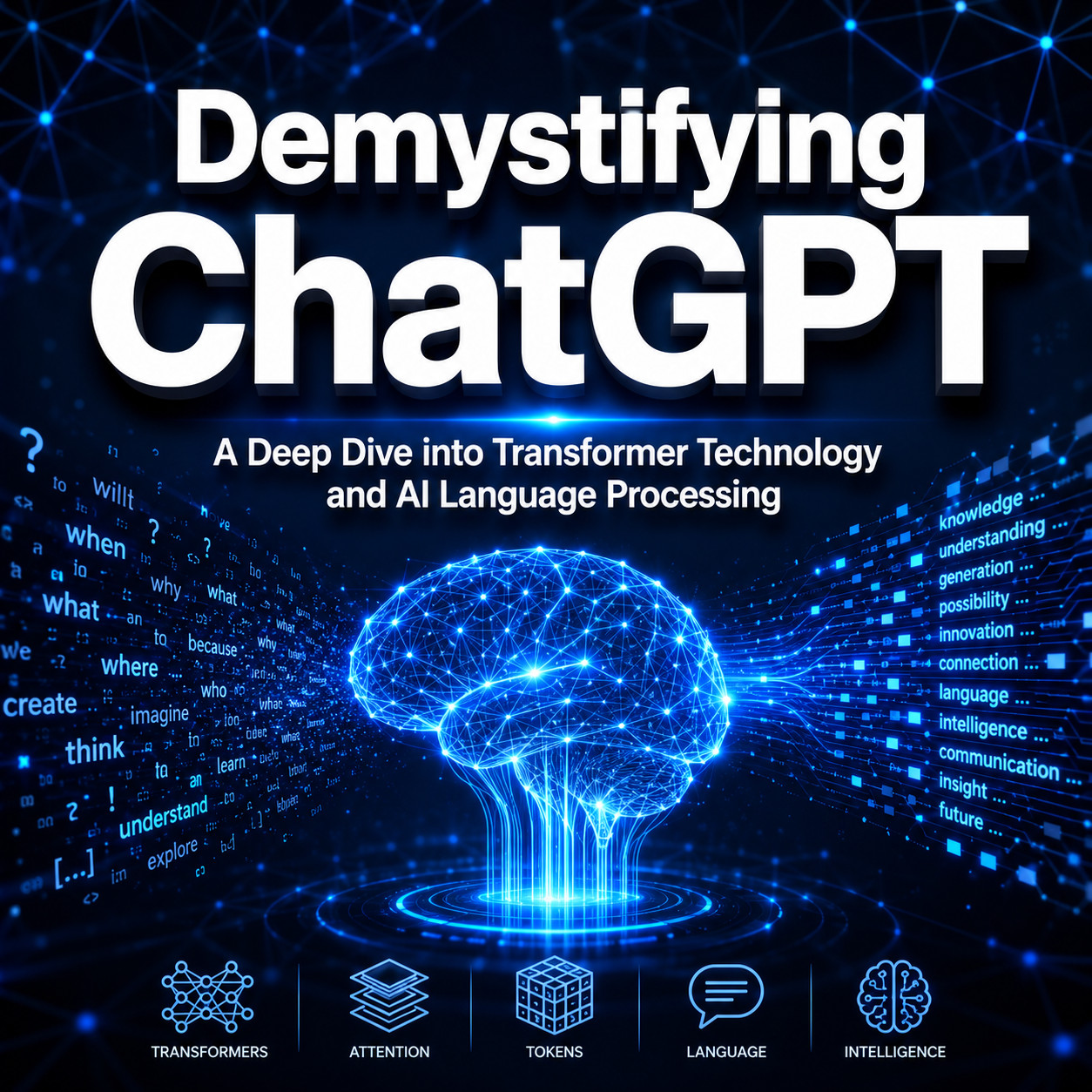
Transformer models do not “understand” language in the human sense. They process text as sequences of tokens (roughly word fragments) and use a mechanism called self-attention to weigh how relevant each token is to every other token in the sequence.
Here is what happens inside a transformer when you send a message:
- Your text is split into tokens (e.g., “unbelievable” might become “un”, “believ”, “able”).
- Each token is converted into a numerical vector called an embedding.
- Multiple attention heads analyze relationships between all tokens simultaneously.
- Stacked layers progressively build richer representations of meaning.
- A final output layer converts those representations back into probable next tokens.
Self-attention is the key innovation from the 2017 paper “Attention Is All You Need” (Vaswani et al., Google Brain). Before transformers, models processed text left-to-right sequentially. Transformers process all tokens in parallel, which made training on much larger datasets practical.
This is why ChatGPT can handle long documents and maintain conversational context — the attention mechanism keeps track of relationships across the entire input window.
For developers interested in working directly with these models, our deep dive into open-source language model notebooks covers hands-on experimentation options.
How Is ChatGPT Different from Other AI Chatbots
ChatGPT is not the only AI chatbot, but it was the first to reach mass consumer adoption at scale. The key differences come down to model architecture, training approach, and product design.
| Feature | ChatGPT (OpenAI) | Google Gemini | Meta Llama (Open Source) |
|---|---|---|---|
| Model family | GPT-4 / GPT-4o | Gemini 1.5 / 2.0 | Llama 3 |
| Free tier | Yes (limited) | Yes | Self-hosted |
| Real-time web access | Yes (Plus) | Yes | Depends on setup |
| API access | Yes (paid) | Yes (paid) | Free (self-hosted) |
| Fine-tuning by users | Limited | Limited | Full control |
ChatGPT’s main advantage over open-source alternatives is ease of use and OpenAI’s continuous safety and capability updates. Its main disadvantage is cost and the fact that your prompts pass through OpenAI’s servers.
For a direct comparison of AI research tools, the NotebookLM vs. Gemini showdown is worth reading alongside this guide.
How Much Does ChatGPT Plus Cost Right Now
As of June 2026, ChatGPT Plus costs $20 per month per user, billed monthly. OpenAI also offers ChatGPT Team at $25/user/month (annual billing) and ChatGPT Enterprise at custom pricing for large organizations.
The free tier gives access to GPT-4o with usage limits. Plus subscribers get higher message limits, access to advanced features like deeper data analysis, image generation via DALL-E, and faster response times during peak hours.
Choose Plus if: you use ChatGPT daily for professional work, need consistent access during busy periods, or rely on advanced features like file uploads and browsing.
Stick with free if: your use is occasional, you are testing the tool, or you are a student on a budget.
Why Do Some ChatGPT Responses Feel Weird or Incorrect
ChatGPT hallucinates — it generates text that sounds confident but is factually wrong. This happens because the model’s goal is to produce a plausible-sounding continuation of text, not to verify facts against a database of ground truth.
Common causes of bad outputs:
- Knowledge cutoff — The model’s training data has a cutoff date; it does not know about recent events unless web browsing is enabled.
- Ambiguous prompts — Vague questions produce vague or misaligned answers.
- Over-confidence — The model does not know what it does not know, so it fills gaps with plausible-sounding fabrications.
- Context window limits — In very long conversations, early context can effectively “fade” from influence.
The fix is usually better prompting: be specific, ask the model to cite its reasoning step by step, and always verify any factual claim independently before acting on it.
What Kind of Jobs or Tasks Is ChatGPT Best Suited For
ChatGPT performs best on language-heavy tasks where fluency matters more than guaranteed factual accuracy. It is a strong tool for professionals who need a fast first draft, a thinking partner, or a code scaffold.
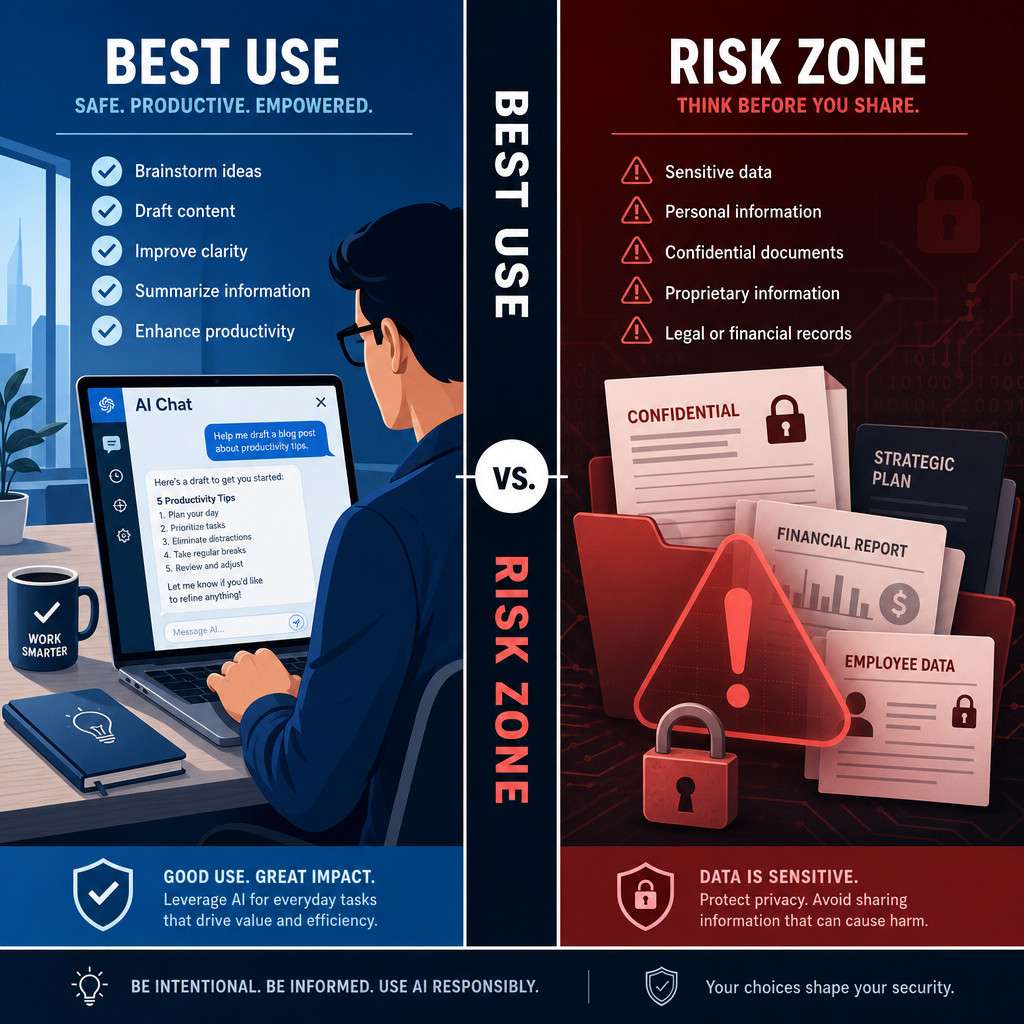
Best use cases:
- Drafting emails, reports, blog posts, and marketing copy
- Summarizing long documents or meeting notes
- Brainstorming ideas, outlines, and creative concepts
- Writing and debugging code in Python, JavaScript, and other common languages
- Explaining complex topics in plain language
- Translating between languages
For teams building automated workflows around ChatGPT, our guide to ChatGPT automation and no-code workflow integration covers practical setups without requiring engineering expertise.
What Are the Limitations of ChatGPT for Professional Use
ChatGPT has real limitations that matter in professional settings. Relying on it without understanding these boundaries leads to errors that can damage credibility or create legal exposure.
Key limitations:
- No real-time data (without browsing enabled) — Financial figures, legal statutes, and medical guidelines change; the model may cite outdated information.
- Cannot perform precise calculations reliably — For complex math, use a dedicated tool or verify outputs manually.
- No memory between sessions (by default) — Each new conversation starts fresh unless memory features are explicitly enabled.
- Not a licensed professional — Outputs should never substitute for legal, medical, or financial advice.
- Output quality varies — The same prompt can produce different results on different runs.
Can ChatGPT Replace Human Writers and Programmers
No, not in 2026 — but it meaningfully changes how both roles operate. ChatGPT accelerates first-draft production and routine code generation, but it cannot replace the judgment, originality, accountability, and domain expertise that experienced professionals bring.
For writers, the practical reality is that AI handles the blank-page problem well but produces generic output without strong human direction and editing. For programmers, tools like ChatGPT and AI code generators such as Bolt can scaffold boilerplate code quickly, but debugging complex systems still requires human reasoning.
The professionals most at risk are those doing high-volume, low-complexity work — templated content, basic CRUD code, simple data entry summaries. The professionals who benefit most are those who use AI to handle repetitive tasks while focusing their own time on higher-value work.
Is ChatGPT Safe to Use for Sensitive Information
No. You should not enter sensitive information into ChatGPT unless you are on an Enterprise plan with data processing agreements in place. By default, OpenAI may use conversations to improve its models.
Never enter into ChatGPT:
- Passwords or API keys
- Patient health records (HIPAA-protected data)
- Proprietary source code or trade secrets
- Personal financial account details
- Confidential client information
Enterprise plans offer stronger data privacy controls, but even then, legal and compliance teams should review the terms before use in regulated industries.
What Ethical Concerns Exist Around AI Language Models
The ethical concerns around ChatGPT and similar models are real and actively debated in 2026. The main issues fall into four areas:
- Bias — Training data reflects historical biases in human-written text. The model can reproduce stereotypes, uneven representation, and skewed perspectives.
- Intellectual property — The model was trained on copyrighted text. Questions about fair use, attribution, and compensation for original authors remain unresolved in most jurisdictions.
- Environmental cost — Training and running large models consumes significant energy. OpenAI has not published detailed carbon footprint data for GPT-4-class models.
- Misinformation risk — Fluent, confident-sounding AI text can spread misinformation at scale, especially when users do not verify outputs.
For those tracking the broader AI tools landscape and its implications, the ChatGPT Archives at WebAIStack covers ongoing developments.
How Does OpenAI Train and Improve ChatGPT
OpenAI trains ChatGPT through a multi-stage process. Pre-training on large text corpora gives the model its base language ability. Supervised fine-tuning on human-written examples of good conversations shapes its behavior. Then RLHF — Reinforcement Learning from Human Feedback — uses human raters to score model responses, and those scores train a reward model that guides further updates.
OpenAI also runs ongoing red-teaming exercises where researchers deliberately try to elicit harmful outputs, then use those findings to add safety guardrails. Model updates are released periodically, which is why ChatGPT’s capabilities shift over time even if you are using the same product tier.
What Programming Skills Do You Need to Work With GPT Technology
You need no programming skills to use ChatGPT through the web interface or mobile app. To work with the GPT API for custom applications or automation, basic Python is the most practical starting point.
Skill levels and what they unlock:
- No code — Web chat, plugins, and no-code automation tools (Zapier, Make.com)
- Basic Python — API calls, custom prompts, simple scripts, data processing pipelines
- Intermediate Python + REST APIs — Building chatbots, integrating GPT into apps, fine-tuning workflows
- Advanced ML/engineering — Custom fine-tuning, model evaluation, production deployment
For developers looking to build on GPT technology, our guide to streamlining your development process with JCode and resources on AI development tools are useful next steps.
What Are the Most Common Mistakes People Make When Using ChatGPT
Most poor results with ChatGPT trace back to a small set of avoidable errors.
- Vague prompts — “Write something about marketing” produces generic output. Specific context, audience, tone, and length instructions produce usable drafts.
- Trusting outputs without verification — Especially for statistics, citations, dates, and technical claims.
- Using it for tasks it cannot do well — Real-time stock prices, precise legal citations, complex multi-step math.
- Ignoring the system prompt — In API or advanced use, not setting a clear system prompt leads to inconsistent persona and behavior.
- One-shot prompting on complex tasks — Breaking a complex task into steps and iterating produces far better results than a single large prompt.
Conclusion
Demystifying ChatGPT: A Deep Dive into Transformer Technology and AI Language Processing comes down to one core insight — this is a pattern-matching system of extraordinary scale, not a thinking machine. That distinction matters because it tells you exactly where to trust it and where to verify independently.
Actionable next steps:
- Start with specific, detailed prompts and iterate rather than expecting perfection on the first try.
- Never input sensitive personal, medical, financial, or proprietary data into the standard consumer interface.
- Use ChatGPT to accelerate first drafts and brainstorming — then apply your own expertise to refine and verify.
- If you want to build with the API, invest a few hours in basic Python; the return on that investment is significant.
- Stay current on OpenAI’s updates — the capabilities and pricing change regularly, and what was a limitation six months ago may now be solved.
The professionals who get the most from ChatGPT are those who treat it as a capable but fallible collaborator, not an oracle. Keep that frame in mind and you will avoid most of the common pitfalls while capturing real productivity gains.
Frequently Asked Questions
What is ChatGPT in simple terms? ChatGPT is an AI chatbot that generates human-like text responses based on patterns learned from billions of text samples. It predicts the most likely next word or phrase given your input.
Does ChatGPT actually understand what I’m saying? No. It processes statistical relationships between words and tokens, not meaning in the human sense. It can produce contextually appropriate responses without genuine comprehension.
Is ChatGPT free to use? Yes, a free tier exists with usage limits. ChatGPT Plus costs $20/month as of 2026 and offers higher limits and advanced features.
Can ChatGPT access the internet? Yes, but only when the browsing feature is enabled, which is available on Plus and above. Without it, the model relies on training data with a fixed cutoff date.
Why does ChatGPT sometimes make up facts? This is called hallucination. The model generates plausible-sounding text even when it lacks accurate information, because its goal is fluent completion, not factual accuracy.
Is it safe to use ChatGPT for work documents? For general drafting, yes. For documents containing confidential client data, health records, or trade secrets, no — unless you are on an Enterprise plan with appropriate data agreements.
What is a transformer in AI? A transformer is a neural network architecture that uses self-attention to process all parts of a text sequence simultaneously, enabling the model to capture long-range relationships between words efficiently.
How is GPT-4 different from GPT-3? GPT-4 is larger, more capable, and better at following complex instructions. It also performs better on reasoning tasks and has stronger safety guardrails compared to GPT-3.
Can I use ChatGPT to write code? Yes, and it does this well for common languages like Python and JavaScript. Always review and test AI-generated code before deploying it in production.
What is RLHF? Reinforcement Learning from Human Feedback. Human raters score model outputs, and those scores train a reward model that guides the AI toward more helpful, accurate, and safer responses.
Does ChatGPT remember previous conversations? Not by default. Each session starts fresh. OpenAI has introduced optional memory features, but these must be explicitly enabled and managed by the user.
What is the context window? The context window is the maximum amount of text (measured in tokens) that ChatGPT can process in a single conversation. GPT-4-class models support large context windows, but very long conversations can still affect response quality near the limits.
Useful Resources: ChatGPT by OpenAI & OpenAI research blog