Last updated: June 9, 2026
Quick Answer: ChatGPT 5 is OpenAI’s most advanced conversational AI model to date, offering significantly improved reasoning, multimodal capabilities, and real-world task execution compared to its predecessors. It represents a meaningful leap forward in how AI systems understand context, handle complex instructions, and interact with users across text, voice, and visual inputs. For professionals, developers, and everyday users alike, ChatGPT 5 sets a new standard for what conversational AI can accomplish.
Key Takeaways
- ChatGPT 5 delivers stronger multi-step reasoning and longer context retention than GPT-4 and GPT-4o
- The model handles text, images, voice, and structured data within a single conversation
- Reduced hallucination rates make responses more reliable for research and professional use
- Agentic capabilities allow ChatGPT 5 to plan and execute multi-step tasks with less human hand-holding
- Pricing and access tiers vary by use case, from free consumer access to enterprise API plans
- It is not a perfect tool: complex legal, medical, and financial decisions still require human expert review
- Developers can integrate ChatGPT 5 via the OpenAI API for custom applications and workflows
- Competitors including Google Gemini Ultra and Anthropic Claude 3.5 remain strong alternatives
What Makes ChatGPT 5 Different from Earlier Models
ChatGPT 5 is not simply a faster version of GPT-4. The core differences lie in reasoning depth, context window size, and the model’s ability to act on instructions rather than just respond to them.
Earlier models like GPT-3.5 were strong at generating fluent text but struggled with multi-step logic, long documents, and tasks requiring sequential planning. GPT-4 closed many of those gaps. ChatGPT 5 goes further by combining a substantially larger context window with improved instruction-following and a lower rate of confident-sounding errors (commonly called hallucinations).
Key improvements over GPT-4:
- Longer context retention, allowing coherent work across much longer documents or conversations
- Better performance on math, coding, and logical reasoning benchmarks
- Native multimodal input: text, images, audio, and structured data in a single session
- Stronger agentic behavior, meaning the model can break a goal into steps and work through them
For a broader look at how AI tools compare across categories, see our comprehensive guide to the most influential AI websites.
How ChatGPT 5: The Next Frontier of Conversational AI Technology Handles Multimodal Input
ChatGPT 5 processes text, images, audio, and data files in a single unified conversation. This is one of the clearest signs that conversational AI technology has crossed into a new phase.
A user can upload a spreadsheet, paste a chart image, describe a business problem in plain language, and ask for a structured analysis, all within one session. The model integrates those inputs rather than treating them as separate tasks.
Practical multimodal use cases:
- Medical imaging review: Clinicians can share diagnostic images alongside patient notes and receive structured summaries (always subject to professional verification)
- Code debugging with screenshots: Developers can paste an error screenshot and code simultaneously for faster diagnosis
- Document analysis: Legal or financial teams can upload PDFs and ask targeted questions about specific clauses or figures
- Voice-driven workflows: Users can speak instructions and receive spoken or written responses, useful for accessibility and hands-free environments
For those interested in how voice technology intersects with AI accessibility, the AAC voice technology resources on this site offer relevant context.
Who Should Use ChatGPT 5 (and Who Should Not)
ChatGPT 5 is well-suited for knowledge workers, developers, researchers, educators, and content teams. It is not a replacement for licensed professionals in high-stakes domains.
Choose ChatGPT 5 if you:
- Write, edit, or summarize large volumes of content regularly
- Build software and want AI-assisted code generation or review
- Conduct research and need help synthesizing information from multiple sources
- Run a business and want to automate repetitive communication or data tasks
Be cautious if you:
- Need legally binding advice (consult a licensed attorney)
- Require medical diagnoses or treatment plans (consult a qualified clinician)
- Work in regulated financial advisory roles where AI output must meet compliance standards
The model is also not ideal for real-time tasks requiring live internet data unless it is connected to a browsing or retrieval tool. Base ChatGPT 5 responses draw from training data with a knowledge cutoff, so time-sensitive queries may need verification.
ChatGPT 5 Agentic Capabilities: What They Mean in Practice
Agentic AI means the model can pursue a goal across multiple steps without needing a human prompt at each stage. ChatGPT 5 moves meaningfully in this direction compared to earlier versions.
For example, a user might say: “Research the top five competitors in the project management software space, summarize their pricing, and draft a comparison table.” Earlier models would need that broken into separate prompts. ChatGPT 5 can plan the sequence, execute each step, and return a finished output.
This connects directly to the growing field of AI agent workflows, where models like ChatGPT 5 serve as the reasoning core inside larger automated systems. Developers building with n8n, Make.com, or custom pipelines can call the ChatGPT 5 API to handle the decision-making layer of complex automations.
Common agentic use cases in 2026:
- Automated report generation from raw data inputs
- Customer support triage with escalation logic
- Code generation, testing, and iteration cycles
- Research synthesis across multiple documents or web sources
How ChatGPT 5 Compares to Google Gemini and Claude
ChatGPT 5 leads in instruction-following and broad general knowledge tasks, but competitors are strong in specific areas. No single model dominates every benchmark.
| Capability | ChatGPT 5 | Google Gemini Ultra | Anthropic Claude 3.5 |
|---|---|---|---|
| Long-context reasoning | Strong | Strong | Very strong |
| Code generation | Very strong | Strong | Strong |
| Multimodal input | Strong | Very strong | Moderate |
| Hallucination rate | Low | Low | Very low |
| API availability | Wide | Wide | Wide |
| Pricing (consumer tier) | Free + paid plans | Free + paid plans | Free + paid plans |
The right choice depends on your specific workflow. Gemini Ultra has an edge in tasks that benefit from deep Google ecosystem integration. Claude 3.5 is often preferred for tasks where factual caution matters most. ChatGPT 5 tends to perform best for general-purpose professional use and developer applications.
For a detailed head-to-head on AI research tools, our NotebookLM vs Gemini comparison is a useful reference point.
Practical Applications of ChatGPT 5: The Next Frontier of Conversational AI Technology
The clearest value of ChatGPT 5 comes from applying it to real, repeatable tasks rather than one-off experiments. Here is where it consistently delivers.
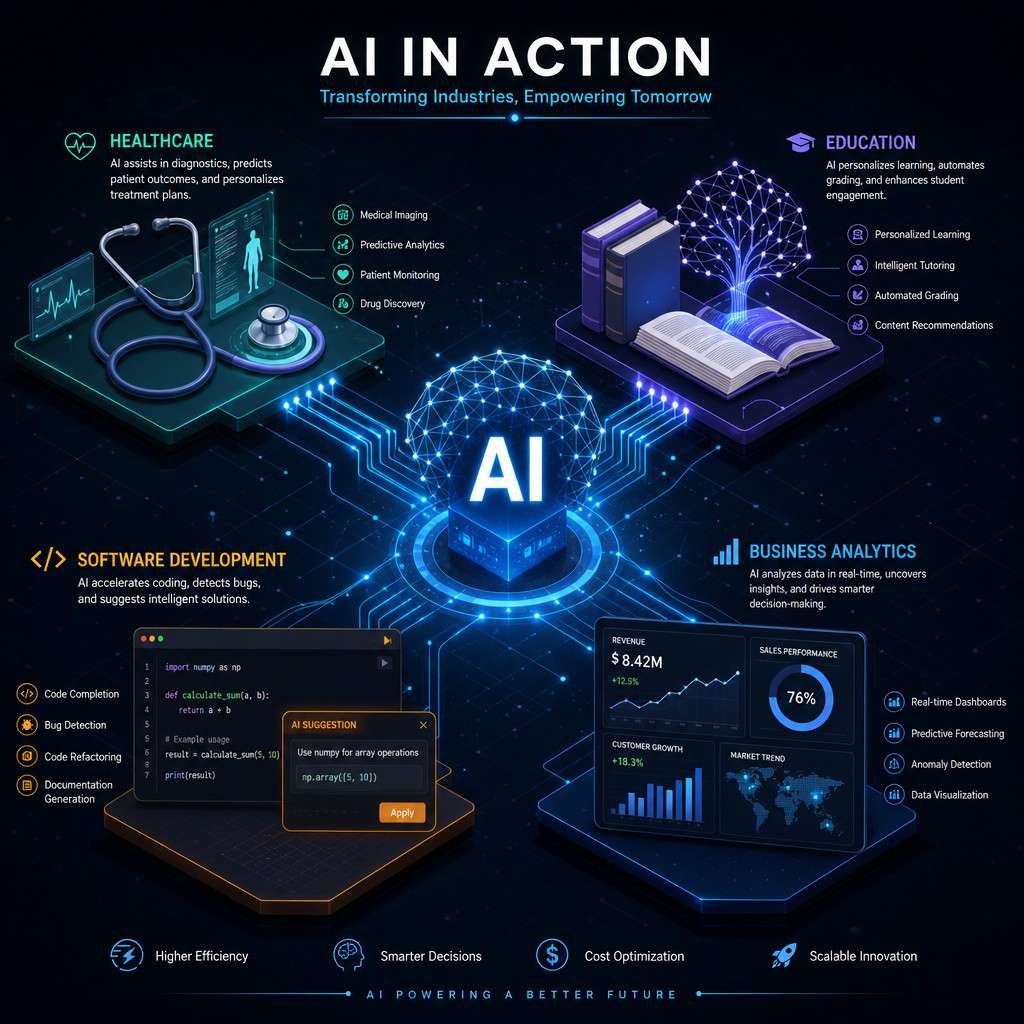
For developers and technical teams:
Developers using AI-assisted coding tools have reported significant reductions in time spent on boilerplate code and debugging. ChatGPT 5 integrates well with IDEs and can be paired with tools like those covered in our Cursor AI guide for a more complete AI-assisted development environment.
For content and marketing teams:
ChatGPT 5 handles long-form drafting, tone adjustment, SEO structuring, and multilingual content with noticeably better coherence than earlier models. It can maintain a consistent voice across a 3,000-word document without drifting.
For business automation:
Teams building no-code or low-code workflows can use ChatGPT 5 as the intelligence layer in tools like n8n or Make.com. Our ChatGPT automation guide covers how to set this up without writing custom code.
For researchers and analysts:
The model’s improved citation awareness and structured output formatting make it useful for literature reviews, competitive analysis, and data interpretation. That said, always verify factual claims from primary sources.
Common Mistakes When Using ChatGPT 5
Most users underuse the model by treating it like a search engine. ChatGPT 5 performs best when given clear context, a defined role, and specific output requirements.
Mistakes to avoid:
- Vague prompts: “Write something about marketing” produces generic output. “Write a 300-word LinkedIn post for a B2B SaaS company targeting HR directors, focusing on employee retention data” produces something usable.
- Ignoring system prompts: If you are building with the API, a well-crafted system prompt shapes every response. Skipping it leads to inconsistent outputs.
- Over-trusting numerical outputs: ChatGPT 5 is better at math than its predecessors, but complex calculations should still be verified independently.
- Single-turn conversations for complex tasks: Break large projects into stages. Give the model one clear task per turn for best results.
- Skipping output review: Even with lower hallucination rates, factual claims in professional documents should be checked against primary sources.
FAQ
What is ChatGPT 5? ChatGPT 5 is OpenAI’s latest large language model, designed for advanced conversational AI tasks including reasoning, coding, multimodal input processing, and agentic task execution.
Is ChatGPT 5 free to use? A free tier exists for consumer access, but full capability access, including higher usage limits and API access, requires a paid subscription or API plan.
How is ChatGPT 5 different from GPT-4o? ChatGPT 5 offers improved reasoning depth, a larger context window, lower hallucination rates, and stronger agentic capabilities compared to GPT-4o.
Can ChatGPT 5 browse the internet? With the appropriate tool or plugin enabled, yes. The base model without browsing relies on its training data, which has a knowledge cutoff date.
Is ChatGPT 5 safe for business use? For most business applications, yes, provided sensitive data handling follows your organization’s privacy policies and you verify critical outputs before acting on them.
Can developers access ChatGPT 5 via API? Yes. OpenAI provides API access to ChatGPT 5 for developers building custom applications, chatbots, and automated workflows.
Does ChatGPT 5 support languages other than English? Yes. It supports dozens of languages, with particularly strong performance in English, Spanish, French, German, Chinese, and Japanese.
What industries benefit most from ChatGPT 5? Software development, content creation, legal research support, healthcare documentation, education, and business analytics see the strongest productivity gains.
How accurate is ChatGPT 5? More accurate than previous versions, but not infallible. It performs well on factual recall within its training data but can still produce errors, especially on highly specific or recent information.
Can ChatGPT 5 replace human workers? It automates specific tasks well, but it does not replace judgment, creativity, or accountability in complex professional roles. It is best understood as a capable assistant, not a substitute.
Conclusion
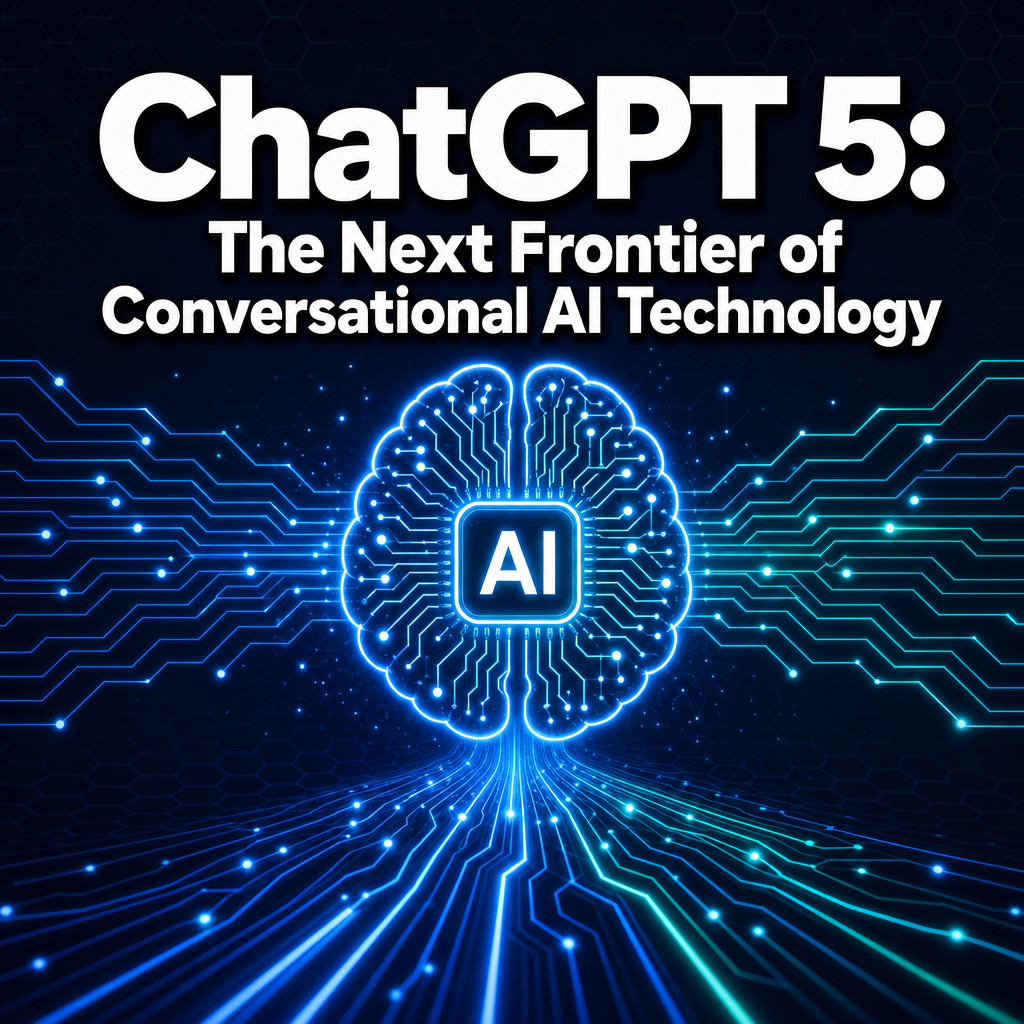
ChatGPT 5: The Next Frontier of Conversational AI Technology is not hype. It represents a genuine step forward in what AI models can do, from handling complex multi-step reasoning to processing mixed inputs across text, voice, and images. For professionals and developers in 2026, the question is no longer whether to use it, but how to use it well.
Actionable next steps:
- Start with a specific, high-value use case in your current workflow rather than experimenting broadly.
- Learn to write structured prompts with clear roles, context, and output formats.
- If you build software, explore the OpenAI API and consider pairing ChatGPT 5 with tools like those in our AI coding tools resources.
- For automation use cases, review how ChatGPT 5 fits into no-code platforms covered in our ChatGPT category archive.
- Always review AI-generated outputs before publishing or acting on them in professional contexts.
The technology is genuinely useful. Getting value from it comes down to how deliberately you apply it.
Useful Resources: ChatGPT by OpenAI & OpenAI research blog