Last updated: June 9, 2026
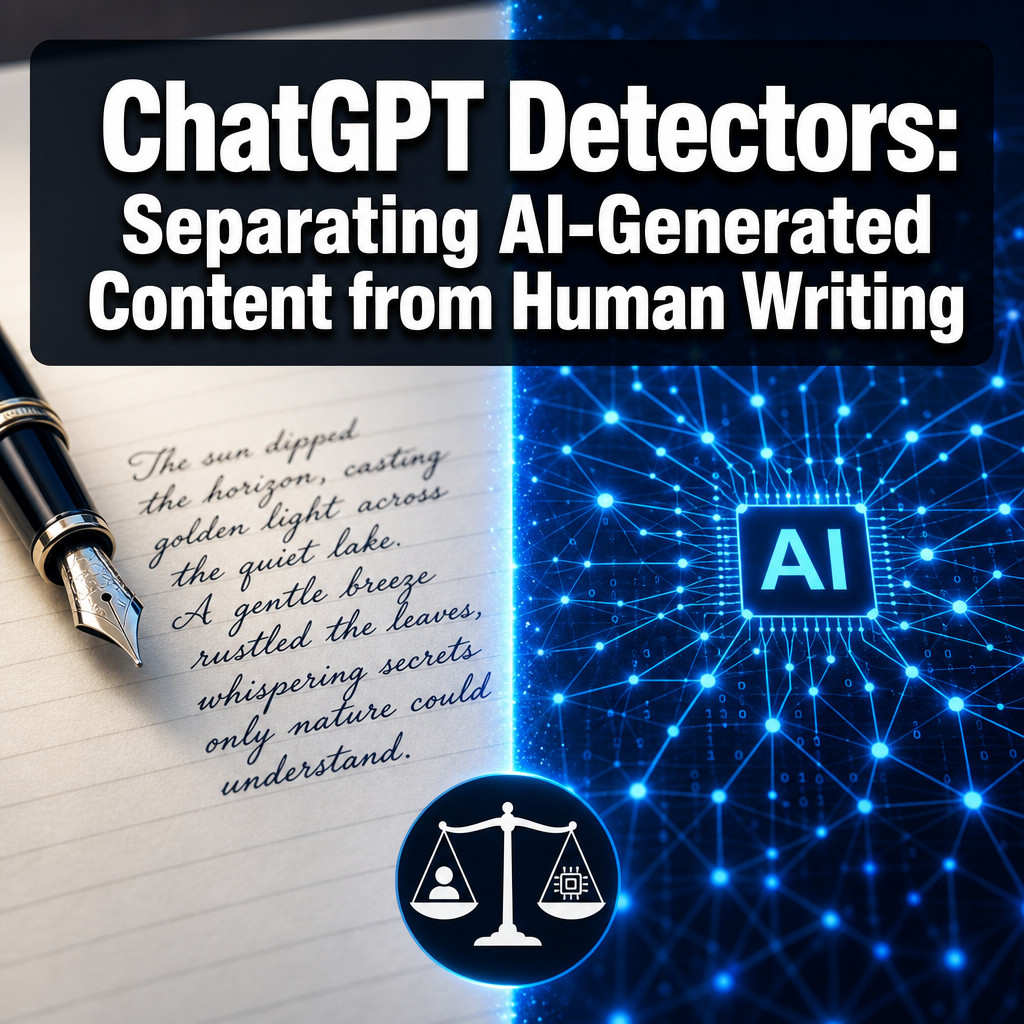
Quick Answer: ChatGPT detectors are software tools that analyze text patterns, statistical signals, and linguistic features to estimate whether content was written by a human or generated by an AI model like ChatGPT. They are widely used by educators, publishers, and content managers, but no detector is 100% accurate. False positives remain a real problem, and their reliability varies significantly by tool and context.
Key Takeaways
- AI detectors analyze perplexity and burstiness — two statistical measures of how predictable and varied text is — to flag likely AI-generated content.
- No current detector achieves perfect accuracy; false positive rates can be significant, especially for non-native English writers.
- Free tools like GPTZero and Copyleaks offer basic detection; paid tiers add bulk scanning, API access, and higher accuracy thresholds.
- Plagiarism checkers and AI detectors are fundamentally different tools that solve different problems.
- Academic institutions are cautious about using AI detection as sole proof of misconduct.
- Students can and should use these tools to self-check their work before submission.
- AI writing tools can be prompted or post-processed to partially evade detection, but this is not foolproof.
- Uniform, low-complexity sentence structures are the clearest signals that content may be AI-generated.
How Do ChatGPT Detectors Actually Work
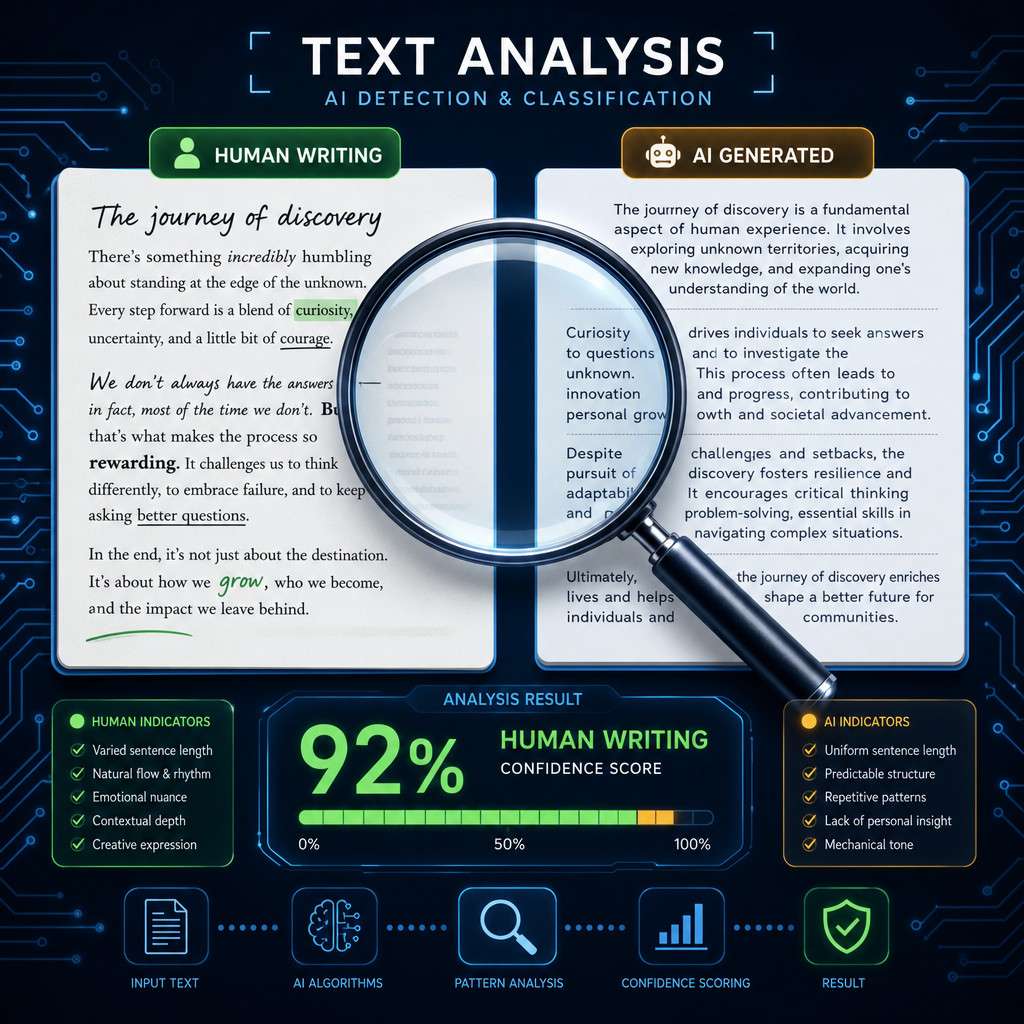
ChatGPT detectors measure two core properties of text: perplexity and burstiness. Perplexity measures how surprising or unpredictable a piece of text is to a language model. AI-generated text tends to be low-perplexity — meaning it follows highly predictable word patterns. Burstiness measures variation in sentence length and complexity. Humans write in bursts: short punchy sentences followed by longer, more complex ones. AI text is comparatively flat.
Most detectors run your text through their own language model and score it against these benchmarks. Some tools also use classifiers trained on large datasets of known human and AI text. The output is typically a probability score, not a binary verdict.
Key signals detectors look for:
- Repetitive sentence structures with minimal variation
- Overuse of transitional phrases like “furthermore” or “it is worth noting”
- Unusually consistent paragraph lengths
- Low lexical diversity (limited vocabulary range across the document)
- Absence of personal anecdotes, typos, or idiosyncratic phrasing
For a deeper look at how AI content generation works under the hood, see this comprehensive guide to AI-powered content generation tools.
Which AI Detection Tool Is Most Accurate, and How Do They Compare
No single tool is definitively “most accurate” across all content types, but several consistently perform well in independent evaluations. Accuracy depends heavily on the AI model used to generate the content and the type of text being tested.
| Tool | Free Tier | Paid Plans | Known Strength |
|---|---|---|---|
| GPTZero | Yes (limited) | From ~$10/month | Academic use, classroom integration |
| Originality.ai | No | From ~$14.95/month | Publisher and SEO content workflows |
| Copyleaks | Yes (limited) | Custom pricing | Multilingual detection |
| Turnitin AI Detection | Institutional only | Bundled with Turnitin | Higher education integration |
| Winston AI | Yes (limited) | From ~$12/month | Document upload, OCR support |
Decision rule: Choose GPTZero if you’re an educator working with student essays. Choose Originality.ai if you manage content at scale for SEO or publishing. Choose Copyleaks if you need multilingual support.
Are These Detectors 100% Reliable
No. ChatGPT detectors are probabilistic tools, not forensic proof. They produce a likelihood score, not a definitive verdict. False positives — flagging human-written content as AI-generated — are a documented and serious problem.
Non-native English speakers are disproportionately affected. Writing that is grammatically clean, formally structured, or repetitive by style (think technical documentation or legal writing) can score as “likely AI” even when written entirely by a human. This is a genuine equity concern in academic settings.
False negatives are also common. Lightly edited AI content, or AI text that has been paraphrased through another tool, often slips through detection systems with low AI probability scores.
Bottom line: Use detector scores as one signal among many, never as standalone proof.
What Are the Top Free AI Detection Websites
Several free tools provide basic AI detection without requiring a paid account. Each has meaningful limitations on word count or daily scans.
- GPTZero (gptzero.me): One of the most widely used free tools. Offers sentence-level highlighting to show which sections score as AI-generated.
- Copyleaks: Free tier includes limited scans per month with both plagiarism and AI detection.
- ZeroGPT: Simple interface, free for shorter documents. Less transparent about its methodology.
- Sapling AI Detector: Free with no account required. Best for quick spot-checks on short passages.
- Writer.com AI Content Detector: Free for up to 1,500 characters. Useful for short-form content.
Free tiers are adequate for occasional personal use. For bulk content workflows or institutional use, paid plans are worth the investment.
Why Do Some AI Detectors Give False Positives
False positives happen because AI detectors measure statistical patterns, not authorship. Any text that mimics the low-perplexity, low-burstiness profile of AI output can trigger a false positive, regardless of who wrote it.
Common causes of false positives:
- Formal academic writing: Structured, citation-heavy prose naturally resembles AI output.
- Non-native English writing: Writers who learned English through textbooks often produce grammatically uniform text.
- Technical and legal documents: These genres use repetitive phrasing by convention.
- Heavily edited drafts: When a human editor smooths out all stylistic variation, the text loses the “burstiness” detectors expect from humans.
This is why educators and publishers should treat a high AI score as a reason to investigate further, not as a conclusion.
How Much Do Professional AI Content Detection Services Cost
Professional AI detection services range from roughly $10 to $30 per month for individual plans, with enterprise pricing available on request.
- GPTZero Pro: Around $10 to $16/month, includes batch document uploads and API access.
- Originality.ai: Pay-per-credit model starting around $14.95 for 200 credits (1 credit = 100 words). Subscription plans available.
- Winston AI: Plans start around $12/month for individuals, higher for teams.
- Turnitin: Institutional licensing only; individual pricing is not publicly listed.
- Copyleaks: Custom pricing for enterprise; free tier available for light use.
For teams producing large volumes of content, the cost per word drops significantly with higher-tier plans. If you’re using AI tools as part of a broader AI-powered content optimization workflow, budgeting for a paid detection tool is a reasonable operational cost.
Can Students Use These Tools to Check Their Own Writing
Yes, and doing so is a smart habit. Students can run their own essays through free tools like GPTZero or Copyleaks before submission to catch any sections that might flag as AI-generated, even if those sections were written by hand.
This is especially useful for:
- Students who use AI tools for brainstorming or outlining but write their final drafts themselves
- Non-native English speakers whose writing style may inadvertently resemble AI output
- Anyone who uses grammar checkers or editing software that may flatten their natural voice
Self-checking does not guarantee a clean result from an instructor’s detector, since different tools use different models. But it reduces surprises and gives students a chance to revise flagged sections for greater stylistic variety.
For more context on academic writing tools and AI, see resources tagged under academic writing tools.
What Is the Difference Between Plagiarism Checkers and AI Detectors
Plagiarism checkers and AI detectors solve completely different problems and should not be used interchangeably.
Plagiarism checkers (like Turnitin’s traditional engine or Grammarly’s plagiarism tool) compare submitted text against a database of existing documents, websites, and academic papers. They look for copied or closely paraphrased content from known sources.
AI detectors do not compare text to a database. They analyze the statistical and linguistic properties of the text itself to estimate whether it was generated by a language model.
A piece of content can be:
- Original (not plagiarized) but AI-generated
- Human-written but accidentally similar to a published source
- Both plagiarized and AI-generated (if someone copied AI output from another source)
Institutions that want comprehensive content integrity checking need both types of tools, not just one.
Do Academic Institutions Trust These Detection Tools
Academic institutions are cautious, not dismissive. Most major universities have adopted AI detection tools as part of their academic integrity workflows, but very few treat a high AI score as sufficient grounds for disciplinary action on its own.
The reasons for caution are well-founded:
- False positive rates are high enough to risk penalizing innocent students
- Detection tools are not transparent about their training data or methodology
- AI-generated content that has been substantially edited may not be detected
- There is no legal or academic consensus on what constitutes “AI-assisted” versus “AI-generated” work
Turnitin, which is integrated into thousands of institutions globally, added an AI detection layer to its platform and explicitly advises instructors to use scores as a starting point for conversation, not as proof of misconduct.
Can AI Writing Tools Trick Detection Software
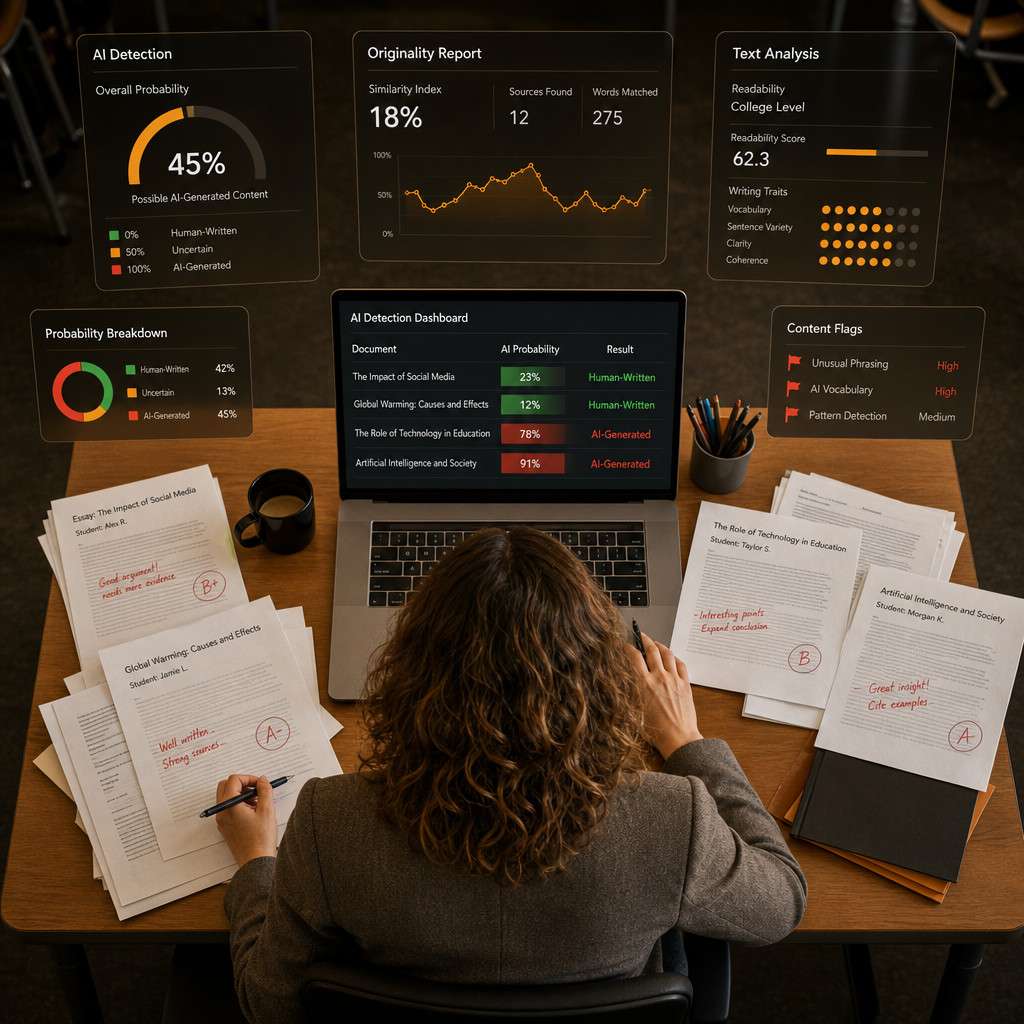
Partially, yes. AI-generated text can be modified to reduce its detectability, but doing so reliably and consistently is harder than it sounds.
Common evasion techniques include:
- Paraphrasing tools: Running AI output through a tool like QuillBot can change sentence structure enough to lower AI probability scores.
- Manual editing: Adding personal anecdotes, varying sentence length, and introducing deliberate imperfections increases burstiness.
- Prompt engineering: Asking ChatGPT to “write in a casual, varied tone with short and long sentences” produces output that is harder to detect.
However, detection tools are also improving. Some newer detectors are specifically trained to recognize paraphrased AI content. The arms race between generation and detection is ongoing, and neither side has a permanent advantage.
For those exploring how ChatGPT automation fits into content workflows, understanding detection limitations is a practical necessity.
What Writing Styles Make AI Content Easier to Detect
Certain writing patterns are strong signals for AI detection tools. Understanding these helps both writers who want to avoid false positives and editors who want to spot AI content manually.
Easiest-to-detect AI writing characteristics:
- Uniform sentence length: Every sentence runs 18 to 25 words with no short punchy breaks.
- Overuse of hedging language: Phrases like “it is important to consider” or “one might argue” appear repeatedly.
- Generic structure: Introduction, three body points, conclusion — every time, without variation.
- Absence of specific detail: Vague claims without named examples, dates, or concrete numbers.
- Predictable transitions: “Furthermore,” “Moreover,” “In conclusion” used in standard positions.
Human writing, by contrast, tends to include contradictions, digressions, specific references, and tonal shifts. These are the features detectors are trained to look for — and that editors can use as a manual checklist.
For more on content quality signals in AI-assisted writing, explore the AI content creation resources and AI content tools on WebAiStack.
Are AI Detectors Useful for Teachers and Professors
Yes, with important caveats. AI detectors give educators a useful signal, but they work best as a conversation starter rather than a verdict.
Practical uses for educators:
- Flagging submissions for closer review, especially when the writing quality is inconsistent with a student’s previous work
- Identifying patterns across a class (if 40% of submissions score high, the assignment design may need rethinking)
- Educating students about AI detection by running sample texts together in class
The most effective approach combines AI detection with direct student conversation. Asking a student to explain their argument, walk through their sources, or revise a section in real time reveals far more about authorship than any software score.
Conclusion
ChatGPT detectors are genuinely useful tools, but they are not lie detectors for text. They measure statistical probability, not intent or authorship. In 2026, the most responsible approach — for educators, publishers, and content managers alike — is to treat detection scores as one data point within a broader evaluation process.
Actionable next steps:
- Run your own content through at least two different detectors before drawing conclusions. Scores vary significantly between tools.
- If you manage student submissions or editorial content, pair AI detection with human review. Look for inconsistencies in voice, specificity, and argument quality.
- If you use AI tools in your writing process, vary your sentence structure deliberately and add specific, personal detail. This reduces false positives and improves content quality regardless of detection.
- For institutional use, choose a tool with transparent methodology and avoid using any single score as disciplinary proof.
- Stay current. Detection technology and AI generation capabilities are both evolving fast. A tool that performs well today may need reassessment within months.
For more on building responsible AI content workflows, explore the AI content generation resources and the broader AI category on WebAiStack.
FAQ
Q: Can ChatGPT detect its own writing? ChatGPT does not have a built-in self-detection feature. OpenAI discontinued its own classifier tool in 2023 due to low accuracy. Third-party tools are needed for detection.
Q: Is it illegal to use AI detectors on student work? In most jurisdictions, no. However, using detection scores to penalize students without additional evidence raises serious fairness and due process concerns.
Q: Do AI detectors work on languages other than English? Most tools are optimized for English. Copyleaks offers the broadest multilingual support, but accuracy drops in less-resourced languages.
Q: Can a VPN or anonymization tool fool an AI detector? No. AI detectors analyze the text itself, not the user’s IP address or identity. Anonymization tools have no effect on detection scores.
Q: How long does text need to be for accurate detection? Most tools recommend a minimum of 250 to 300 words for reliable results. Shorter texts produce less reliable scores due to insufficient statistical signal.
Q: Will AI detectors flag content written with Grammarly or similar editing tools? Possibly. Heavy use of grammar and style editors can reduce burstiness in human writing, which may increase AI probability scores. Light use is generally safe.
Q: Do detectors distinguish between different AI models (GPT-4, Claude, Gemini)? Some newer tools claim model-specific detection, but this capability is still developing and not consistently reliable across all platforms.
Q: Is there a way to make human writing undetectable as human? Ironically, yes — highly polished, uniform writing can score as AI-generated. Adding natural variation, personal voice, and specific detail helps detectors (and readers) recognize human authorship.
Q: Should publishers require AI detection before accepting submissions? Many publishers now do. It is a reasonable editorial standard, provided scores are treated as one signal rather than a final decision.
Q: Can I appeal a false positive AI detection result? In academic settings, yes. Most institutions have appeals processes. Providing drafts, notes, browser history, or other evidence of your writing process can support an appeal.
Useful Resources: ChatGPT by OpenAI & OpenAI research blog