Last updated: June 9, 2026
Quick Answer: ChatGPT 5 is OpenAI’s most advanced conversational AI model to date, offering significantly improved reasoning, longer context retention, and multimodal capabilities compared to its predecessors. It is available through OpenAI’s platform in tiered pricing plans and represents a meaningful step forward in what AI language models can reliably do for individuals and businesses alike.
Key Takeaways
- ChatGPT 5 improves on GPT-4 in reasoning depth, context length, instruction-following, and multimodal input handling
- Pricing follows a tiered model: a free version exists, with paid plans targeting individuals and enterprise teams
- The model is not a replacement for professional legal or medical judgment, but it can assist meaningfully in those workflows
- Industries such as healthcare administration, legal research, software development, and customer service stand to benefit most
- ChatGPT 5 competes directly with Anthropic’s Claude and Google’s Gemini, each with distinct strengths
- Ethical concerns include misinformation risk, bias in outputs, data privacy, and workforce displacement
- No specialized hardware is needed to use ChatGPT 5 via the web or API; local deployment requires significant compute resources
- Small businesses and freelancers can use it to automate drafting, research, customer support, and content workflows
What Exactly Is ChatGPT 5 and How Is It Different from Previous Versions
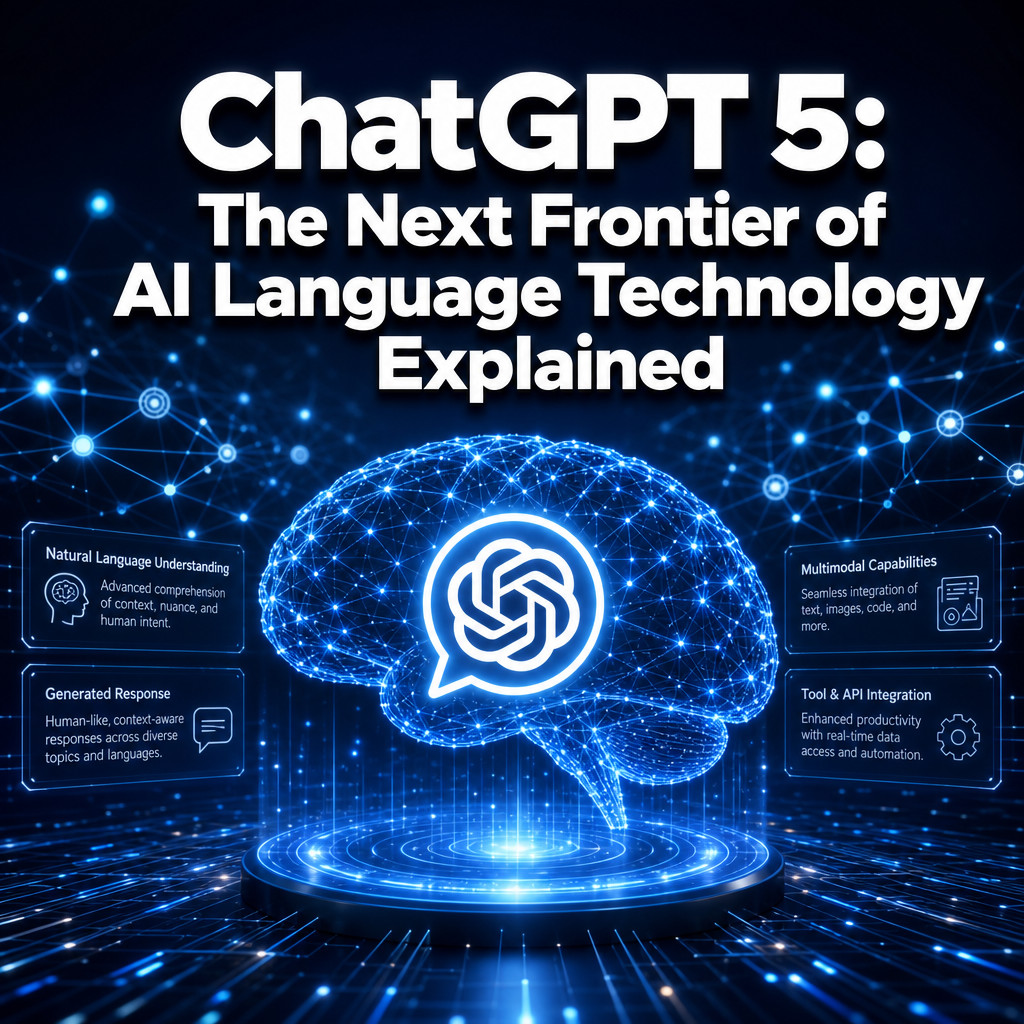
ChatGPT 5 is OpenAI’s fifth-generation large language model, built on the GPT-5 architecture. Compared to GPT-4, it handles longer conversations with better coherence, reasons through multi-step problems more accurately, and processes text, images, and other inputs within a single interaction.
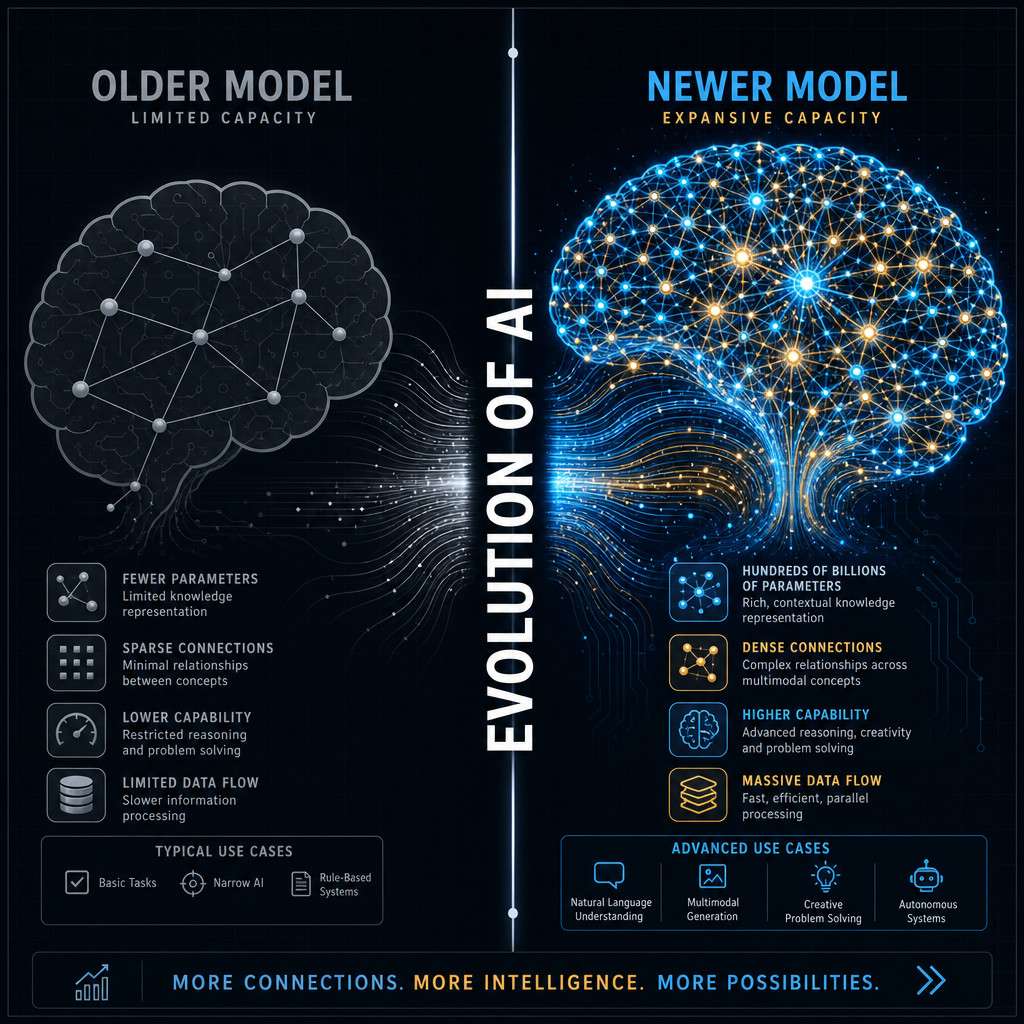
Here is what changed most noticeably from earlier versions:
- Context window: GPT-5 supports a substantially larger context window, meaning it can hold and reference much longer documents or conversation histories without losing track
- Reasoning: The model performs better on tasks requiring logical chains, such as math proofs, legal argument construction, and code debugging
- Instruction-following: It is more precise about following nuanced, multi-part instructions without drifting off-task
- Multimodal input: Users can submit images, documents, and text together in one prompt
- Reduced hallucination rate: While not eliminated, factual errors are less frequent than in GPT-3.5 and early GPT-4 versions
For readers who want to explore the broader ChatGPT ecosystem, the ChatGPT archives at WebAIStack offer a solid collection of related guides and updates.
How Much Will ChatGPT 5 Cost for Individuals and Businesses
ChatGPT 5 is available at no cost in a limited capacity through OpenAI’s free tier, with more capable access requiring a paid subscription. Based on OpenAI’s established pricing structure as of 2026, ChatGPT Plus runs at approximately $20 per month for individual users, while ChatGPT Team and Enterprise plans are priced higher and include additional features like admin controls, larger context windows, and priority access.
Pricing tiers (approximate as of 2026):
| Plan | Monthly Cost | Best For |
|---|---|---|
| Free | $0 | Casual use, basic tasks |
| ChatGPT Plus | ~$20/user | Power users, freelancers |
| ChatGPT Team | ~$30/user | Small to mid-size teams |
| Enterprise | Custom | Large organizations |
API access is billed per token (input and output), making it cost-effective for developers building lightweight applications but potentially expensive at high volume. If you’re building automated workflows on top of ChatGPT 5, reviewing a comprehensive guide to ChatGPT automation and no-code integrations is a practical starting point.
Can ChatGPT 5 Really Understand Context Better Than Humans
ChatGPT 5 does not “understand” context the way humans do. It processes statistical patterns in text at a very high level of sophistication, which produces outputs that often appear contextually aware. In practice, it handles long-document summarization, multi-turn dialogue, and nuanced instruction-following better than any previous version, but it still lacks genuine comprehension or real-world grounding.
Where it genuinely excels:
- Maintaining topic coherence across very long conversations
- Picking up on subtle shifts in user intent mid-conversation
- Referencing earlier parts of a document accurately when asked
Where it still falls short of human understanding:
- It cannot verify facts against live data unless given tools to do so
- It may confidently produce plausible-sounding but incorrect information
- It lacks common sense in edge cases that humans resolve intuitively
What Are the Top Limitations and Potential Mistakes with ChatGPT 5
ChatGPT 5 is a powerful tool, but it makes specific, predictable types of errors. Knowing these in advance prevents costly mistakes.
Common limitations:
- Hallucination: The model can generate false information with high confidence, especially on niche or recent topics
- Recency cutoff: Training data has a knowledge cutoff, so events after that date are unknown unless the model has web browsing enabled
- Sycophancy: It tends to agree with users even when the user is wrong, which can reinforce bad assumptions
- Verbosity: Without clear instructions, it often over-explains when a short answer would serve better
- Bias: Outputs can reflect biases present in training data, particularly on politically or culturally sensitive topics
Common user mistakes:
- Treating its outputs as verified facts without cross-checking
- Using it for final legal or medical decisions without professional review
- Providing vague prompts and expecting precise results
- Ignoring the system prompt or context window when working on long documents
Which Industries Will Benefit Most from ChatGPT 5’s Capabilities
Healthcare administration, legal research, software development, education, and customer service are the industries best positioned to benefit from ChatGPT 5. These fields involve high volumes of text processing, repetitive drafting tasks, and knowledge retrieval, which are exactly where the model performs best.

Industry breakdown:
- Healthcare: Clinical documentation, patient intake summaries, medical literature review (not diagnosis)
- Legal: Contract drafting, case research, clause comparison, document review
- Software development: Code generation, debugging assistance, documentation writing
- Education: Personalized tutoring, curriculum drafting, grading rubric creation
- Customer service: Automated response drafting, FAQ generation, ticket triage
For developers looking at AI-assisted coding specifically, tools like those covered in our Cursor AI coding companion guide show how AI language models are already reshaping software workflows.
Is ChatGPT 5 Safe to Use for Sensitive Work Like Legal or Medical Tasks
ChatGPT 5 can assist with legal and medical tasks, but it should not be the final decision-maker in either domain. It is suitable for research, drafting, and summarization, but outputs must be reviewed by a qualified professional before acting on them.
Use it for:
- Drafting initial contract language for attorney review
- Summarizing medical literature for a clinician to evaluate
- Generating patient education materials (with professional sign-off)
- Identifying relevant case law to research further
Do not rely on it for:
- Final legal advice or court filings without attorney oversight
- Diagnosis or treatment recommendations
- Any task where an error could cause direct patient or client harm
Data privacy is also a concern. Sensitive client or patient data should not be entered into a public-facing ChatGPT interface without confirming the applicable data processing agreements and compliance with regulations such as HIPAA or GDPR.
What Kind of Hardware Do I Need to Run ChatGPT 5 Effectively
To use ChatGPT 5 through OpenAI’s web interface or API, you need only a standard internet-connected device. A modern laptop, tablet, or smartphone is sufficient. No special GPU or local compute is required for cloud-based access.
Local deployment is a different situation entirely. Running a model of GPT-5’s scale locally would require enterprise-grade GPU clusters, which puts it out of reach for most individuals and small businesses. For most users, cloud access via OpenAI’s platform is both the practical and cost-effective choice.
If you’re interested in the broader landscape of open-source model alternatives that can run locally at smaller scales, our guide to open-source language model notebooks covers that territory well.
How Does ChatGPT 5 Compare to Other AI Models Like Claude or Gemini
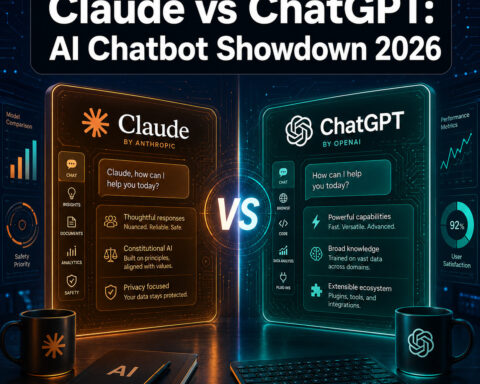
ChatGPT 5 leads on instruction-following and general-purpose text generation, while Anthropic’s Claude models are often preferred for long-document analysis and safety-conscious outputs. Google’s Gemini has strong integration with Google Workspace and excels at tasks tied to search and real-time data.
| Model | Strength | Weakness |
|---|---|---|
| ChatGPT 5 | Reasoning, coding, instruction-following | Knowledge cutoff, hallucination risk |
| Claude (Anthropic) | Long documents, safety alignment | Occasionally overly cautious |
| Gemini (Google) | Real-time data, Google integration | Less consistent on creative tasks |
Choose ChatGPT 5 if you need strong coding assistance, multi-step reasoning, or a broad general-purpose assistant. Choose Claude if you’re processing very long documents and want more conservative outputs. Choose Gemini if your workflow is Google-centric or requires live web data.
For a broader look at AI tools worth tracking, see our roundup of AI websites that can transform your digital workflow.
Will ChatGPT 5 Replace Human Workers in Writing and Customer Service
ChatGPT 5 will automate specific writing and customer service tasks, but it is unlikely to fully replace human workers in either field in the near term. It handles high-volume, repetitive, and templated work well. It struggles with tasks requiring genuine empathy, accountability, brand voice consistency, and real-time judgment under ambiguous conditions.
What is more likely to happen is role restructuring. Writers who use ChatGPT 5 as a drafting and research tool will produce more output in less time. Customer service teams will use it to handle tier-one queries automatically while routing complex issues to human agents.
The workers most at risk are those doing purely templated, low-judgment writing or scripted customer interactions. Those who develop skills in prompt engineering, AI output editing, and workflow design will likely increase their value rather than lose it.
What Ethical Concerns Exist Around ChatGPT 5’s Advanced Capabilities
The primary ethical concerns around ChatGPT 5 center on misinformation, bias, privacy, consent, and economic displacement. As the model becomes more capable, these concerns grow proportionally.
Key ethical issues:
- Misinformation at scale: More convincing outputs make it easier to generate and spread false content
- Bias amplification: Training data biases can produce discriminatory outputs in hiring, lending, or legal contexts
- Consent and attribution: Content generated using scraped training data raises unresolved questions about creator rights
- Surveillance risk: AI-generated text can be used to impersonate individuals or craft targeted manipulation
- Workforce impact: Automation of cognitive tasks affects livelihoods, particularly in lower-wage writing and support roles
OpenAI has published usage policies and safety guidelines, but enforcement is imperfect and the technology moves faster than regulation in most jurisdictions.
How Can Small Businesses and Freelancers Use ChatGPT 5
Small businesses and freelancers can use ChatGPT 5 to reduce time spent on drafting, research, customer communication, and content production without hiring additional staff. The most practical entry point is identifying one or two repetitive text-heavy tasks and automating them first.
High-value use cases for small operators:
- Drafting email campaigns, proposals, and client reports
- Generating first drafts of blog posts or social media content
- Answering customer FAQs through an integrated chatbot
- Summarizing long contracts or vendor agreements before attorney review
- Conducting competitive research by analyzing uploaded documents
For freelancers specifically, the comprehensive guide to AI-powered content generation tools offers practical workflow ideas. Those interested in automating business processes further will also find value in exploring AI automation strategies to connect ChatGPT 5 with other tools in their stack.
FAQ
What is ChatGPT 5 in simple terms? ChatGPT 5 is a conversational AI made by OpenAI that can read, write, reason, and respond to questions across a wide range of topics. It is the most capable version of ChatGPT released to date.
Is ChatGPT 5 free to use? A limited free version exists. Full access to ChatGPT 5’s capabilities requires a paid subscription, starting at approximately $20 per month for individuals.
How accurate is ChatGPT 5? It is more accurate than previous versions but still makes factual errors, especially on niche or recent topics. Always verify important outputs with a credible source.
Can ChatGPT 5 browse the internet? Yes, when the browsing tool is enabled in the interface. Without it, the model relies on its training data, which has a knowledge cutoff date.
Is ChatGPT 5 safe for business use? Generally yes, for drafting and research tasks. Sensitive data should only be submitted under an Enterprise agreement with appropriate data handling terms in place.
How does ChatGPT 5 handle multiple languages? It performs well in major world languages including Spanish, French, German, Mandarin, and Japanese, though English remains its strongest language.
Can I use ChatGPT 5 to write code? Yes. Code generation and debugging are among its strongest capabilities, particularly for Python, JavaScript, and SQL.
Does ChatGPT 5 remember previous conversations? By default, memory between separate sessions is limited unless the memory feature is enabled. Within a single session, it retains the full conversation context.
What is the difference between ChatGPT 5 and the GPT-5 API? ChatGPT 5 is the consumer-facing product with a chat interface. The GPT-5 API gives developers direct programmatic access to the underlying model for building custom applications.
Is ChatGPT 5 good for students? It can help with research, writing drafts, and explaining concepts. Students should use it as a learning aid rather than a shortcut, and always follow their institution’s academic integrity policies.
Conclusion
ChatGPT 5 represents a genuine step forward in what AI language models can do, not just in raw capability but in practical usefulness for everyday tasks. The improvements in reasoning, context handling, and multimodal input make it a more reliable tool than its predecessors for professionals, small businesses, and individual users alike.
Actionable next steps:
- Start with a free account to test ChatGPT 5 on one specific task you currently do manually, such as drafting emails or summarizing documents
- If you find consistent value, upgrade to ChatGPT Plus and build a simple prompt template for your most common use case
- For business use, review OpenAI’s data processing terms before submitting any client or employee data
- Stay current on model updates, as OpenAI releases capability improvements regularly
- Pair ChatGPT 5 with automation tools to multiply its impact across your workflow
The model is a tool, not a replacement for expertise or judgment. Used with clear expectations and appropriate oversight, it can meaningfully reduce time spent on cognitive busywork and free up capacity for higher-value work.
Useful Resources: ChatGPT by OpenAI & OpenAI research blog