Last updated: June 7, 2026
Quick Answer: Canva ideas range from social media graphics and presentation decks to business cards, email headers, video thumbnails, and printable planners. The platform works for anyone — not just designers — because it pairs drag-and-drop simplicity with thousands of templates. The best canva ideas match a specific goal (brand awareness, sales, education) with the right template category, then get customized with your own fonts, colors, and images.
Key Takeaways
- Canva is a browser-based design tool that requires zero prior design experience to produce professional-quality visuals.
- The free plan covers most casual and small-business needs; Canva Pro (about $13/month in 2026) unlocks premium templates, Brand Kit, and background remover.
- Social media posts, presentations, logos, email templates, and short videos are the most popular canva ideas for beginners.
- Sticking to two or three fonts and a consistent color palette is the fastest way to make any Canva design look polished.
- Canva is not a direct replacement for Adobe Photoshop — each tool serves different complexity levels.
- Common beginner mistakes include overcrowding layouts, ignoring alignment, and using too many fonts.
- Free alternatives like Google Slides, Figma, and Piktochart exist, but Canva’s template library remains the largest for non-designers.
What Exactly Is Canva and How Do Designers Use It?
Canva is a cloud-based graphic design platform that lets users create visuals through a drag-and-drop editor. It launched in 2013 and has grown to serve over 170 million monthly active users (per Canva’s own reporting in 2024). You don’t need to install software — everything runs in your browser or the mobile app.
Designers and non-designers use Canva differently:
- Non-designers rely on templates. They pick a layout, swap in their text and images, and export.
- Professional designers use Canva for quick drafts, client-facing mockups, or collaborative projects where the client needs to make edits later.
- Teams use Canva’s Brand Kit feature to lock in approved logos, colors, and fonts so every team member stays on-brand.
If you’re exploring AI-powered design tools, Canva now includes Magic Design, which generates layout suggestions from a text prompt or uploaded image.
What Types of Projects Work Best in Canva?
Canva excels at template-driven, fixed-dimension projects. It’s less suited for complex photo manipulation or multi-artboard illustration work. Here’s where it shines:
| Project Type | Best For | Free Plan Enough? |
|---|---|---|
| Social media posts | Instagram, Facebook, LinkedIn, Pinterest | Yes |
| Presentations | Pitch decks, classroom slides, webinars | Yes |
| Logos and brand kits | Startups, freelancers, side projects | Partially (Pro for Brand Kit) |
| Email headers | Newsletters, marketing campaigns | Yes |
| Video thumbnails | YouTube, course platforms | Yes |
| Short-form video | Reels, TikToks, animated stories | Partially |
| Print materials | Business cards, flyers, posters | Yes |
| Documents | Resumes, proposals, reports | Yes |
For example, I helped a friend’s bakery create an entire visual identity in Canva over a weekend — logo, menu card, Instagram templates, and a simple website banner. Total cost: $0 on the free plan.
If you want to build engaging carousel posts for Instagram or LinkedIn, Canva’s multi-page document feature makes that straightforward.
Is Canva Better Than Adobe Photoshop for Graphic Design?
No — and it’s not trying to be. Canva and Photoshop serve different purposes. Canva is a layout and template tool. Photoshop is a pixel-level image editor. Choose Canva if you need fast, good-looking designs without a learning curve. Choose Photoshop if you need advanced photo retouching, compositing, or print-production control.
Choose Canva when:
- You need a social media graphic in under 10 minutes
- You’re not a trained designer
- Collaboration with non-technical teammates matters
Choose Photoshop when:
- You need layer masks, channel editing, or RAW photo processing
- You’re producing assets for print at CMYK specifications
- The project requires pixel-perfect precision
Many professionals use both. I personally draft concepts in Canva for speed, then move to Photoshop or Figma only when the project demands it. If you’re curious about Figma for more complex design work, it’s worth comparing.
How Much Does a Canva Pro Subscription Cost?
Canva Pro costs approximately $13 per month (billed monthly) or about $120 per year (billed annually) as of 2026. Canva Teams pricing starts around $10 per person per month on an annual plan, with a minimum of three users.
- Free plan: 250,000+ templates, 5 GB storage, basic export options.
- Pro plan: 100+ million premium stock photos, 1 TB storage, Brand Kit, Background Remover, Magic Resize, and priority support.
- Teams plan: Everything in Pro plus shared brand controls, team folders, and approval workflows.
- Education and nonprofit plans: Free Pro-level access for verified educators and registered nonprofits.
The free plan is genuinely useful. Most people only need Pro when they hit the Brand Kit limitation or want access to premium stock photos without paying for a separate service.
Are There Any Limitations to Canva’s Free Version?
Yes, but they’re manageable for most users. The free plan restricts access to premium templates (marked with a crown icon), limits cloud storage to 5 GB, and doesn’t include Brand Kit, Background Remover, or Magic Resize. You also can’t export with transparent backgrounds on the free plan — that’s a Pro feature.
Workarounds for free users:
- Use only free templates (filter by “Free” in the template browser)
- Remove backgrounds manually with free external tools like remove.bg
- Resize designs manually by creating a new project at the target dimensions and copying elements over
What Are Some Free Alternatives to Canva for Making Graphics?
If Canva doesn’t fit your workflow, several free tools cover similar ground:
- Google Slides: Surprisingly capable for social media graphics and presentations. No templates library like Canva, but fully free.
- Figma (free tier): Better for UI design and wireframes, but can produce marketing graphics. Steeper learning curve.
- Piktochart: Strong for infographics and data visualization.
- Crello (now VistaCreate): Closest direct competitor to Canva with a similar template model.
- GIMP: Free, open-source image editor. More like Photoshop than Canva — not template-based.
For a broader look at AI-powered content generation tools that complement design work, we’ve covered several options.

Is Canva Good for Small Business Owners or Just for Designers?
Canva was built for non-designers, and small business owners are its core audience. If you run a local shop, freelance practice, or online store, Canva handles most of your visual marketing needs without hiring a designer.
Common small-business canva ideas include:
- Social media content calendars — batch-create a month of posts in one sitting
- Email newsletter headers — keep branding consistent across campaigns (see our guide on creating effective email templates in Canva)
- Product mockups — showcase merchandise on lifestyle backgrounds
- Menus and price lists — update seasonally without reprinting costs
- Hiring posts — branded job announcements for LinkedIn or Instagram
A common mistake for business owners: using a different template style every time. Pick one template set and adapt it. Consistency builds brand recognition faster than variety.
Can I Use Canva for Professional Presentation Templates?
Absolutely. Canva’s presentation mode includes speaker notes, animations, transitions, and remote-control features. You can present directly from Canva, export to PowerPoint, or share a view-only link.
Tips for better Canva presentations:
- Start with a template that matches your industry tone (minimal for tech, bold for creative agencies).
- Limit each slide to one key idea.
- Use the “Notes” feature for speaker prompts — they won’t appear on screen.
- Export as PDF for print handouts or PPTX if your audience needs to edit.
I’ve delivered client pitch decks built entirely in Canva. The only time I switch to PowerPoint or Google Slides is when the client’s IT environment blocks Canva links.
How Do I Design Social Media Graphics That Actually Look Good?
Start with the right dimensions, pick a single focal point per graphic, and limit your color palette to three colors. That alone puts you ahead of most amateur designs.
Step-by-step process:
- Choose the correct preset size (Canva auto-suggests dimensions for each platform).
- Select a template close to your vision — don’t start from a blank canvas unless you’re confident.
- Replace placeholder text with concise copy. Social posts need fewer words than you think.
- Swap stock images for your own photos when possible. Authenticity outperforms polish on social media.
- Align everything. Use Canva’s snap guides (the purple lines that appear when dragging elements).
- Check contrast. Light text on light backgrounds is the most common readability mistake.
For platform-specific guidance, our tutorial on designing engaging Instagram story templates walks through the full process.
What Are the Most Common Mistakes Beginners Make in Canva?
The biggest beginner mistake is overcrowding the design. New users try to fill every inch of white space, which makes the layout feel cluttered and hard to read.
Other frequent mistakes:
- Using more than three fonts — stick to one heading font and one body font
- Ignoring alignment — always use Canva’s grid and snap features
- Choosing clashing colors — use Canva’s built-in color palette suggestions or a tool like Coolors
- Downloading at low resolution — always export as PNG for images or PDF Print for physical materials
- Skipping the Brand Kit — even on the free plan, write down your hex codes and font choices somewhere
How Can I Make My Canva Designs Look More Professional?
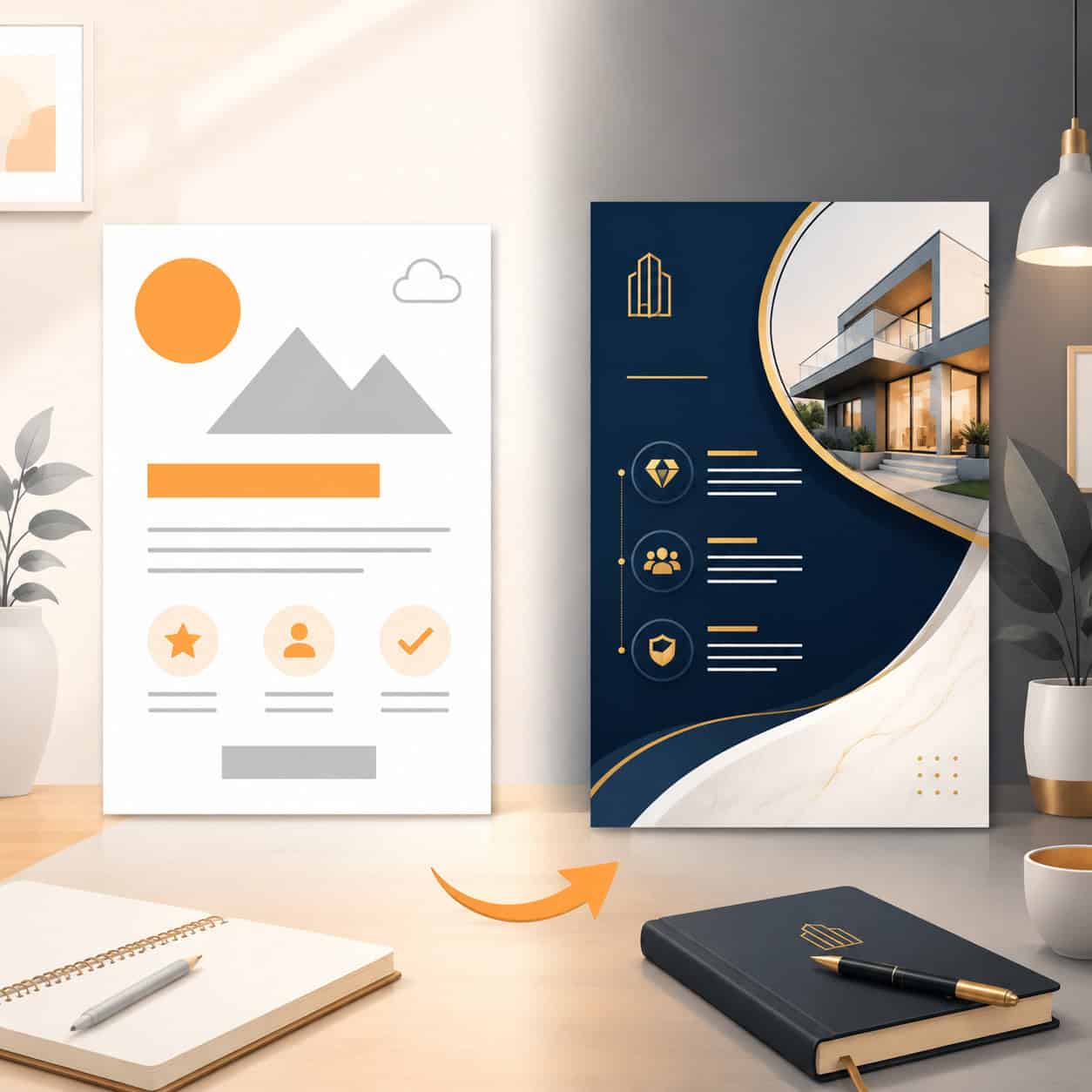
Three changes make the biggest difference: consistent spacing, a limited color palette, and high-quality images. Professional design is mostly about restraint.
Quick wins:
- Add breathing room. Increase padding around text boxes and between elements.
- Use brand colors. Pick two or three hex codes and use them everywhere.
- Upgrade your images. Canva Pro’s stock library is solid, but your own high-resolution photos always feel more authentic.
- Layer subtle effects. A slight drop shadow or a transparent color overlay on a background image adds depth without looking amateur.
- Lock your grid. Use Canva’s ruler and guide features to keep margins even.
For logo work specifically, our beginner’s guide to Canva logo design covers the fundamentals.
What Design Skills Do I Need to Use Canva Effectively?
You need zero formal design skills to start. Canva’s templates handle layout, typography pairing, and color harmony for you. But understanding a few basic principles will improve your output significantly:
- Visual hierarchy: Make the most important element the largest or most contrasting.
- Alignment: Keep elements snapped to a grid.
- Contrast: Ensure text is readable against its background.
- Consistency: Repeat the same styles across related designs.
You don’t need to study graphic design theory. Just pay attention to designs you admire, and notice what makes them work — it’s usually simplicity and consistency.
Why Is My Canva Design Not Saving or Uploading?
Canva auto-saves to the cloud, so saving issues usually point to a connectivity or browser problem. Try these fixes in order:
- Check your internet connection. Canva needs a stable connection to sync.
- Clear browser cache. Corrupted cache files cause upload and save failures.
- Switch browsers. Chrome and Edge work best with Canva. Safari occasionally has rendering issues.
- Reduce file size. Uploads over 25 MB (for images) or 500 MB (for videos) may fail on the free plan.
- Disable browser extensions. Ad blockers and privacy extensions sometimes interfere with Canva’s save process.
- Try the Canva desktop app. It handles large files more reliably than the browser version.
If designs still won’t save, Canva’s status page (status.canva.com) shows whether there’s a platform-wide outage.
Frequently Asked Questions
Can I use Canva designs for commercial purposes? Yes. Canva’s free and Pro content licenses allow commercial use, including for client work. You cannot, however, sell unmodified templates or stock assets as standalone files.
Is Canva good for YouTube thumbnails? Yes. Canva has a dedicated YouTube thumbnail preset (1280 x 720 px) with templates optimized for high-contrast, click-worthy designs.
Can I collaborate with others in Canva? Yes. You can share any design via link and set permissions to view, comment, or edit. Real-time collaboration works similarly to Google Docs.
Does Canva work offline? Only partially. The Canva desktop app caches recent designs, but you need an internet connection for full functionality, template access, and saving.
Can I animate designs in Canva? Yes. Canva offers page animations and element-level animations. You can export animated designs as MP4 or GIF.
Is Canva safe to use for business documents? Canva uses encryption in transit and at rest. For sensitive documents, review Canva’s data processing agreements, especially if you’re in a regulated industry.
What’s the best export format for Canva designs? PNG for web images, PDF Print for physical materials, MP4 for videos, and SVG (Pro only) for scalable graphics like logos.
Can I import my own fonts into Canva? Yes, but only on Pro or Teams plans. Free users are limited to Canva’s built-in font library.
How many templates does Canva offer? Canva reports over 250,000 free templates and millions more on Pro. New templates are added regularly.
Can I use Canva on my phone? Yes. Canva’s iOS and Android apps offer nearly full functionality, including template editing, photo uploads, and direct social media publishing.
Conclusion
The best canva ideas start with a clear purpose — whether that’s growing your Instagram following, pitching a client, or printing menus for your restaurant. Canva’s strength is speed and accessibility, not complexity. Lean into that.
Your next steps:
- Pick one project from the table above that matches your current need.
- Choose a template, customize it with your brand colors and fonts, and export.
- Build a small library of 5-10 reusable templates so you’re not starting from scratch every time.
- Explore Canva’s AI design features to speed up your workflow further.
Start simple, stay consistent, and refine as you go. That’s how good design actually happens — one project at a time.
Useful Resources: Canva design platform & Canva Design School free tutorials