Last updated: June 7, 2026
Quick Answer: The Canva AI image generator (called Magic Media) lets you type a text prompt and receive a custom image in seconds, directly inside the Canva editor. It’s available on Free plans with limited monthly uses and with expanded access on Canva Pro, Teams, and Enterprise plans. The tool is best suited for marketers, small business owners, and content creators who need quick, commercially usable visuals without leaving their design workflow.
Key Takeaways
- Canva’s AI image generator is built into the editor under “Magic Media” and supports text-to-image, style presets, and aspect ratio selection.
- Free plan users get a limited number of AI image generations per month (typically around 50 lifetime uses as of early 2026). Pro and Teams subscribers get significantly more.
- Generated images can be used commercially under Canva’s content license, but you should avoid generating images of real public figures or trademarked content.
- The tool is simpler than Midjourney or DALL-E but trades advanced control for speed and convenience.
- Common mistakes include vague prompts, ignoring style presets, and expecting photorealistic results on every attempt.
- Canva applies content moderation filters that block violent, explicit, or harmful image requests.
- Professional designers can use Canva AI as a rapid ideation tool, not necessarily as a final production asset creator.
What Exactly Can Canva’s AI Image Generator Do?
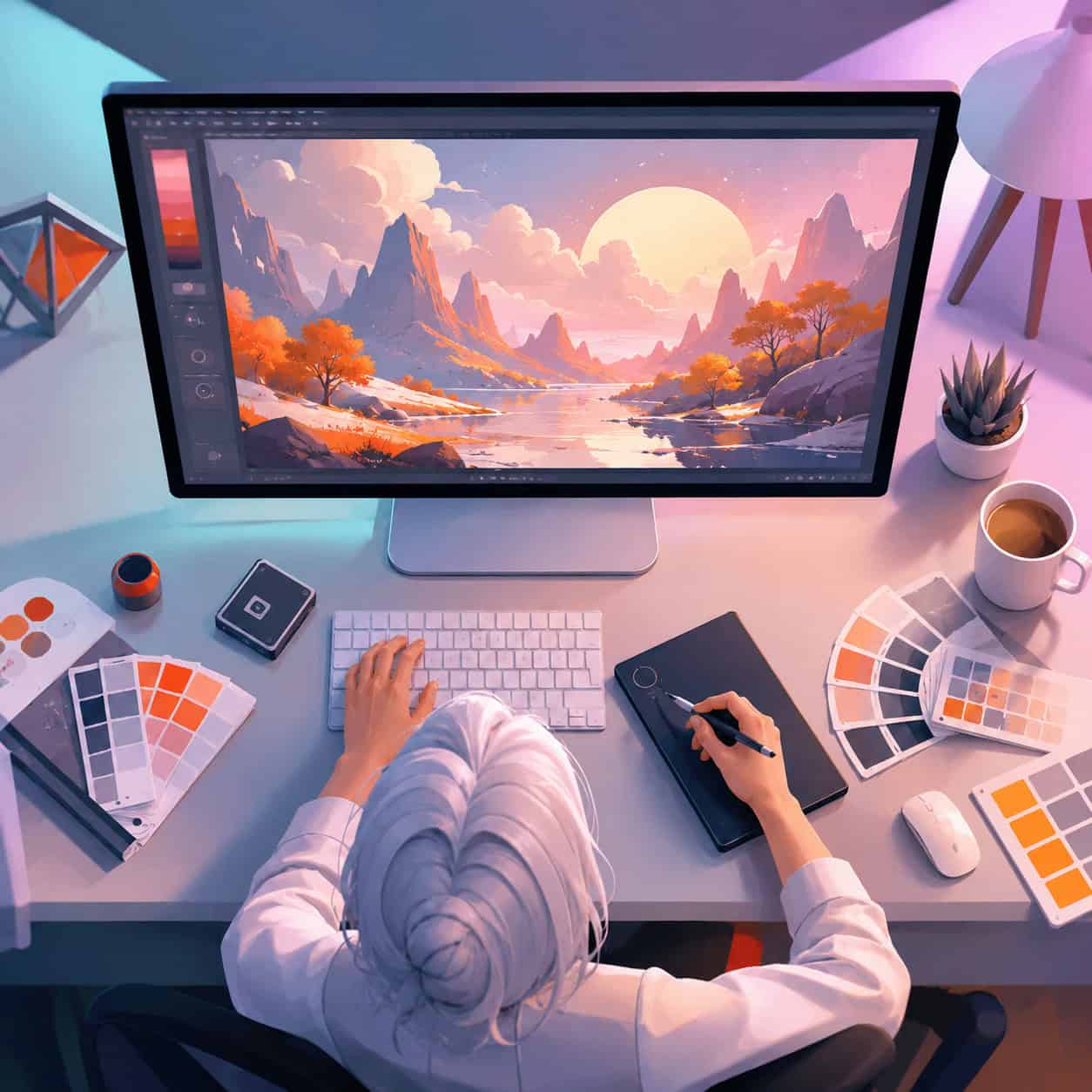
Canva’s AI image generator, branded as Magic Media, converts plain-text descriptions into original images. You type something like “a golden retriever wearing sunglasses on a beach at sunset” and receive multiple image options within about 10 to 15 seconds.
Beyond basic text-to-image, here’s what the tool supports:
- Style presets: Choose from options like watercolor, photo, film, neon, anime, and more to steer the visual output.
- Aspect ratio control: Generate images in square, landscape, or portrait formats to match your design needs.
- Direct editor integration: Generated images drop straight onto your Canva canvas, so you can resize, filter, and layer them immediately.
- AI-powered editing: After generation, you can use Magic Eraser or Magic Edit to refine parts of the image without starting over.
I recently needed a quick hero image for a newsletter about remote work trends. Instead of spending 20 minutes on a stock photo site, I typed a prompt into Magic Media, selected the “photo” style, and had a usable image on my canvas in under a minute. It wasn’t gallery-worthy art, but it was exactly right for the job.
If you’re already using Canva for other design tasks, explore more ways to craft stunning visuals with Canva’s AI tools.
How Is Canva’s AI Image Generator Different from Midjourney or DALL-E?
Canva prioritizes convenience and integration over raw image quality and granular control. Midjourney and DALL-E 3 generally produce higher-fidelity images with more nuanced prompt interpretation, but they require separate platforms and workflows.
| Feature | Canva Magic Media | Midjourney | DALL-E 3 (via ChatGPT) |
|---|---|---|---|
| Built into a design editor | Yes | No | No |
| Style presets | Yes (12+) | Via prompt syntax | Limited |
| Prompt complexity | Simple, short prompts work best | Rewards detailed prompts | Moderate detail |
| Image quality ceiling | Good for web/social | Excellent, near-photorealistic | Very good |
| Learning curve | Very low | Moderate to high | Low to moderate |
| Commercial use | Yes, under Canva license | Yes, on paid plans | Yes, under OpenAI terms |
| Price entry point | Free (limited) | Starts ~$10/month | Included with ChatGPT Plus |
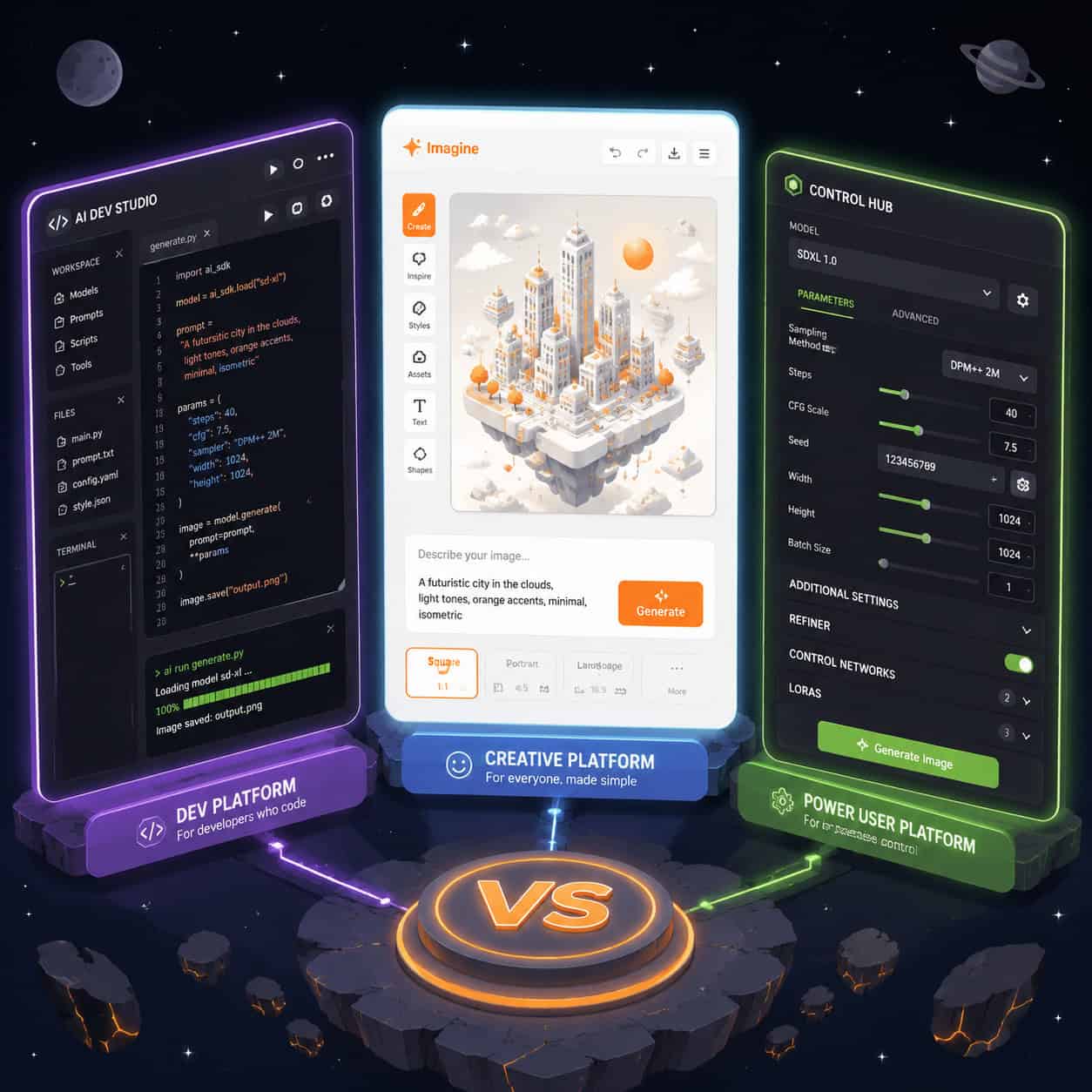
Choose Canva AI if you need images inside an existing design workflow and value speed over maximum fidelity. Choose Midjourney if image quality is your top priority and you’re comfortable with Discord-based prompting. Choose DALL-E 3 if you want strong prompt adherence and already use ChatGPT.
Is Canva AI Image Generation Free with My Current Plan?
Free plan users get a limited number of AI image generations. As of early 2026, Canva provides roughly 50 lifetime text-to-image uses on the Free tier. Once you hit that cap, you need to upgrade.
Canva Pro subscribers (currently around $13/month billed monthly) receive 500 monthly AI image generations. Canva Teams plans include similar or higher allocations depending on team size. Enterprise plans offer custom limits.
A common edge case: If you use Magic Media for both text-to-image and text-to-video, those draws from the same monthly pool. Track your usage in account settings to avoid running out mid-project.
How Detailed Can Canva AI Images Get?
Canva’s AI image generator handles moderate detail well but struggles with highly complex compositions. Simple scenes with one or two subjects, clear lighting descriptions, and a chosen style preset produce the best results.
Where it performs well:
- Single-subject portraits or product-style shots
- Abstract backgrounds and textures
- Illustrations and cartoon-style graphics
- Nature scenes and landscapes
Where it falls short:
- Images requiring precise text rendering (hands and text remain common AI weak spots)
- Multi-person scenes with specific spatial relationships
- Highly technical or architectural imagery
- Photorealistic close-ups of human faces (occasional distortion)
Tip: Adding specific details like “soft morning light,” “minimalist composition,” or “muted earth tones” consistently improves output quality. Vague prompts like “a nice picture of a city” produce generic results.
What Are the Most Common Mistakes People Make with Canva AI Image Generation?
The biggest mistake is writing prompts that are either too vague or too long. Canva’s model responds best to concise, descriptive prompts of roughly 10 to 25 words.
Here are the most frequent errors I see:
- Ignoring style presets. The style selector dramatically changes output. Skipping it means you’re leaving quality on the table.
- Expecting perfection on the first try. AI image generation is iterative. Plan to generate three to five variations and pick the best one.
- Not editing after generation. Canva’s built-in editing tools (crop, filters, Magic Eraser) can fix minor issues. Many users accept the raw output without any refinement.
- Overloading the prompt. Sentences like “a photorealistic 4K image of a woman in a red dress standing on a cliff overlooking the ocean at sunset with birds flying and a lighthouse in the background and dramatic clouds” tend to produce confused results. Simplify.
- Using AI images without checking brand consistency. Generated images may not match your brand colors or style. Always review against your brand guidelines.
For designers working on branded content, pairing AI-generated images with a solid logo design foundation ensures visual consistency.
Can I Use Canva AI Images for Social Media Posts and Marketing?
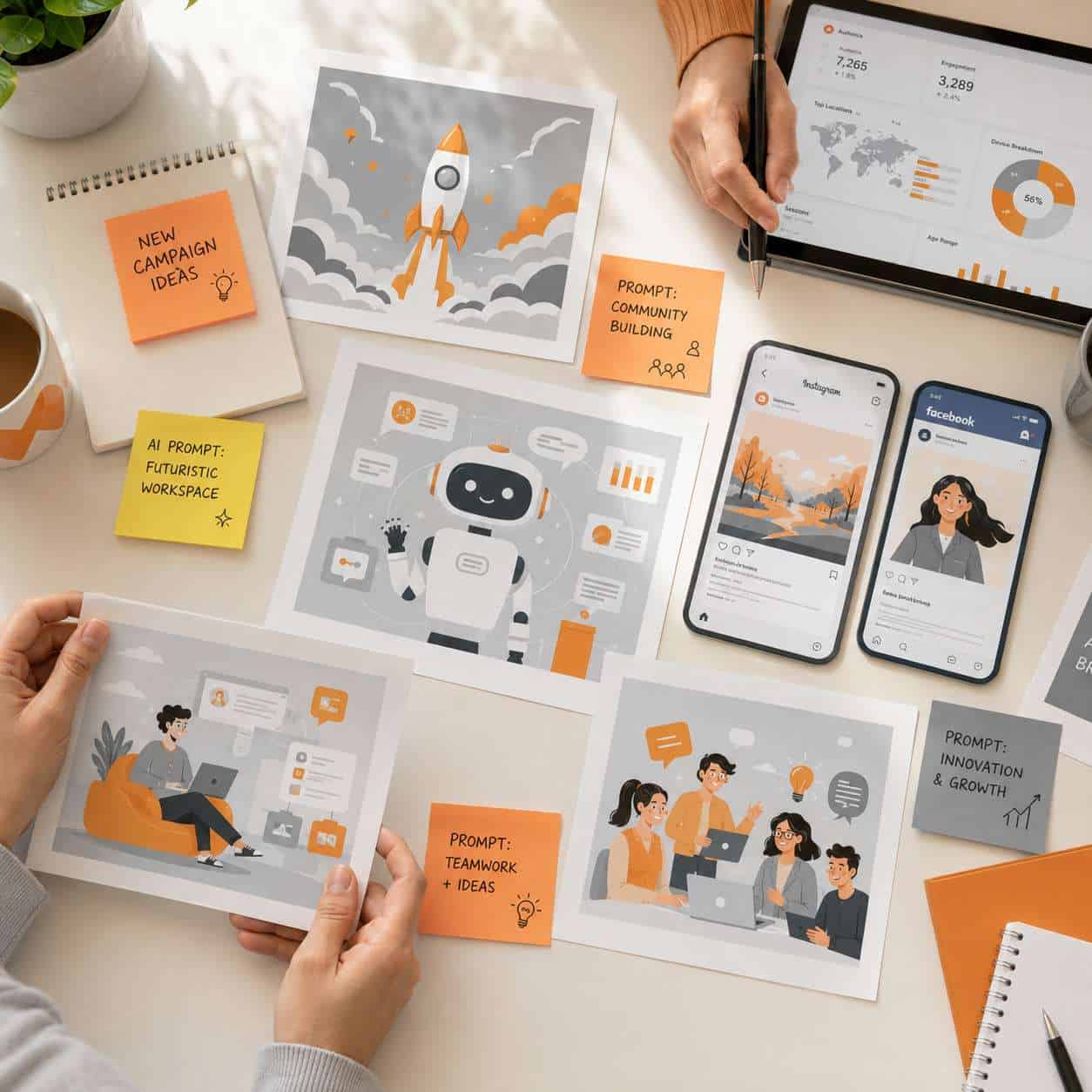
Yes. Canva’s content license covers commercial use of AI-generated images, including social media posts, ads, blog headers, email campaigns, and marketing collateral. This applies to both Pro and Free plan users.
This makes the Canva AI image generator particularly useful for:
- Instagram stories and carousels where you need fresh visuals daily. Check out our guide on designing engaging Instagram story templates for layout ideas.
- Email marketing headers that need to be unique but don’t justify a custom photoshoot. Our walkthrough on creating effective email templates in Canva covers this workflow.
- Blog and article featured images where stock photos feel repetitive.
- Social media ad creatives for A/B testing different visual concepts quickly.
One caution: Avoid generating images that closely mimic real brand logos, celebrity likenesses, or copyrighted characters. Canva’s license doesn’t protect you from third-party intellectual property claims.
For carousel-based content, you can also explore creating engaging carousel designs that pair well with AI-generated visuals.
Is Canva AI Good for Graphic Designers or Just Beginners?
Canva’s AI image generator serves both groups, but in different ways. Beginners benefit from the low learning curve and instant results. Professional designers benefit from rapid concept exploration and placeholder generation.
For beginners: The tool removes the need to source, license, and edit stock photography. You can go from idea to finished social post in minutes.
For professional designers: I’ve spoken with several designers who use Canva AI specifically for mood boarding and client concept pitches. They generate rough visuals to communicate direction, then produce final assets in more advanced tools like Adobe Illustrator or Figma. It’s a brainstorming accelerator, not a replacement for professional design software.
Choose Canva AI if you need speed and simplicity. Choose dedicated AI art tools if you need fine-grained artistic control over every element.
Are There Any Limitations on the Types of Images Canva AI Can Create?
Canva enforces content policies that restrict certain categories of image generation. The platform blocks prompts requesting violent, sexually explicit, hateful, or deceptive content (such as deepfakes of real people).
Additional limitations include:
- No real person generation by name. You can’t type a celebrity’s name and get their likeness.
- Resolution caps. Generated images are suitable for web and social media but may not meet print-quality DPI requirements for large-format printing.
- Style range. While presets cover many styles, you can’t achieve the hyper-specific aesthetic control available in Midjourney’s parameter system.
- Prompt language. The tool works best with English-language prompts. Other languages may produce inconsistent results.
What Happens If Canva AI Generates Something Inappropriate or Offensive?
Canva uses automated content moderation to filter both prompts and outputs. If a prompt is flagged, the system will refuse to generate an image and display a policy notice. If an output somehow bypasses filters and contains problematic content, Canva provides a reporting mechanism.
In practice, the filters are fairly aggressive. Even borderline prompts (like medical imagery or mildly violent historical scenes) may get blocked. If your legitimate creative need is being filtered, try rephrasing the prompt with less ambiguous language.
Why Aren’t My AI Images Generating Correctly in Canva?
If your images look wrong, fail to generate, or don’t match your prompt, here are the most common causes and fixes:
- Vague prompts: Add specific details about subject, lighting, color, and composition.
- Browser issues: Clear your cache or try a different browser. Canva’s AI features work best on Chrome and Edge.
- Account limits reached: Check your remaining AI credits in account settings.
- Server load: During peak hours, generation may be slower or fail. Try again in a few minutes.
- Conflicting style and prompt: If you select “watercolor” but describe a “photorealistic” scene, the output will be confused. Align your preset with your prompt language.
For broader Canva design troubleshooting and tips, browse our Canva resource archive.
What Kind of Images Can I Make with Canva AI That I Can Actually Use Commercially?
Under Canva’s content license, virtually any AI-generated image can be used commercially, provided it doesn’t infringe on third-party rights. This includes images for websites, products, merchandise, advertisements, and client work.
Practical commercial use cases:
- Product mockups for e-commerce listings
- Custom illustrations for blog posts and ebooks
- Social media content for brand accounts
- Presentation slides and pitch decks
- Print-on-demand designs (with the caveat that resolution may limit large-format printing)
Important: You cannot claim copyright ownership of AI-generated images in most jurisdictions as of 2026. This means competitors could theoretically use similar AI-generated visuals. For truly unique brand assets, consider using AI generations as starting points and having a designer refine them.
If you’re exploring other AI-powered design tools beyond Canva, our roundup of free AI home design generators covers adjacent use cases.
FAQ
How many AI images can I generate for free on Canva? Free plan users receive approximately 50 lifetime AI image generations. After that, you’ll need a Canva Pro or Teams subscription for continued access.
Can I edit Canva AI-generated images after creation? Yes. Generated images can be cropped, filtered, layered, and modified using Canva’s full editing suite, including Magic Eraser and Magic Edit.
Does Canva AI generate vector images? No. Canva’s AI image generator produces raster (pixel-based) images. For vector graphics, you’ll need to use a separate tool or trace the image manually.
Are Canva AI images royalty-free? Yes, under Canva’s content license. You can use them commercially without paying additional royalties, but you can’t resell the raw images as standalone stock assets.
Can I use Canva AI images in client work? Yes. Canva’s commercial license covers client projects. However, inform clients that AI-generated images may not be copyrightable.
Does Canva AI work on mobile? Yes. Magic Media is available in the Canva mobile app for both iOS and Android, though the experience is slightly more limited than on desktop.
How long does it take to generate an image? Most images generate in 10 to 20 seconds. Complex prompts or high server load may extend this to 30 seconds or more.
Can I upscale Canva AI images for print? Canva doesn’t offer native AI upscaling for generated images. You can use third-party upscaling tools if you need higher resolution for print projects.
Is there a way to save my favorite prompts in Canva? Canva doesn’t have a built-in prompt library. I recommend keeping a simple spreadsheet or note with your best-performing prompts for reuse.
Can Canva AI generate images of real people? The tool is designed to avoid generating recognizable likenesses of real individuals. Prompts containing celebrity or public figure names will typically be blocked.
Conclusion
The Canva AI image generator is a practical, accessible tool that fills a specific gap: fast, good-enough custom visuals for people who are already designing in Canva. It won’t replace dedicated AI art platforms for high-fidelity creative work, but it dramatically speeds up everyday design tasks.
Your next steps:
- Open Canva and navigate to Magic Media in the left sidebar to try your first prompt.
- Experiment with at least three different style presets using the same prompt to see how outputs vary.
- Keep prompts between 10 and 25 words, and always specify lighting, color mood, and composition.
- Track your monthly generation credits so you don’t run out before a deadline.
- Use Canva’s built-in editing tools to refine AI outputs rather than accepting raw generations.
Whether you’re a solo marketer producing daily social content or a designer exploring concepts for a client pitch, the Canva AI image generator earns its place in a modern design workflow by prioritizing speed and simplicity where it matters most.
Useful Resources: Canva design platform & Canva Design School free tutorials