Last updated: June 9, 2026
Quick Answer: To log into your OpenAI account, go to chat.openai.com, click “Log in,” and authenticate with your email and password or a linked account (Apple or Microsoft). New users must verify their email and phone number during signup. As of 2026, two-factor authentication is mandatory for business accounts and strongly recommended for all users.
Key Takeaways
- The only verified login point for OpenAI is chat.openai.com — avoid third-party login pages to prevent phishing
- New accounts require both email verification and phone number verification via SMS
- As of March 2026, OpenAI supports Sign in with Apple and Sign in with Microsoft; Google sign-in is temporarily unavailable due to API changes [9]
- Two-factor authentication (2FA) is now mandatory for all business and enterprise accounts [8]
- The ChatGPT mobile app (v5.2.1, May 2026) supports biometric login by default, cutting average login time significantly [1]
- Password recovery now uses time-limited magic links rather than temporary passwords, as of April 2026 [3]
- Free accounts give access to GPT-4o with usage limits; paid plans (Plus at $20/month) remove most restrictions
- Users must be at least 13 years old to create an account (18+ without parental consent in some regions)
- CAPTCHA verification during login has reduced bot account creation by 82% while keeping legitimate user success at 99.7% [6]
What Exactly Is an OpenAI Account and Do I Really Need One
An OpenAI account is your personal credential set that grants access to OpenAI’s suite of AI tools, including ChatGPT, the API, and DALL-E. You need one to save conversation history, access paid features, and use the API for development work.
If you only want to try ChatGPT briefly, OpenAI does offer limited guest access. But without an account, you cannot save chats, access GPT-4o consistently, or use any developer tools. For anyone planning to use AI tools regularly — whether for writing, coding, research, or automation — creating a full account is worth the five-minute setup.
Who needs an OpenAI account:
- Developers building with the OpenAI API
- Writers, marketers, and researchers using ChatGPT daily
- Businesses deploying AI-powered workflows
- Students and educators using AI as a learning aid
If you’re exploring broader AI tools beyond OpenAI, our comprehensive guide to AI-powered content generation tools covers the wider landscape worth knowing.
How Do I Create an OpenAI Account from Scratch
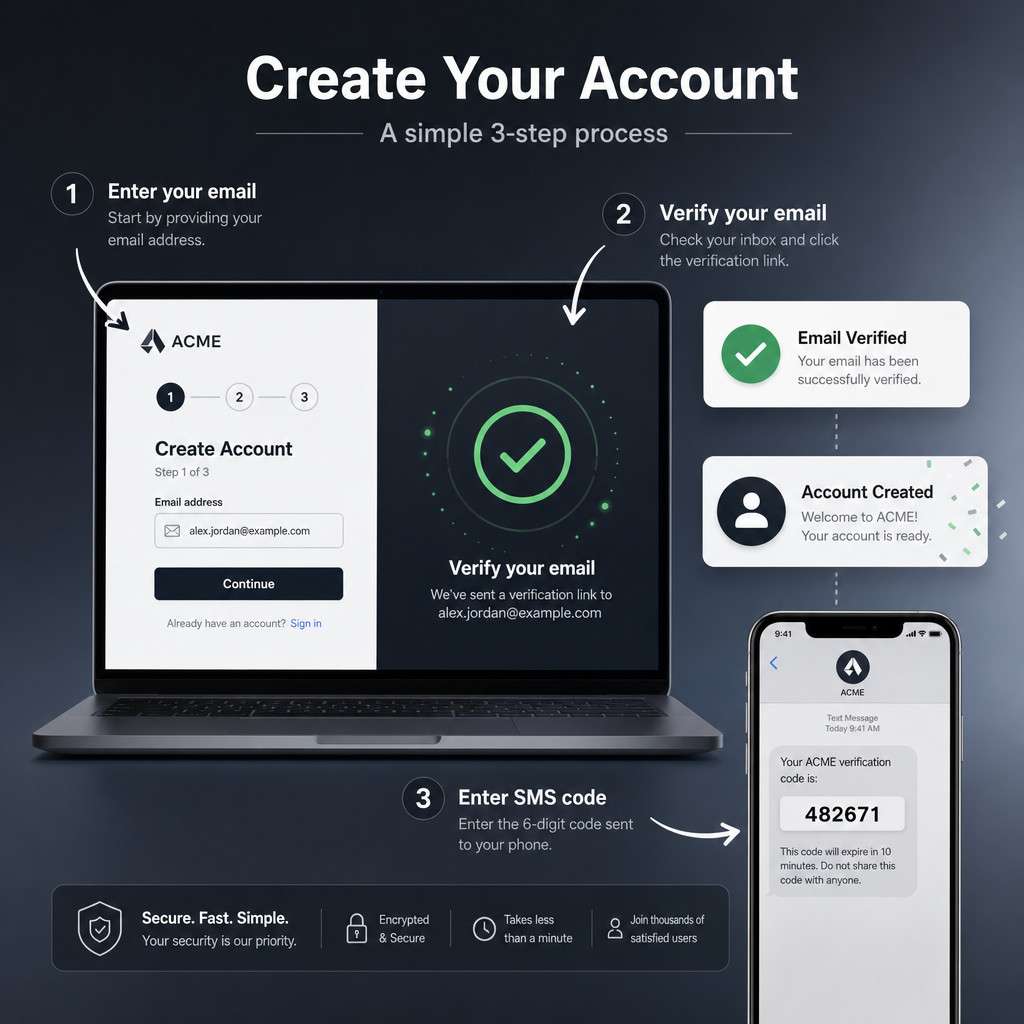
Creating an OpenAI account takes about five minutes and requires a valid email address and phone number. Go to chat.openai.com, click “Sign up,” and follow the prompts.
Step-by-step account creation:
- Go to chat.openai.com and click “Sign up”
- Enter your email address or choose “Continue with Apple” or “Continue with Microsoft”
- Create a strong password (minimum 12 characters recommended)
- Check your inbox and click the verification link OpenAI sends
- Enter your phone number and input the SMS code you receive
- Complete the CAPTCHA verification (added in May 2026 to reduce bot signups) [6]
- Accept the terms of service and set your display name
Common mistake: Using a disposable email address. OpenAI flags these and may block account creation or lock you out during recovery.
Once your account is active, you land directly in the ChatGPT interface. For developers, the API dashboard is accessible at platform.openai.com using the same credentials. [5]
What Is the Difference Between OpenAI and ChatGPT Login
OpenAI and ChatGPT use the same underlying account system, but they serve different entry points. Logging into chat.openai.com gives you the ChatGPT conversational interface, while platform.openai.com gives you API access, billing, and developer tools.
Think of it this way: one OpenAI account unlocks both doors. You don’t need separate credentials. The confusion usually arises because the two interfaces look different and serve different purposes. ChatGPT is the consumer product; the OpenAI platform is the developer environment.
If you’re building automated workflows on top of ChatGPT, our guide to ChatGPT automation and no-code workflow integration explains how to connect your account to external tools.
Can I Use My Google or Microsoft Account to Sign In
As of March 2026, OpenAI supports Sign in with Microsoft and Sign in with Apple as primary authentication methods. Google sign-in is temporarily unavailable due to API compatibility changes between the platforms [9].
If you previously used Google sign-in, you’ll need to log in with your email and password instead, or link a Microsoft or Apple account in your profile settings. OpenAI has not announced a timeline for restoring Google sign-in.
Choose Sign in with Microsoft if: You already use Microsoft 365 or Azure at work and want single-sign-on convenience. Choose Sign in with Apple if: You’re primarily on iOS or macOS and prefer Apple’s privacy-focused authentication. Choose email/password if: You want credentials that aren’t tied to a third-party platform.
How Much Does an OpenAI Account Cost
A basic OpenAI account is free. Paid tiers add higher usage limits, priority access to newer models, and additional features.
| Plan | Monthly Cost | Key Features |
|---|---|---|
| Free | $0 | GPT-4o with usage limits, basic DALL-E access |
| ChatGPT Plus | $20 | Higher GPT-4o limits, o3 access, Advanced Data Analysis |
| ChatGPT Pro | $200 | Unlimited o3 usage, extended thinking, priority access |
| Team | $30/user | Shared workspace, admin controls, higher limits |
| Enterprise | Custom pricing | SAML SSO, HIPAA compliance, dedicated support |
For most individual users, the free tier is enough to start. Upgrade to Plus if you hit usage limits regularly or need access to reasoning models like o3. Enterprise accounts now support SAML 2.0 single sign-on with Okta, Azure AD, and Google Workspace [5].
Why Am I Having Trouble Logging Into My OpenAI Account
Login failures usually come from one of four causes: wrong credentials, browser cache issues, 2FA problems, or account lockouts from security protocols. Start with the simplest fix first.
Troubleshooting checklist:
- Wrong password: Use the “Forgot password” link on the login page
- Browser issues: Clear cookies and cache, or try a private/incognito window
- VPN conflicts: Some VPNs trigger OpenAI’s fraud detection; try disabling it
- Account lockout: OpenAI locks accounts after multiple failed attempts; wait 30 minutes before retrying
- 2FA app out of sync: Check that your authenticator app’s time is synced correctly (see next section)
- Unverified email: Check your spam folder for the original verification email
A 23% year-over-year increase in account lockouts was recorded in Q1 2026 versus Q1 2025, with 78% of incidents traced to credential stuffing attacks [8]. If you suspect your credentials were compromised, change your password immediately and enable 2FA.
For broader account troubleshooting resources, the account troubleshooting archive covers common issues across multiple platforms.
How Do I Troubleshoot Two-Factor Authentication Problems
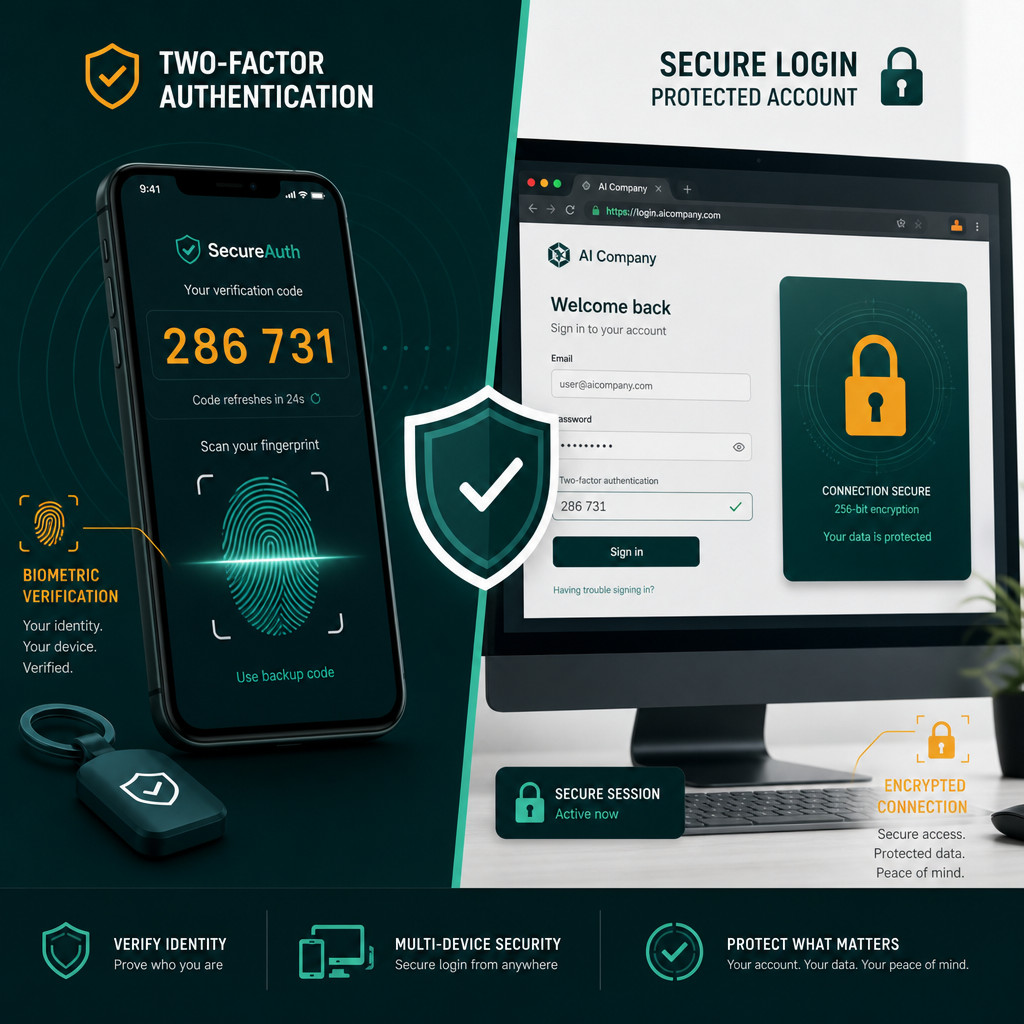
Two-factor authentication (2FA) problems usually stem from time sync issues on your authenticator app or using a backup code that has already been used. The fix is almost always one of three things.
If your 2FA code isn’t working:
- Check that your phone’s time is set to automatic/network time (not manual)
- Open your authenticator app and look for a refresh or sync option
- Try the code immediately after it refreshes — don’t wait until it’s about to expire
- If you’ve lost access to your authenticator app, use a backup code from when you first set up 2FA
- If no backup codes remain, contact OpenAI support at help.openai.com with proof of account ownership
As of early 2026, 2FA is mandatory for all business and enterprise accounts [8]. For personal accounts, it’s optional but strongly recommended given the rise in credential attacks.
Edge case: If you’re switching phones, export your authenticator app’s accounts before wiping the old device. Many users get locked out by skipping this step.
Can I Recover My Password If I Forget It
Yes. OpenAI’s password recovery process, overhauled in April 2026, now sends a time-limited magic link to your registered email instead of a temporary password [3]. Click the link within 15 minutes to reset your credentials.
Recovery steps:
- Go to chat.openai.com and click “Log in”
- Click “Forgot password?” below the password field
- Enter your registered email address
- Check your inbox for the magic link (check spam if it doesn’t arrive within two minutes)
- Click the link and set a new password
- Re-authenticate with 2FA if enabled
This change reduced support tickets related to password recovery by 41% since implementation [3]. If you no longer have access to your registered email, recovery requires verifying your identity through your registered phone number or security questions for high-value accounts.
Is OpenAI Login Secure and How Can I Protect My Account
OpenAI uses industry-standard encryption, CAPTCHA verification, and mandatory 2FA for business accounts to protect user credentials. That said, account security also depends on what you do.
Best practices for keeping your account secure:
- Use a unique, strong password (at least 12 characters, mixed case, numbers, symbols)
- Enable 2FA using an authenticator app rather than SMS where possible
- Never log in through links in emails — always go directly to chat.openai.com
- Review active sessions in your account settings and log out of devices you don’t recognize
- For API users: rotate API keys every 90 days, as required for enterprise customers since April 2026
- Don’t share your account credentials with colleagues — use Team or Enterprise plans for shared access
OpenAI’s CAPTCHA implementation (May 2026) has reduced bot account creation by 82% while maintaining a 99.7% legitimate user success rate [6]. For a deeper look at platform security practices across AI tools, our guide to Make.com security and data protection offers useful parallel context.
What Features Do I Get with a Basic vs Paid OpenAI Account
Free accounts give you access to GPT-4o with daily usage limits and basic image generation. Paid accounts primarily extend those limits and add access to more advanced models.
Free vs Plus at a glance:
- Free: GPT-4o (limited messages per day), DALL-E image generation (limited), basic memory features
- Plus ($20/month): Higher GPT-4o message limits, access to o3 reasoning model, Advanced Data Analysis, longer context windows, priority during peak hours
- Pro ($200/month): Effectively unlimited o3 usage, extended thinking mode, voice features, highest priority access
For developers, the API is billed separately based on token usage regardless of your ChatGPT subscription tier. Our AI API guide covers how API billing works across major platforms.
What Devices and Browsers Work Best for OpenAI Login
OpenAI’s web interface works on any modern browser. The mobile app offers the smoothest experience on phones, including biometric login support.
Recommended setup:
- Desktop browsers: Chrome, Firefox, Safari, Edge (all current versions)
- Mobile: ChatGPT app for iOS or Android (version 5.2.1 or later for biometric login) [1]
- Avoid: Outdated browsers (IE, pre-2022 Safari versions), heavily modified browsers with aggressive script blocking
The ChatGPT mobile app released in May 2026 (v5.2.1) made biometric login the default authentication method, supporting fingerprint and facial recognition on both iOS and Android [1]. This is the fastest login method available and worth setting up if you use the app daily.
Are There Age Restrictions for Creating an OpenAI Account
OpenAI requires users to be at least 13 years old. In some jurisdictions, users between 13 and 18 need verifiable parental consent.
This applies globally. OpenAI’s terms of service specify that users under 13 are not permitted to create accounts under any circumstances. For users aged 13-17, the account creation process may prompt for parental consent depending on the country of registration. Schools and educational institutions using OpenAI tools for minors typically operate under separate enterprise agreements that include appropriate safeguards.
FAQ
Q: Can I have more than one OpenAI account? OpenAI’s terms of service allow one account per person. Creating multiple accounts to bypass usage limits violates their policies and can result in all associated accounts being banned.
Q: Why does OpenAI need my phone number? Phone verification is required to confirm you’re a real person and to enable account recovery. OpenAI uses it for SMS-based identity verification during signup and, optionally, for 2FA.
Q: Is the ChatGPT login the same as the OpenAI login? Yes. One set of credentials works for both chat.openai.com (ChatGPT) and platform.openai.com (API and developer tools).
Q: How long does an OpenAI session stay active? Sessions typically remain active for 30 days unless you manually log out or log in from a new device, which may trigger re-authentication.
Q: What should I do if I don’t receive the verification email? Check your spam or junk folder first. If it’s not there, wait five minutes and request a new one. Make sure you haven’t mistyped your email address during signup.
Q: Can I use OpenAI without creating an account? OpenAI offers limited guest access to ChatGPT without an account, but conversation history, personalization, and most features require a logged-in account.
Q: What happens if I enter my password wrong too many times? OpenAI temporarily locks the account after repeated failed attempts. Wait approximately 30 minutes before trying again, or use the password reset option.
Q: Does OpenAI support single sign-on for companies? Yes. Enterprise accounts support SAML 2.0 SSO with providers including Okta, Azure AD, and Google Workspace, with setup documentation updated as of May 2026.
Q: Is my OpenAI account data stored securely? OpenAI uses encryption for stored credentials and data in transit. Enabling 2FA and using a unique password significantly reduces your personal risk exposure.
Q: Can I delete my OpenAI account? Yes. Account deletion is available in Settings under “Data Controls.” Deletion is permanent and removes your conversation history and saved preferences.
Conclusion
Mastering OpenAI login comes down to a few straightforward habits: use the official login page, secure your account with 2FA, keep your credentials unique and strong, and know the recovery path before you need it.
Your next steps:
- If you don’t have an account yet, go to chat.openai.com and complete signup today — it takes under five minutes
- Enable two-factor authentication immediately after logging in for the first time
- Save your 2FA backup codes somewhere secure (not in your email inbox)
- If you use OpenAI for work or development, consider upgrading to Plus or exploring the Team plan for shared access
- Bookmark the official help center at help.openai.com for any issues that arise
For developers looking to go further with OpenAI beyond basic login, our guide to AI-powered content optimization and the Mastering Replit Login guide for developers are practical next reads.
References
[1] How To Use ChatGPT AI Chatbot Beginners Guide – https://www.zdnet.com/article/how-to-use-chatgpt-ai-chatbot-beginners-guide/ [3] How To Easily Guide Yourself Through OpenAI’s ChatGPT Login Process – https://blog.lingoedit.com/how-to-easily-guide-yourself-through-openais-chatgpt-login-process/ [5] Setting Up OpenAI Account – KodeKloud Notes – https://notes.kodekloud.com/docs/Mastering-Generative-AI-with-OpenAI/Getting-Started-with-OpenAI/Setting-Up-OpenAI-Account/page [6] OpenAI Auth Login: Your Ultimate Guide – https://vault.nimc.gov.ng/blog/openai-auth-login-your-ultimate-guide-1764802798 [7] Mastering OpenAI API: Complete Guide On Accessing And Using Its Potential – https://neuralnetworkguru.com/mastering-openai-api-complete-guide-on-accessing-and-using-its-potential/ [8] Mastering GPT-5 API: A Complete Guide To The New Features – https://www.riis.com/blog/mastering-gpt-5-api-a-complete-guide-to-the-new-features [9] Comprehensive Guide To OpenAI Login Page: Everything You Need To Know – https://thebastion.ca/automation/comprehensive-guide-to-open-ai-login-page-everything-you-need-to-know.html [10] Mastering OpenAI API Tips And Tricks – https://arize.com/blog-course/mastering-openai-api-tips-and-tricks/