Last updated: May 10, 2026
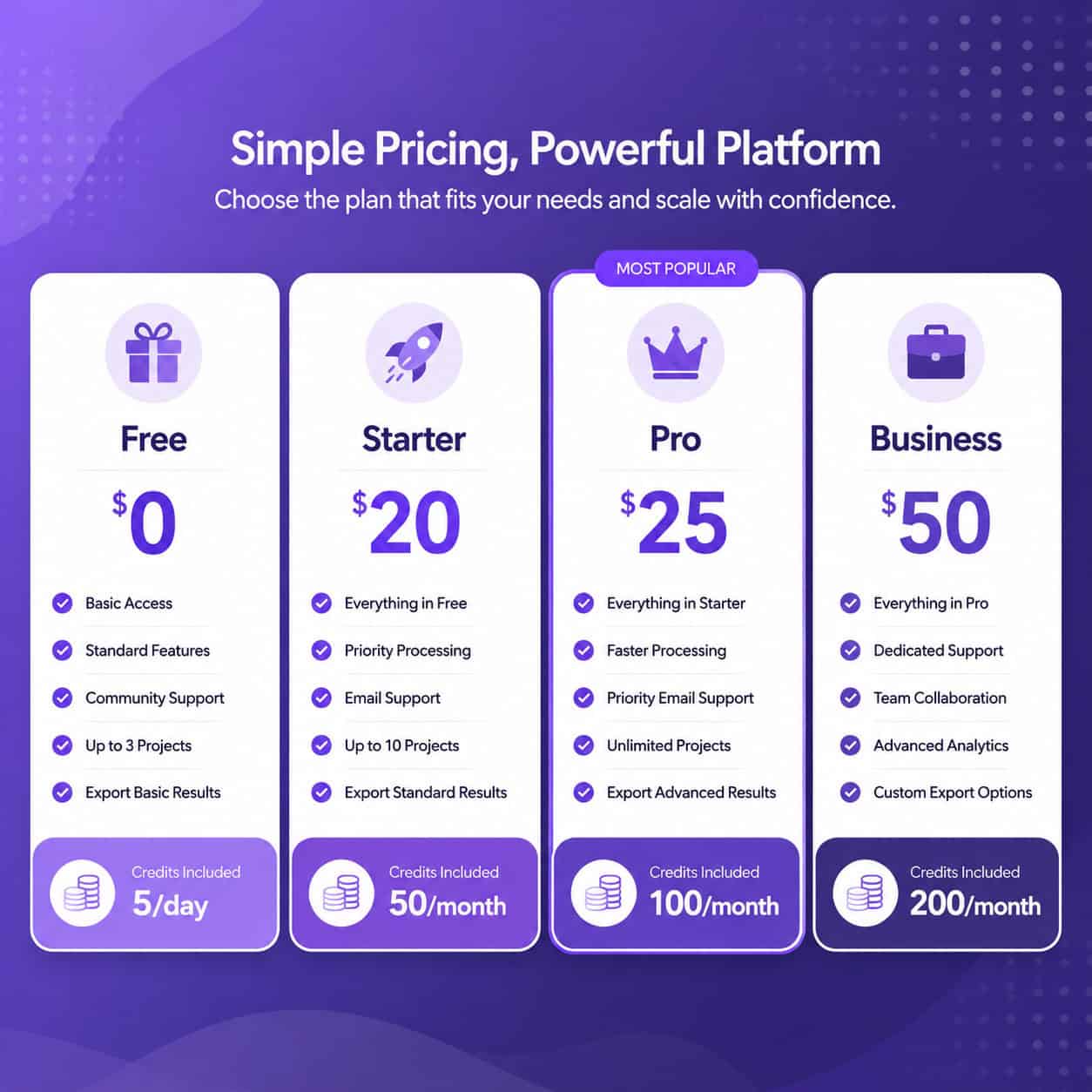
Quick Answer: Lovable.dev offers four pricing tiers ranging from free to custom enterprise pricing. The Free plan gives you 5 credits per day, the Starter plan costs $20/month for 50 credits, Pro runs $25/month for 100 credits, and Business is $50/month for 200 credits [1]. As of 2026, this credit-based pricing structure established in 2024 remains unchanged, making it one of the more affordable AI app-building tools on the market.
Key Takeaways
- Free plan provides 5 credits/day with a 30-credit monthly cap — enough for prototyping, not production [1][6]
- Pro ($25/month) is the most popular tier, offering 100 monthly credits and full code export [3]
- Annual billing saves roughly 20% across all paid plans [5]
- Credits burn faster on complex, multi-step app builds — budget accordingly [5][7]
- Full code export (React + TypeScript) reduces vendor lock-in compared to pure no-code platforms [6]
- Lovable is cheaper than hiring a junior developer (estimated $4k+/month) but credits don’t scale well for production apps [7]
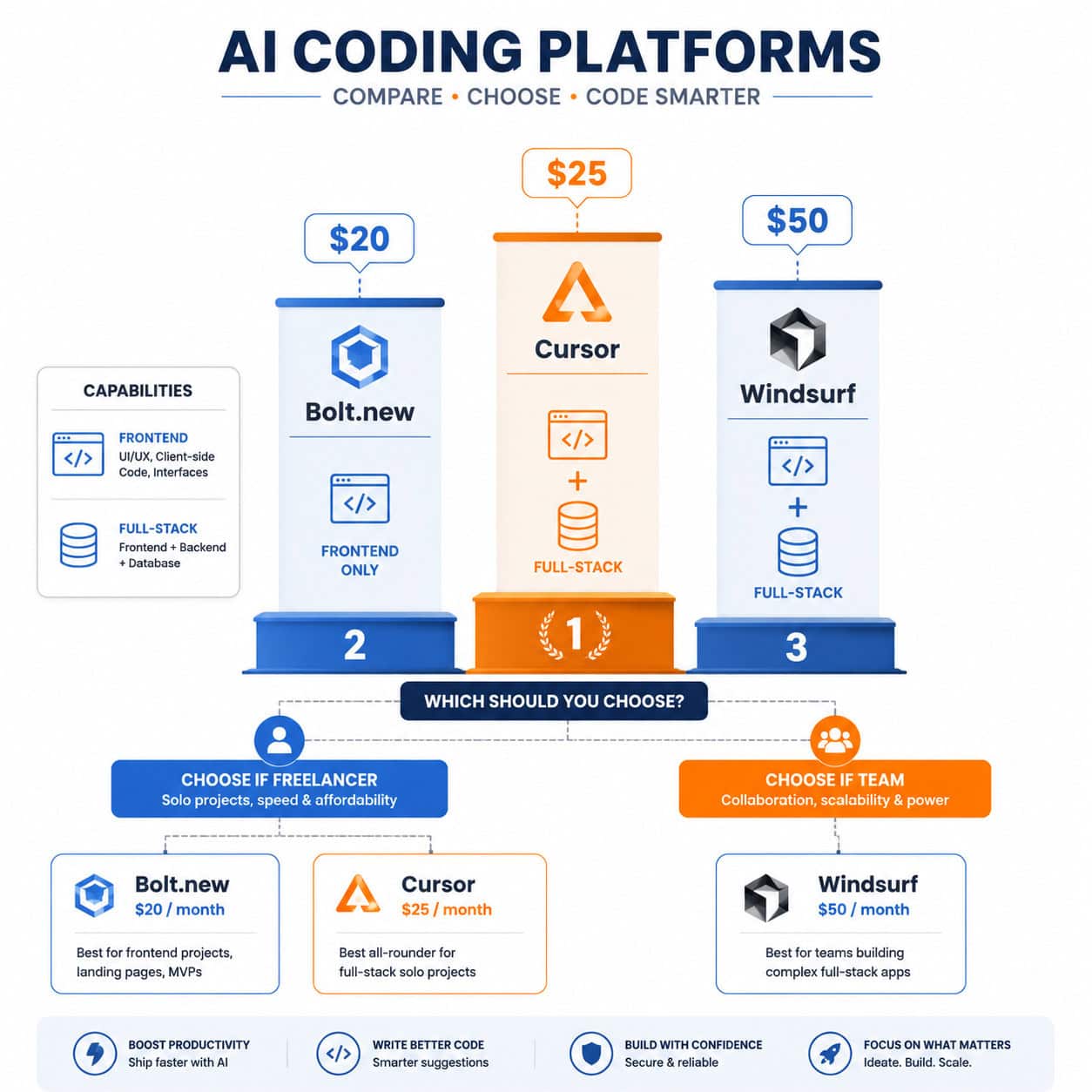
- Competitors like Bolt.new ($20/month) and v0 by Vercel ($20/month) offer lower entry points but with trade-offs in full-stack capability [5]
- No pricing changes have occurred in the past 60 days (March–May 2026)
What Does Each Lovable.dev Plan Include?
Lovable.dev structures its pricing around four tiers, each built on a credit system where one credit roughly equals one AI-assisted action (like generating a component or modifying code) [1][2].
Here’s the full breakdown:
| Feature | Free | Starter | Pro | Business |
|---|---|---|---|---|
| Monthly Price | $0 | $20 | $25 | $50 |
| Credits | 5/day (30/month cap) | 50/month | 100/month | 200/month |
| Code Export | Limited | Yes | Yes | Yes |
| Supabase Integration | Basic | Full | Full | Full |
| Custom Domains | No | No | Yes | Yes |
| SSO / Privacy Controls | No | No | No | Yes |
| Priority Support | No | No | Yes | Yes |
Choose Free if you want to test the platform or build a quick prototype. Choose Pro if you’re a freelancer or solo developer building client projects. Choose Business only if your team specifically needs SSO or advanced privacy controls — the credit-to-dollar ratio isn’t much better than Pro [3].
A common mistake: assuming the Starter plan at $20 is the best value. At $0.40 per credit versus Pro’s $0.25 per credit, Starter is actually the worst per-credit deal among paid tiers [5].
How Does the Credit System Actually Work?
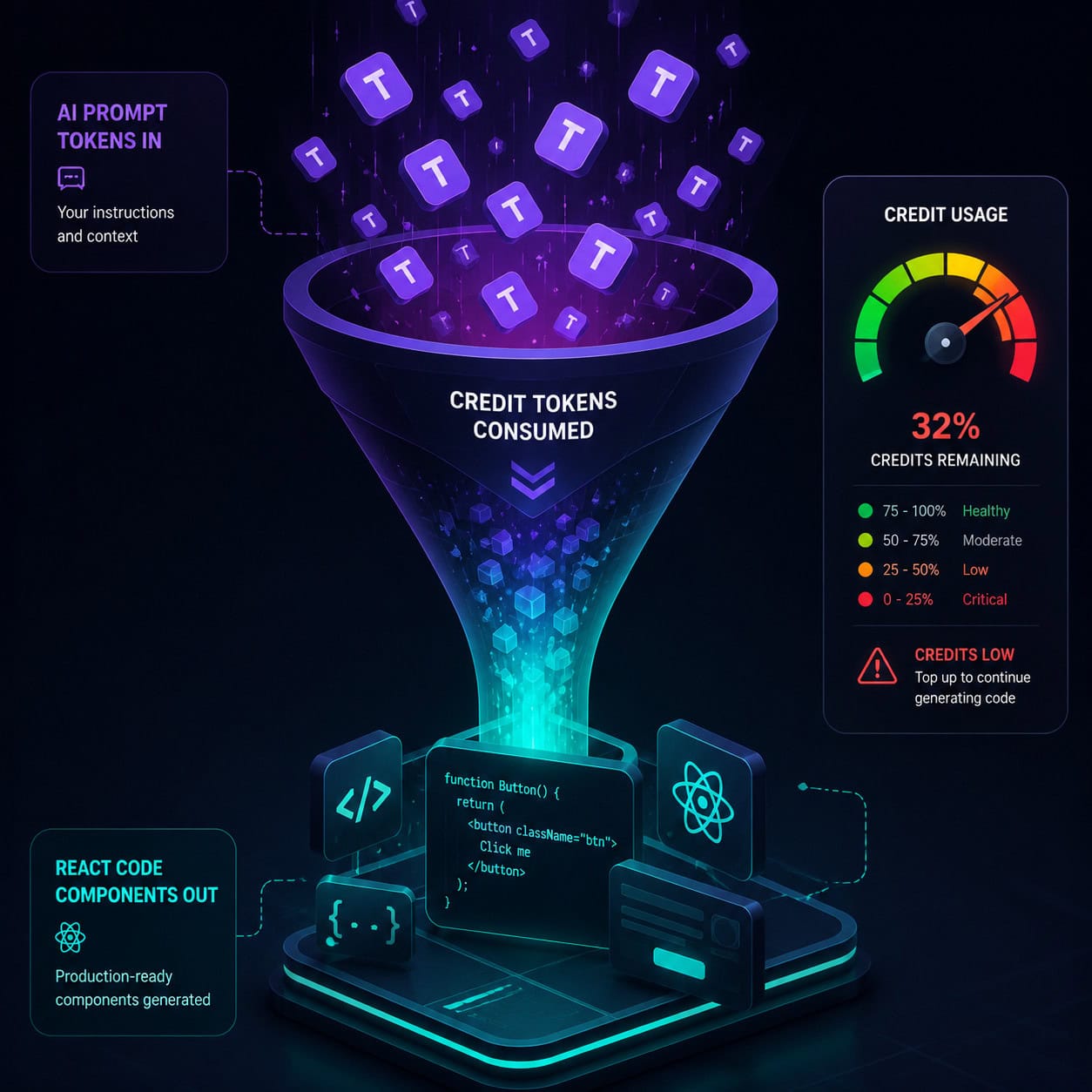
Each credit corresponds to roughly one AI generation or edit action. When you prompt Lovable to build a component, fix a bug, or add a feature, it consumes credits. Simple prompts may use one credit; complex multi-step generations can burn through several in a single session [5][9].
Key details about credits:
- Credits reset monthly — they don’t roll over indefinitely, though they accumulate within your billing cycle [3]
- Daily cap on Free: You get exactly 5 credits per day, and unused daily credits don’t stack beyond the 30/month ceiling [1]
- No per-credit purchasing: You can’t buy individual credits à la carte on standard plans
- Usage is unpredictable: A simple landing page might take 3–5 credits, while a multi-page app with authentication could consume 30+ credits in one sitting [7]
This unpredictability is the biggest criticism of Lovable’s pricing model. As one reviewer noted, project managers and founders often struggle to forecast monthly costs because credit consumption varies so much by project complexity [9]. If you’re building anything beyond simple prototypes, I’d recommend tracking your credit usage closely for the first two weeks before committing to an annual plan.
For teams exploring other AI-powered tools for building websites without code, understanding these credit mechanics is essential for accurate budgeting.
Is the Pro Plan Worth It for Solo Developers?
Yes, for most solo developers and freelancers, the Pro plan at $25/month offers the best balance of credits and features. At 100 credits per month, you get enough capacity to build and iterate on 2–3 small to medium projects [3][6].
Here’s why Pro stands out:
- Best per-credit value at $0.25/credit among standard plans
- Code export included — you own your React/TypeScript output and can deploy anywhere [6]
- Custom domain support for client-facing projects
- Priority support when you hit issues
The Superblocks analysis from March 2026 specifically recommends Pro for solo developers, noting it strikes the right balance between cost and capability [3]. However, the same review warns that if you’re building complex, production-grade applications, 100 credits may not last the month.
Edge case: If you only build one small project per month, the Starter plan might suffice. But the $5 difference between Starter (50 credits) and Pro (100 credits) makes Pro almost always the smarter choice — you’re paying 25% more for double the credits.
If you’re a freelancer also working with design tools, you might find our guide on Relume AI integration for efficient web design workflows useful for streamlining your process before bringing designs into Lovable.
How Does Lovable.dev Compare to Bolt.new and v0?
Lovable isn’t the only AI coding tool available. Here’s how it stacks up against its two closest competitors:
| Feature | Lovable.dev (Pro) | Bolt.new | v0 (Vercel) |
|---|---|---|---|
| Price | $25/month | $20/month | $20/month + $2/day |
| Credit System | 100 credits | Token-based | Credit-based |
| Backend Support | Yes (Supabase) | Yes (built-in) | No (UI only) |
| Code Export | React/TypeScript | Yes | React components |
| Full-Stack Apps | Yes | Yes | No |
| Best For | Complete web apps | Quick prototypes with backend | React UI components |
Choose Lovable if you need full-stack React/TypeScript apps with clean, exportable code. Choose Bolt.new if budget is your top priority and you want backend included at a lower price point. Choose v0 if you only need frontend React components and already use the Vercel ecosystem [5].
Lovable’s main advantage is the quality and portability of its code output. Because it generates standard React with TypeScript, you’re not locked into a proprietary platform [6]. This matters significantly for professional projects where you need to hand off code to a development team later.
For a broader look at platforms in this space, check out our roundup of the best no-coding website design software platforms.
Can Lovable Replace a Developer? The Real Cost Math
One of the most-cited analyses comes from Hackceleration, which calculated that Lovable’s Pro plan at $25/month could replace tasks that would cost $4,000+ per month if handled by a junior developer [7]. That math checks out for simple CRUD apps and prototypes, but it breaks down for production applications.
Here’s the realistic picture:
- Prototyping phase: Lovable saves enormous time and money. Building an MVP that would take a developer 2–3 weeks can happen in hours.
- Production phase: Credits burn fast when you’re iterating on bugs, edge cases, and polish. A production-ready app might consume 200+ credits across its development lifecycle [7].
- Maintenance: Lovable doesn’t handle ongoing maintenance, monitoring, or server management. You still need technical resources for that.
Bottom line: Think of Lovable as a force multiplier, not a replacement. It’s best used alongside human developers, especially for projects that need to scale. Teams exploring AI-powered content and development tools will find Lovable fits well into a broader AI-assisted workflow.
What’s New With Lovable in 2026?
While the core pricing hasn’t changed since 2024, Lovable has made significant platform updates:
- Mobile app launched (April 2026): A “vibe-coding” app for iOS and Android lets you build apps via voice and text prompts on the go, with full desktop sync
- Strong financial health: The company announced automatic 10% employee pay raises in May 2026, with some months reportedly exceeding $100M in annual recurring revenue growth
- No pricing increases: Despite rapid growth, Lovable has kept its pricing stable through at least May 2026
The mobile app is particularly interesting for the no-code community because it enables building from anywhere — though complex projects will still benefit from the desktop experience.
Common Mistakes When Choosing a Lovable Plan
- Starting with Starter instead of Free: Test with the Free plan first. Five daily credits are enough to evaluate whether Lovable fits your workflow.
- Ignoring annual billing: You save roughly 20% by paying annually. If you’ve used Lovable for two months and know you’ll continue, switch to annual [5].
- Underestimating credit consumption: Complex apps with authentication, database integration, and multiple pages can consume 10x more credits than a simple landing page [7].
- Choosing Business for the wrong reasons: Unless you specifically need SSO or enterprise privacy controls, Pro gives you better per-credit value [3].
- Not exporting code regularly: Lovable lets you export clean React/TypeScript. Do this frequently so you’re never dependent on the platform alone [6].
FAQ
How many credits do I need per month? For light use (1–2 simple projects), 50 credits suffice. For active development across multiple projects, plan for 100–200 credits [3][5].
Can I buy extra credits if I run out? Standard plans don’t offer à la carte credit purchases. You’d need to upgrade to a higher tier or wait for your monthly reset [1].
Does Lovable offer a free trial of paid plans? No traditional free trial exists, but the Free plan with 5 daily credits serves as an indefinite trial [1][6].
Is annual billing worth it? Yes. Annual billing saves approximately 20%, and since pricing has remained stable since 2024, locking in the annual rate carries minimal risk [5].
Can I cancel anytime? Yes, all plans are cancelable. You retain access through the end of your billing period [2].
Does Lovable work for mobile app development? Lovable primarily generates web applications using React. The new mobile “vibe-coding” app lets you build from your phone, but the output is still web-based.
What happens to my code if I stop paying? Any code you’ve exported remains yours. Projects stored on Lovable’s platform may become inaccessible on the Free tier’s limitations [6].
Is Lovable good for teams? The Business plan ($50/month) adds team-oriented features like SSO. For collaborative design-to-development workflows, pairing Lovable with tools like Figma for web design works well.
How does Lovable compare to traditional website builders? Lovable generates actual code, while drag-and-drop website builders produce platform-dependent sites. Lovable is better for custom applications; builders are better for standard websites.
Conclusion
Lovable.dev’s pricing remains straightforward and unchanged since its 2024 structure: Free for testing, Starter at $20 for light use, Pro at $25 for serious work, and Business at $50 for teams needing enterprise features. The Pro plan offers the best value for most users at $0.25 per credit.
Your next steps:
- Start with the Free plan to test whether Lovable fits your workflow
- Track your credit usage for at least two weeks before upgrading
- Choose Pro unless you have a specific reason for another tier
- Switch to annual billing once you’re committed — the 20% savings add up
- Export your code regularly to maintain flexibility and avoid platform dependence
The credit system’s unpredictability is the platform’s biggest weakness, but for prototyping and building MVPs, Lovable delivers remarkable value at a fraction of traditional development costs.
References
[1] Pricing – https://lovable.dev/pricing [2] Plans – https://lovable.dev/faq/billing/plans [3] Lovable Dev Pricing – https://www.superblocks.com/blog/lovable-dev-pricing [5] Lovable Pricing Plans Explained – https://till-freitag.com/blog/lovable-pricing-plans-explained [6] How Much Is Lovable Dev – https://www.alanbagi.com/blog/how-much-is-lovable-dev [7] Lovable Review – https://hackceleration.com/lovable-review/ [9] Lovable Pricing – https://www.zite.com/blog/lovable-pricing