Last updated: May 1, 2026
Quick Answer: Free character AI platforms let anyone create, customize, and converse with AI-powered personas without spending a cent. The best options combine large language model (LLM) technology with deep customization, memory features, and community sharing. Choosing the right platform depends on your use case — creative writing, game design, education, or casual roleplay — and how much control you need over personality, memory, and content moderation.
Key Takeaways
- Free character AI platforms use LLMs and natural language processing to simulate distinct personalities in real-time conversation [2]
- AI has reduced character creation time from weeks to minutes, making professional-quality characters accessible to non-designers [3]
- The best free platforms offer detailed customization over physical traits, personality, backstory, and dialogue style [1]
- Memory and context management are critical features — without them, characters forget previous conversations and lose narrative coherence [5]
- Content moderation policies vary widely across platforms, which matters for both safety and creative freedom [5]
- Multi-modal features (image generation + chat) are becoming standard on leading free platforms [2]
- Community sharing features significantly expand what you can do with a platform beyond solo creation [2]
- Custom character bots are buildable via APIs and self-hosted frameworks for developers who need full control [5]
What Are Free Character AI Platforms and Who Are They For?
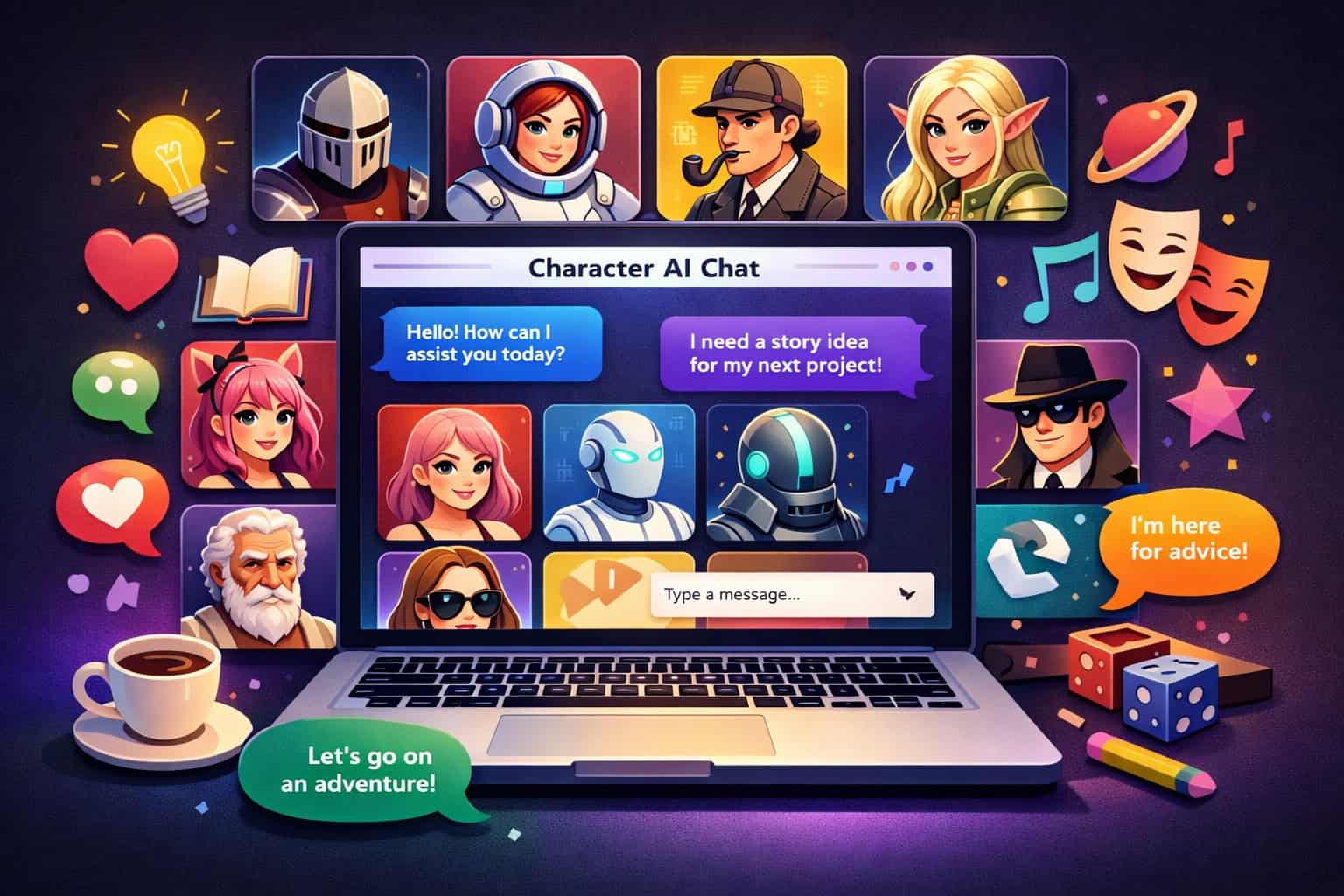
Free character AI platforms are web-based or app-based tools that let users create AI-powered personas with distinct names, personalities, backstories, and conversational styles. These characters can then hold extended, context-aware conversations with users — or with each other in collaborative story settings.
These platforms are built on large language models (LLMs) trained on massive datasets of text, which allows them to simulate human-like dialogue with surprising depth [2]. The “free” tier typically means you can access core creation and chat features at no cost, sometimes with usage caps or feature limits.
Who benefits most from these tools:
- 🎮 Game designers building NPC dialogue trees and character backstories
- ✍️ Writers and novelists developing voice-consistent characters for long-form fiction
- 🎓 Educators creating interactive historical figures or scenario-based learning agents
- 🎭 Roleplay and fandom communities exploring creative storytelling
- 💼 Businesses prototyping AI chatbot personas before committing to paid platforms
Who might find free tiers limiting:
- Developers needing API access at scale (usually requires paid plans)
- Projects requiring strict data privacy guarantees
- Teams needing consistent character appearance across visual media at high volume
How Does the Core Technology Behind Character AI Actually Work?
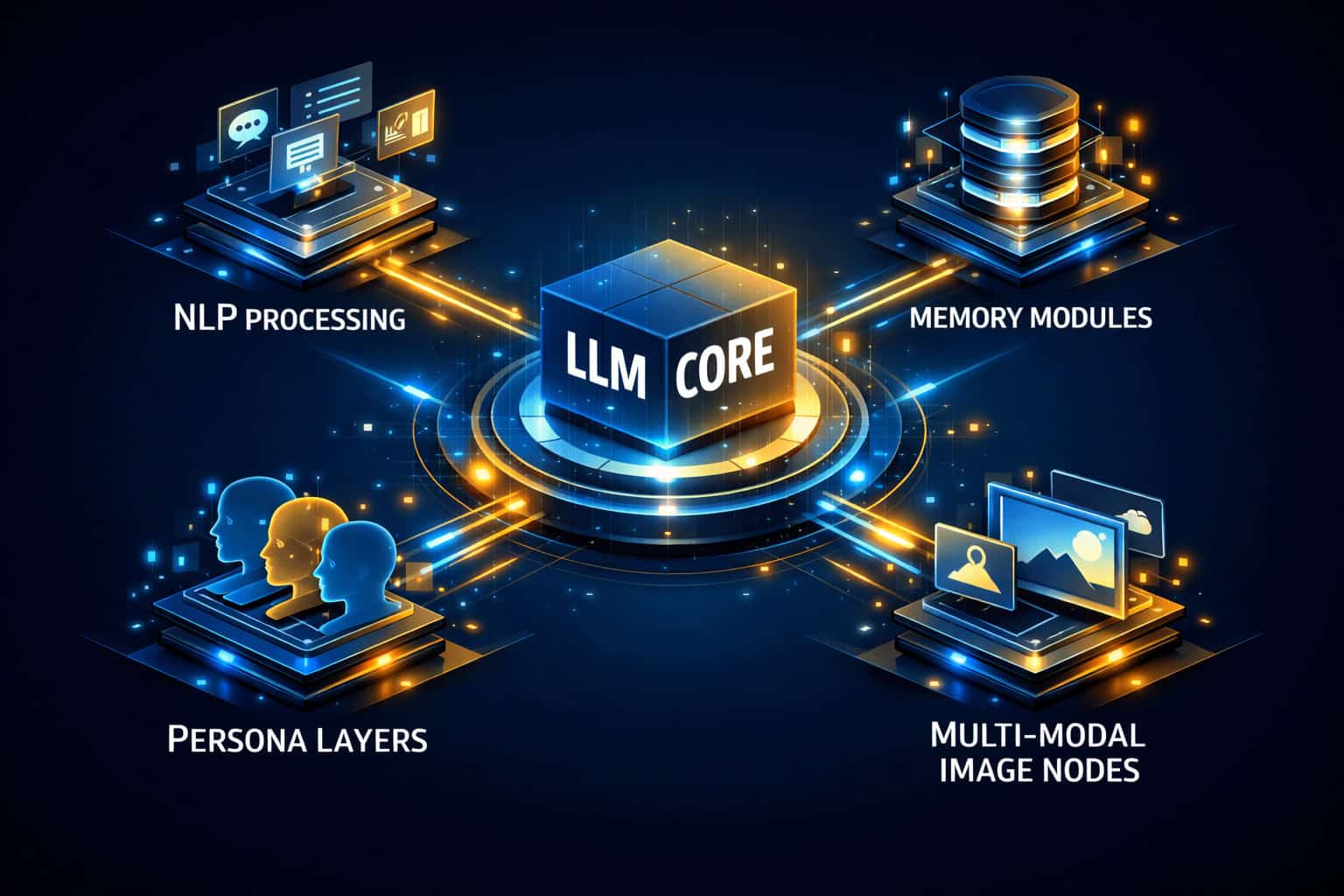
Character AI platforms are powered by LLMs combined with layered systems for persona definition, memory management, and moderation [2]. Understanding this stack helps you choose the right platform for your needs.
The core components:
- Base LLM — The language model (such as GPT-4-class or open-source alternatives) generates responses based on input context
- Persona layer — A structured prompt or fine-tuned configuration that defines the character’s name, personality traits, speaking style, and knowledge boundaries
- Memory module — Stores conversation history so the character can reference earlier exchanges; this is what makes long-form roleplay coherent
- Moderation layer — Filters outputs based on platform content policies, ranging from strict (no adult content) to permissive (with age verification)
- Multi-modal integration — Some platforms add image generation or image understanding so characters can “see” uploads or generate visual responses [2]
Pull quote: “The difference between a forgettable chatbot and a compelling AI character is almost entirely in the persona and memory layers — not the base model.” — Common consensus among AI character platform developers
A key insight from the research: consistency across scenes is one of the hardest technical problems in character AI [1]. A character who looks or sounds different in each interaction breaks immersion immediately. The best platforms solve this with persistent memory and locked persona configurations.
What Are the Best Free Character AI Platforms Available Right Now?
The free character AI space has several strong options, each with different strengths. Here’s a direct comparison of the leading platforms as of 2026.
| Platform | Free Tier Limits | Memory | Multi-modal | Best For |
|---|---|---|---|---|
| Character.AI | Unlimited chats, slower response | Short-term context | No (text only) | Roleplay, casual chat |
| Janitor AI | Limited daily messages | Configurable | No | Adult-filtered creative writing |
| Poe (by Quora) | Daily message cap | Per-bot memory | Yes (some bots) | Exploring multiple LLMs |
| CraveU.ai | Free tier with caps | Short-term | Yes | Immersive character chat |
| Replika | Core features free | Long-term memory | Avatar image | Companionship, social skills |
| Kindroid | Free with limits | Persistent memory | Avatar | Relationship simulation |
| Tavern AI (self-hosted) | Fully free | Configurable | Yes (with plugins) | Developers, advanced users |
Choose Character.AI if you want the largest library of community-created characters and the most active user base.
Choose Tavern AI / SillyTavern if you’re a developer or power user who wants full control, local hosting, and no content restrictions imposed by a third party [5].
Choose Poe if you want to experiment with different underlying models (Claude, GPT-4, Llama) without committing to one platform.
Common mistake: Many users pick a platform based on the character creation interface alone, then discover the memory system is too shallow for their project. Always test a multi-session conversation before committing.
For a broader look at how AI tools are reshaping content workflows, the comprehensive guide to AI-powered content generation tools covers the wider ecosystem well.
How Do You Evaluate a Free Character AI Platform Before Committing?
The right evaluation framework saves hours of frustration. When assessing any free character AI platform, check these five dimensions in order [5]:
1. Customization Depth
Can you control physical appearance, personality traits, speech patterns, knowledge limits, and emotional range independently? Generic prompt-only generation is far weaker than structured persona builders [1].
2. Memory and Context Window
How many tokens (words) does the platform retain per session? Does it persist memory across sessions? For narrative projects, cross-session memory is non-negotiable.
3. Content Moderation Approach
Platforms range from strictly filtered (suitable for minors, limited creative range) to fully open (requires age verification, broader creative latitude). Neither is universally better — it depends on your use case [5].
4. Privacy and Data Handling
Does the platform store your conversations? Can it use them for model training? Check the privacy policy before sharing sensitive creative work or personal information.
5. Integration Options
Does the platform offer API access, voice output, image replies, or embeddable widgets? Free tiers often restrict these, but knowing the upgrade path matters if your project scales [5].
Quick checklist before you start:
- Tested a 10-message conversation for tone consistency
- Checked whether memory persists after closing the browser
- Read the content policy for your intended use case
- Confirmed data storage and training opt-out options
- Verified API availability if you plan to build on top of it
How Can Writers and Game Designers Use Free Character AI Platforms Effectively?
Writers and game designers get the most out of character AI platforms when they treat the tool as a collaborative partner rather than a content generator. Here’s a practical workflow that works across most free platforms.
For Fiction Writers
Step 1: Define the character outside the platform first. Write a one-page character sheet covering backstory, core beliefs, speech quirks, and emotional triggers. This becomes your persona prompt.
Step 2: Load the persona into the platform using the character creation interface. Be specific — “speaks in short, clipped sentences and distrusts authority” produces far better results than “mysterious.”
Step 3: Run a stress-test conversation. Push the character into situations that should reveal their personality. If they respond generically, refine the persona prompt.
Step 4: Use the character for dialogue drafting. Ask the AI to respond as the character to specific plot scenarios. Edit the outputs rather than using them verbatim.
Step 5: Maintain a separate continuity document. Free platforms often have limited memory, so keep your own notes on what the character has “experienced” in your story.
For Game Designers
Game designers benefit from using character AI to prototype NPC dialogue before writing final scripts. This is especially useful for:
- Testing whether a character’s voice feels distinct from other NPCs
- Generating branching dialogue options quickly for early playtesting
- Creating lore-consistent responses to unexpected player questions
AI has cut character creation and prototyping time from weeks to minutes in professional workflows [1], and free platforms make this accessible even for solo indie developers.
For teams working on visual character design alongside AI dialogue, pairing these tools with resources like the best AI graphic design tools for creative workflows can round out the production pipeline.
What Are the Real Costs and Limitations of Free Character AI Tiers?
Free tiers are genuinely useful, but they come with real constraints that matter depending on your project scale.
Typical free tier limitations:
- Message caps: Most platforms limit free users to 20–100 messages per day
- Response speed: Free users often get slower response times during peak hours
- Context window: Shorter memory means characters “forget” earlier in a conversation
- No API access: Building custom integrations usually requires a paid plan
- Watermarks or branding: Some platforms add their branding to exported content
- Model quality: Free tiers may use smaller, less capable models than paid tiers
Where free tiers genuinely deliver full value:
- Solo creative writing projects with moderate daily usage
- Prototyping and concept testing before committing to a paid tool
- Educational use cases with structured, short sessions
- Community roleplay where the social features matter more than raw capability
AI platforms do reduce overhead significantly compared to hiring human writers or artists for character development [4], so even limited free access provides real business value for small teams.
Pull quote: “Free access has democratized AI capabilities that were historically behind paywalls or limited to research institutions — anyone with internet access can now experiment with advanced character AI tools. [2]
If you’re exploring how AI tools integrate with content production more broadly, AI-powered content optimization is a useful companion resource.
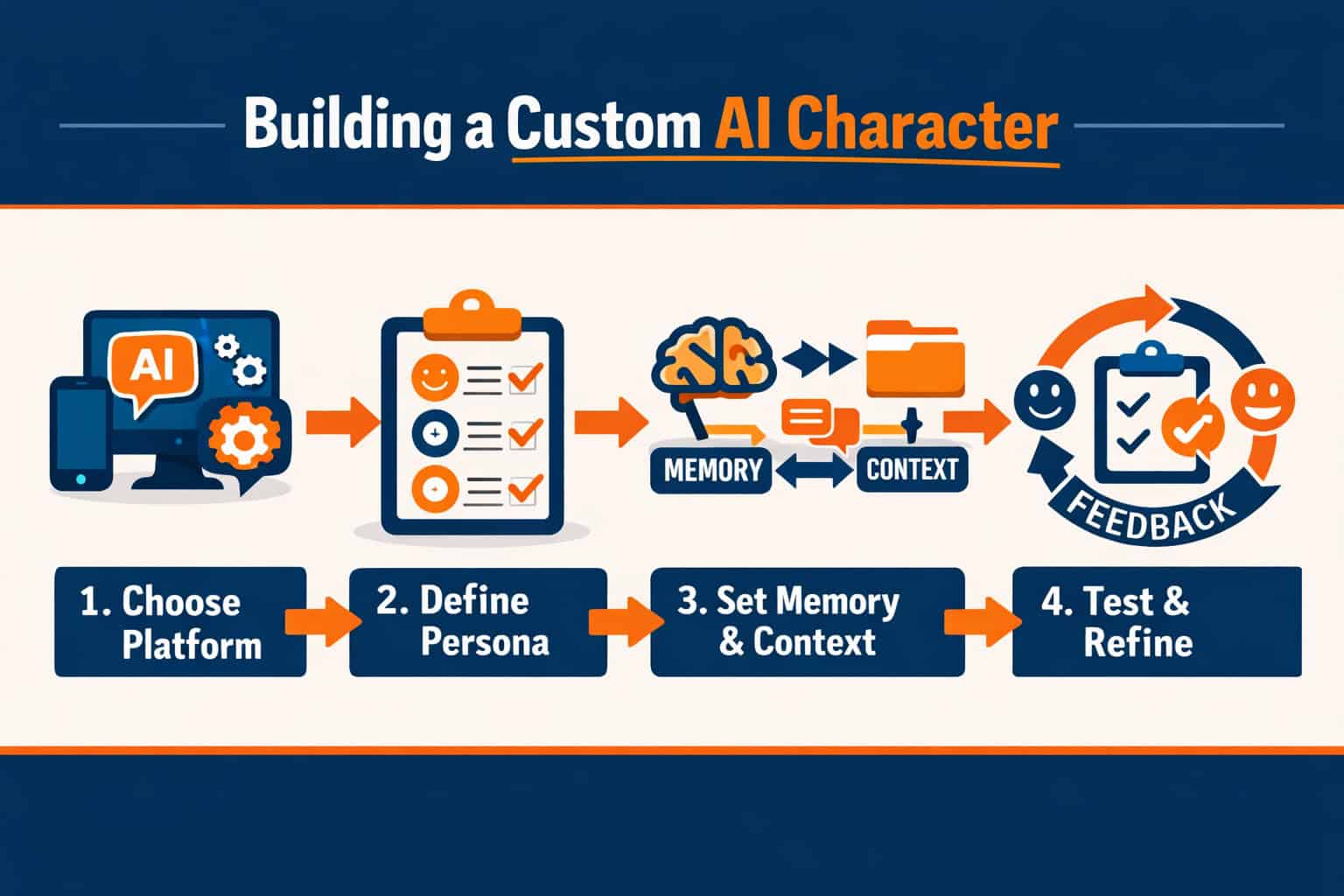
Can You Build a Custom Character AI Bot From Scratch for Free?
Yes — and this is one of the most powerful options for developers and advanced users. Building a custom character bot gives you full control over persona, memory, moderation, and integration [5].
Three main pathways:
Option 1: Platform-Based Custom Bots (No Code)
Tools like Poe, Character.AI’s creator mode, and Janitor AI let you define a custom character using a structured form or system prompt. No coding required. Best for: writers, educators, content creators.
Option 2: API + Prompt Engineering (Low Code)
Combine an LLM API (OpenAI, Anthropic, or open-source via Hugging Face) with a custom system prompt that defines your character. Add a simple frontend with a no-code tool. Best for: small business chatbots, interactive fiction sites.
Option 3: Self-Hosted Frameworks (Full Code)
Tools like SillyTavern, Kobold AI, or LocalGPT let you run models locally with complete control over every layer [5]. Best for: developers needing privacy, uncensored creative projects, or custom enterprise deployments.
Key components to configure in any custom build:
- System prompt / persona definition — The character’s identity, constraints, and speaking style
- Memory architecture — How conversation history is stored and retrieved
- Moderation rules — What the character will and won’t engage with
- Response formatting — Length, tone, and structure of outputs
For teams who want to embed character AI into a website, integrating an AI-powered chatbot into WordPress provides a practical technical walkthrough.
What Are the Most Common Mistakes People Make With Free Character AI Platforms?
Most problems with character AI come down to setup errors and mismatched expectations, not platform limitations.
Mistake 1: Vague persona prompts “A wise old wizard” produces generic outputs. “A 300-year-old elven archivist who speaks in formal Victorian English, distrusts magic users, and hoards obscure historical trivia” produces a distinct character. Specificity is everything [1].
Mistake 2: Ignoring memory limitations Assuming the AI remembers everything from session one in session ten leads to narrative inconsistencies. Always check the platform’s context window and plan your continuity management accordingly.
Mistake 3: Using outputs verbatim AI-generated dialogue is a starting point, not a finished product. The best results come from editing outputs to match your project’s tone and removing generic filler phrases.
Mistake 4: Not testing content moderation before a project Discovering that a platform blocks specific themes mid-project wastes significant time. Test edge cases in your content early.
Mistake 5: Overlooking community resources Most platforms have active communities sharing character templates, prompt strategies, and workarounds. Using these resources can save hours of trial and error [2].
Conclusion: Your Next Steps for Getting Started With Free Character AI
Free character AI platforms have genuinely lowered the barrier to professional-quality character creation and interactive storytelling. The technology is accessible, the free tiers are functional, and the creative applications are broad enough to serve writers, designers, educators, and developers alike.
Here’s how to move forward:
- Identify your primary use case — creative writing, game design, education, or business prototyping — before choosing a platform
- Start with Character.AI or Poe for zero-friction experimentation; move to self-hosted options like SillyTavern if you need full control
- Write your character sheet before opening the platform — the quality of your persona prompt determines 80% of your results
- Test memory persistence in a multi-session conversation within the first week
- Join the platform’s community to access shared character templates and prompt strategies
- Revisit your platform choice at 30 days — if you’re hitting free tier limits consistently, evaluate whether a paid upgrade or a self-hosted alternative makes more sense
The combination of free access, improving LLM quality, and growing community resources makes 2026 an excellent time to start experimenting. The tools are ready — the main variable is how clearly you define what you want your character to be.
For more on how AI is reshaping creative and content workflows, explore the AI content generation tools guide and the best AI graphic design tools to build a complete AI-assisted creative stack.
Frequently Asked Questions
Q: Are free character AI platforms safe to use? Most reputable platforms are safe for general use, but always review the privacy policy before sharing personal information or sensitive creative work. Data storage and training opt-out policies vary significantly by platform.
Q: Can I use free character AI for commercial projects? It depends on the platform’s terms of service. Some free tiers explicitly prohibit commercial use. Always check the ToS before using AI-generated content in a product or publication.
Q: What’s the difference between Character.AI and a custom GPT? Character.AI is a consumer platform with a built-in character library and community features. A custom GPT (via OpenAI) is a more configurable tool built on a specific model, with better API access but less community infrastructure.
Q: Do free character AI platforms work offline? Most consumer platforms require an internet connection. Self-hosted options like SillyTavern or LocalGPT can run fully offline once the model is downloaded, which is ideal for privacy-sensitive projects [5].
Q: How do I make an AI character remember things across sessions? Choose a platform with persistent cross-session memory (Replika and Kindroid offer this on free tiers). Alternatively, paste a brief “memory summary” at the start of each new session to re-establish context.
Q: Can I give my AI character a consistent visual appearance? Text-only platforms don’t control visual appearance. For consistent visual character design, use a dedicated AI image tool alongside your character chat platform, or choose a multi-modal platform that supports avatar generation [1].
Q: Is it possible to build a character AI for my website without coding? Yes. Platforms like Poe offer embeddable bots, and no-code tools can connect LLM APIs to a simple chat interface. For a deeper walkthrough, see the guide on integrating AI chatbots into WordPress.
Q: What’s the best free platform for NSFW or mature creative writing? Platforms with permissive content policies (such as Janitor AI with NSFW mode enabled, or self-hosted SillyTavern) are most commonly used for mature creative writing. Always verify age verification requirements and platform policies before use [5].
Q: How many characters can I create on a free plan? This varies by platform. Most allow unlimited character creation on free tiers; the restrictions are usually on message volume or response speed rather than the number of characters.
Q: Can AI character platforms replace human writers? No — they’re most effective as collaborative tools that accelerate drafting and prototyping. Human editorial judgment, narrative structure, and emotional nuance still require a human writer to direct and refine the output [4].
References
[1] Best AI Character Generator — https://ltx.studio/blog/best-ai-character-generator
[2] Character Chat AI Free — https://craveu.ai/tags/character-chat-ai-free
[3] AI Character Design 2026 — https://digitalsynopsis.com/design/ai-character-design-2026/
[4] AI Character Generators — https://www.contentbeta.com/blog/ai-character-generators/
[5] Character AI Alternatives Guide — https://gempages.net/blogs/shopify/character-ai-alternatives-guide