Last updated: May 10, 2026 This article provides a comprehensive replit core plan review, explores its features, covers pricing, and includes a comparison with other options.
Quick Answer
The Replit Core Plan ($25/month, or $17/month billed annually) is a browser-based development environment that bundles a code editor, AI coding agent, hosting, database, and deployment into a single tab. It’s best suited for solo developers and small teams (up to 5 collaborators) who want to build and ship applications without managing local toolchains or separate hosting providers. As of 2026, it includes full AI Agent access, private publishing, and a new Workspace Security Center [1].
Key Takeaways
- Replit Core costs $25/month (monthly) or $17/month (annual billing), sitting between the free Starter plan and the $40/month Pro plan [7].
- You get unlimited AI Agent usage across all modes, including the newer Security Agent for threat modeling [2].
- Private publishing and external access tokens became available to Core users in May 2026, expanding what was previously a Pro/Enterprise feature [1].
- The platform supports 50+ programming languages directly in the browser with zero local setup.
- Core includes 5 collaborator seats, making it viable for small team projects.
- Workspace Security Center 2.0 lets you audit dependency vulnerabilities across all projects from one dashboard [1].
- G2 reviews average 4.3 to 4.6 stars, with praise for accessibility but some criticism of Agent reliability on complex codebases [10].
- Competitors like GitHub Codespaces and CodeSandbox offer stronger performance or frontend speed, respectively, but lack Replit’s all-in-one hosting and deployment.

What Exactly Is the Replit Core Plan?
Replit Core is the mid-tier paid plan on Replit, a cloud-based development platform that runs entirely in your browser. It gives you a code editor, terminal, package manager, database, AI assistant, and deployment pipeline without installing anything locally.
One analyst described Replit as “the only platform combining code editor, AI agent, hosting, database, and deployment in one browser tab” [10]. That’s the core value proposition: consolidation. Instead of juggling VS Code, a terminal, a hosting provider, and a CI/CD pipeline, everything lives in one place.
The Core Plan specifically unlocks:
- Full AI Agent access across Build, Edit, and Chat modes
- Private Repls (your code isn’t publicly visible by default)
- 5 collaborator seats for team projects
- Always-on Repls that don’t spin down after inactivity
- Custom domains for deployed applications
- Priority support over free-tier users
Choose Core if you’re a solo developer or freelancer building real projects you intend to deploy. If you’re just learning or experimenting, the free Starter plan works fine. If you need more than 5 collaborators or higher compute limits, look at Pro ($40/month) or Teams/Enterprise [7].
How Much Does the Replit Core Plan Cost Compared to Other Tiers?
Core costs $25/month on monthly billing or $17/month when paid annually. Here’s how it stacks up against other Replit plans:
| Feature | Starter (Free) | Core ($17-25/mo) | Pro ($40/mo) |
|---|---|---|---|
| AI Agent access | Limited | Unlimited | Unlimited + priority |
| Private Repls | No | Yes | Yes |
| Collaborators | 1 | 5 | 10+ |
| Always-on Repls | No | Yes | Yes |
| Custom domains | No | Yes | Yes |
| Private publishing | No | Yes (as of May 2026) | Yes |
| Security Center 2.0 | No | Yes | Yes |
| Compute power | Basic | Standard | Enhanced |
The annual billing discount saves roughly 32%, which makes Core competitive with other cloud IDEs at the $17/month price point [7]. If you’re building tools for clients or internal use, the recently added private publishing feature means you can ship sign-in-protected apps without upgrading to Pro [1].
What AI Features Come with the Replit Core Plan in 2026?
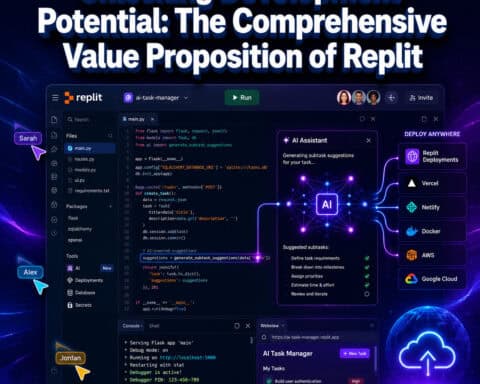
Core Plan users get unlimited access to Replit’s AI Agent, which can generate, edit, debug, and refactor code through natural language prompts. This is the plan’s biggest draw for many developers.
As of April 2026, Replit also released the Security Agent, an AI-powered auditor that goes beyond dependency scanning. It builds threat models for your entire project, identifying risks in your architecture, not just outdated packages [2]. This is available to Core users at no extra cost.
Key AI capabilities on Core:
- Build mode: Describe what you want, and the Agent scaffolds the project
- Edit mode: Select code and ask for changes in plain English
- Chat mode: Ask questions about your codebase or general programming concepts
- Security Agent: Automated threat modeling and vulnerability assessment [2]
Replit celebrated its 10th anniversary on May 2, 2026, by offering 24 hours of free Agent usage to all users, which gave Starter plan users a taste of what Core provides daily [3].
Common mistake: Relying entirely on the AI Agent for complex, multi-file refactors. G2 reviewers note that Agent performance drops on larger codebases with intricate dependencies [10]. Use the Agent for scaffolding and targeted edits, but review its output carefully on anything beyond moderate complexity.
If you’re interested in how AI tools are changing development workflows more broadly, our guide to AI-powered content generation tools covers the wider landscape.

What Security and Deployment Features Were Added in 2026?
Three significant security and deployment updates arrived for Core users in May 2026, all of which previously required Pro or Enterprise plans.
Workspace Security Center 2.0 (May 8, 2026): This dashboard lets you review dependency vulnerabilities across every project in your account from a single interface. You can triage, dismiss, or fix issues without opening each Repl individually [1].
Private Publishing (May 7, 2026): You can now deploy apps that require sign-in to access. This is useful for internal tools, client demos, or beta testing where you don’t want public exposure [1]. If you’re building professional sites for clients, this feature adds a layer of access control.
External Access Tokens for Private Deployments (May 2026): Core users can now integrate external services like Slack, GitHub, or custom webhooks with their private deployments without exposing endpoints publicly [1]. This is a meaningful addition for anyone building internal automation or connecting to third-party APIs.
These updates close a significant gap between Core and Pro. For most solo developers and small teams, Core now covers the security and deployment needs that previously required a more expensive plan.
How Does the Replit Core Plan Compare to GitHub Codespaces and CodeSandbox?
This is the question most developers ask before committing. Each platform has distinct strengths.
| Criteria | Replit Core | GitHub Codespaces | CodeSandbox |
|---|---|---|---|
| Monthly cost | $17-25 | Free 60 hrs, then $0.18/hr | $9/mo (Pro) |
| IDE experience | Browser-based, custom | Full VS Code in browser | Browser-based, custom |
| AI Agent | Built-in, unlimited on Core | Copilot (separate subscription) | Limited AI features |
| Hosting/deployment | Built-in | None (use external) | Limited |
| Spin-up time | 5-10 seconds | 30-90 seconds | 2-3 seconds |
| GitHub integration | Basic | Deep (PRs, branches) | Strong (PR previews) |
| Compute options | Fixed tiers | Up to 32 cores | Fixed tiers |
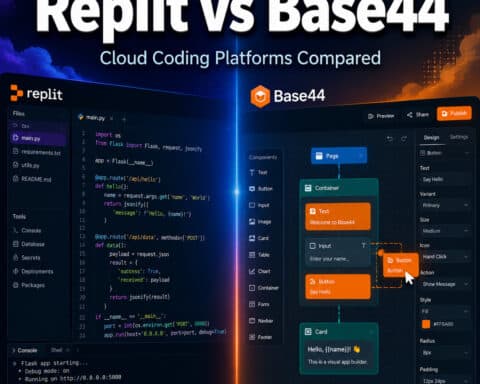
Choose Replit Core if you want everything in one place and don’t want to manage separate hosting, databases, or deployment pipelines. It’s the most self-contained option.
Choose GitHub Codespaces if you need configurable VMs, work heavily with GitHub repositories, or want the full VS Code experience with extensions. It offers more raw compute power and avoids vendor lock-in for your code.
Choose CodeSandbox if you’re primarily doing frontend work and value instant spin-up times. At $9/month, it’s cheaper, but it doesn’t include hosting or databases.
For developers evaluating no-code and low-code platforms alongside traditional coding environments, Replit sits in an interesting middle ground: it’s a full coding environment that’s accessible enough for non-traditional developers.

Who Should (and Shouldn’t) Use the Replit Core Plan?
Core is a strong fit for:
- Solo developers shipping side projects or client work
- Freelancers who need quick prototyping with built-in deployment
- Educators and students working on projects beyond the free tier’s limits
- Non-traditional developers (designers, product managers) who can use AI Agent to build tools
- Small teams of 2-5 people collaborating on a shared codebase
Core is not ideal for:
- Large teams (more than 5 collaborators need Pro or Teams)
- Performance-intensive applications requiring high compute (Codespaces offers up to 32-core VMs)
- Developers deeply embedded in the VS Code ecosystem who rely on specific extensions
- Enterprise organizations needing SSO, audit logs, and compliance features
If you’re a designer looking to bridge the gap between design and code, you might also find value in tools that streamline the design-to-development workflow.
What Are the Known Limitations of the Replit Core Plan?
No platform is perfect. Here are the most commonly cited drawbacks based on user reviews and independent analysis:
- Agent inconsistency on complex projects: The AI works well for standard web apps but can produce unreliable code for multi-service architectures or niche frameworks [10].
- Vendor lock-in risk: Your Repls, databases, and deployments all live on Replit’s infrastructure. Migrating away requires manual effort.
- Limited compute scaling: You can’t configure CPU/RAM the way you can with Codespaces. For compute-heavy tasks (ML training, large builds), this is a real constraint.
- Extension ecosystem: Replit’s editor is capable but doesn’t match VS Code’s extension library.
- Collaboration ceiling: Five collaborators is enough for small projects but limiting for growing teams.
For developers working on WordPress plugin development or other ecosystem-specific work, Replit’s environment may lack the specialized tooling you’d get from a local setup or Codespaces with custom containers.
Conclusion
The Replit Core Plan in 2026 is the strongest version of itself yet. The May 2026 additions of private publishing, Workspace Security Center 2.0, external access tokens, and the Security Agent have closed most of the feature gaps that previously pushed users toward Pro [1] [2].
At $17/month (annual), it offers genuine value for solo developers and small teams who want a single platform for writing, testing, deploying, and securing code. The AI Agent is its biggest differentiator, and for standard web applications, it works well enough to meaningfully speed up development.
Your next steps:
- Try the free Starter plan first to see if you like Replit’s editor and workflow.
- Upgrade to Core when you need private Repls, always-on deployments, or unlimited AI Agent access.
- Evaluate Pro only if you need more than 5 collaborators or enhanced compute.
- Consider Codespaces if raw performance and VS Code compatibility matter more than all-in-one convenience.
If you’re exploring broader AI-powered tools for web creation, Replit Core fits well as the coding-focused complement to no-code and design tools.
FAQ
How much does the Replit Core Plan cost? $25/month on monthly billing, or $17/month when billed annually. The annual plan saves about 32% [7].
Can I use the Replit Core Plan for free? No, but Replit offers a free Starter plan with limited AI Agent usage and no private Repls. Core is the first paid tier.
Does the Core Plan include AI coding assistance? Yes. Core includes unlimited access to Replit’s AI Agent in Build, Edit, and Chat modes, plus the Security Agent for threat modeling [2].
How many people can collaborate on a Core Plan? Up to 5 collaborators per project. If you need more, you’ll need the Pro plan (10+) or a Teams/Enterprise plan [7].
Can I deploy applications directly from Replit Core? Yes. Core includes built-in hosting, custom domains, always-on Repls, and as of May 2026, private publishing for sign-in-protected apps [1].
Is Replit Core better than GitHub Codespaces? It depends on your priorities. Replit Core is more self-contained (editor + hosting + database + AI in one). Codespaces offers more compute power and full VS Code compatibility. Neither is universally better.
What programming languages does Replit support? Over 50 languages, including Python, JavaScript, TypeScript, Go, Rust, Java, C++, Ruby, and more. All run directly in the browser.
Can I export my code from Replit? Yes. You can download your Repl files or connect to GitHub for version control. However, Replit-specific features like databases and deployments don’t transfer automatically.
What is the Workspace Security Center 2.0? A dashboard released May 8, 2026, that lets Core users review and act on dependency vulnerabilities across all their projects from one interface [1].
Is the Replit Core Plan good for beginners? Yes. The AI Agent and zero-setup environment make it accessible for people learning to code. The free Starter plan is fine for beginners, but Core adds privacy and always-on features that help when building real projects.
References
[1] Changelog – https://docs.replit.com/updates/2026/05/08/changelog [2] Changelog – https://docs.replit.com/updates/2026/04/24/changelog [3] x – https://x.com/Replit/status/2013725352057504106?lang=en [7] Replit Pro Is Here And Core Now Offers The Best – https://www.reddit.com/r/replit/comments/1rf4ixb/replit_pro_is_here_and_core_now_offers_the_best/ [10] Replit Year Progress – https://noizz.io/insights/replit-year-progress