Last updated: May 31, 2026
Quick Answer: AI voice generators convert written text into spoken audio using deep learning models that mimic human speech patterns, tone, and emotion. In 2026, the best tools produce near-human-quality output in multiple languages, cost between $0 and $100/month for most users, and can clone a voice from under five seconds of sample audio [6]. This guide covers how the technology works, which tools fit specific use cases, what they cost, and the legal and ethical guardrails you need to know about.
Key Takeaways
- AI voice generators use neural networks to synthesize speech from text, with the latest models achieving mean opinion scores (MOS) above 4.0 out of 5 for naturalness [9].
- Leading platforms like ElevenLabs, Murf.ai, and the new open-source Voxtral TTS from Mistral support 9+ languages and custom voice cloning [6].
- Monthly costs range from free tiers (limited minutes) to $22–$99/month for professional plans, with enterprise pricing scaling higher.
- Twelve U.S. states have passed voice-cloning legislation as of early 2026, making consent documentation essential for commercial use [10].
- AI voices work best for scalable content (YouTube, e-learning, podcasts) but still fall short for highly emotional or character-driven performances.
- Common mistakes include skipping text cleanup, ignoring licensing terms, and choosing the wrong voice for the audience.
What Exactly Is an AI Voice Generator and How Does It Work?
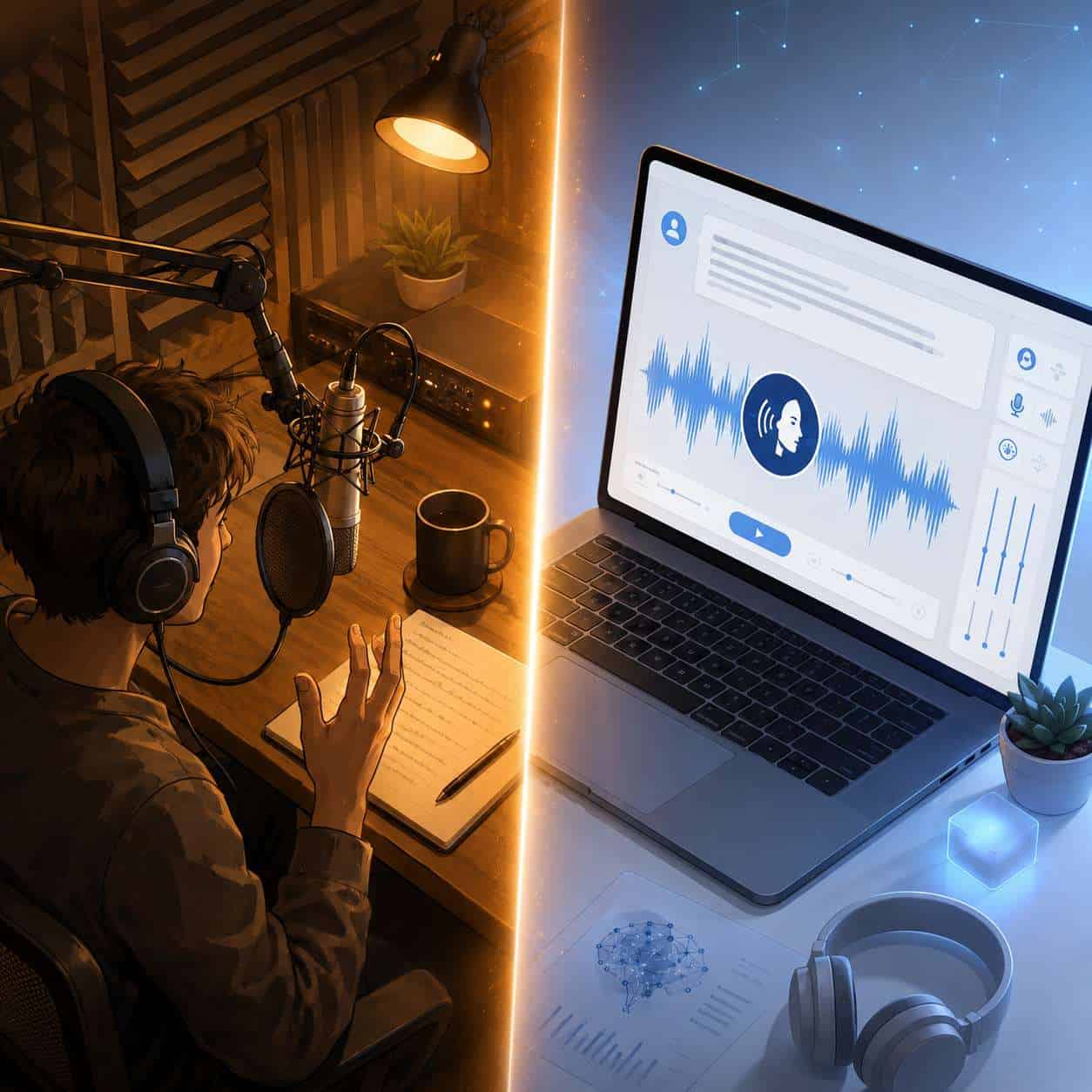
An AI voice generator is software that converts written text into spoken audio using deep learning models trained on large datasets of human speech. Instead of stitching together pre-recorded word fragments (the old approach), modern systems generate speech from scratch, producing fluid, natural-sounding output.
Here’s a simplified breakdown of the process:
- Text analysis: The system parses your input, identifying sentence structure, punctuation, abbreviations, and context.
- Linguistic processing: It converts text into phonemes (individual sound units) and determines prosody (rhythm, stress, intonation).
- Audio synthesis: A neural network generates raw audio waveforms that match the target voice profile.
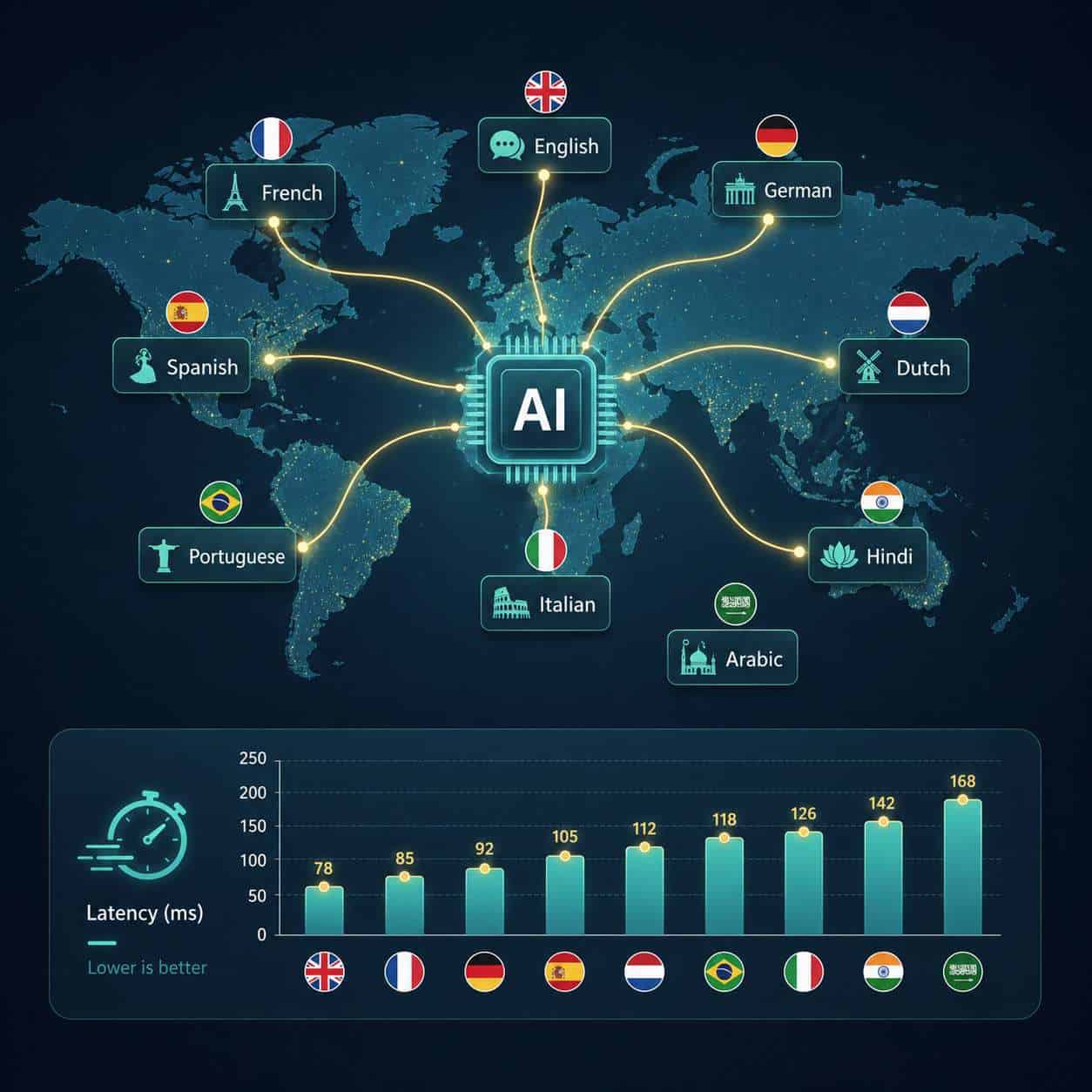
The newest architectures use a hybrid approach. Mistral’s Voxtral TTS, released in March 2026, combines autoregressive generation of semantic speech tokens with flow-matching for acoustic tokens, achieving a time-to-first-audio of roughly 90 milliseconds [6]. That’s fast enough for live conversation.
If you’re exploring other ways AI is changing content creation, our comprehensive guide to AI-powered content generation tools covers the broader landscape.
Which AI Voice Generator Is Best for Podcasters?
For podcasters, the best AI voice generator balances naturalness, long-form stability, and easy editing. ElevenLabs and Murf.ai are the most frequently recommended in 2026, with WellSaid Labs as a strong alternative for teams [3].
What to look for as a podcaster:
- Long-form consistency: Some tools sound great for 30 seconds but drift in tone over a 20-minute episode. Test with at least 2,000 words before committing.
- Voice cloning: If you want the AI to sound like you, choose a platform that supports custom voice profiles. Voxtral TTS can create one from under five seconds of sample audio [6].
- SSML or manual controls: The ability to adjust pauses, emphasis, and speed matters for conversational pacing.
- Export quality: Look for WAV or high-bitrate MP3 output (at least 192 kbps).
Common mistake: Feeding raw show notes directly into a TTS tool without rewriting them as spoken-word scripts. Written text and spoken text have different rhythms. Short sentences, contractions, and conversational phrasing make AI-generated podcast audio sound dramatically better.
Are AI Voice Generators Good for YouTube Content Creators?
Yes, and YouTube is one of the fastest-growing use cases. AI voices let creators produce narrated videos without recording equipment, a quiet room, or hours of editing. Channels covering tutorials, news roundups, listicles, and explainer content are the biggest adopters.
Where AI voices work well on YouTube:
- Faceless channels with consistent narration needs
- Multi-language versions of the same video
- Rapid-turnaround content like daily news summaries [4]
Where they don’t work as well:
- Personality-driven vlogs where the creator’s real voice is the brand
- Comedy or highly emotional storytelling that requires nuanced delivery
Murf.ai now offers domain-specific presets, including broadcast-style news voices, reflecting a trend toward specialized voices for specific content verticals [4]. If you’re also looking to optimize your video content’s discoverability, our guide on AI-powered content optimization covers practical strategies.
How Much Do Professional AI Voice Tools Cost per Month?
Most AI voice generators use tiered subscription pricing based on character or minute limits. Here’s a realistic cost comparison for 2026:
| Tool | Free Tier | Starter/Creator | Pro/Business | Enterprise |
|---|---|---|---|---|
| ElevenLabs | 10,000 chars/mo | ~$5/mo (30K chars) | $22–$99/mo | Custom |
| Murf.ai | Limited trial | ~$23/mo | ~$66/mo | Custom |
| WellSaid Labs | Trial only | ~$44/mo | Custom | Custom |
| Voxtral TTS (Mistral) | Open-source (self-host) | API pricing TBD | API pricing TBD | Custom |
| Play.ht | 12,500 chars/mo | ~$30/mo | ~$99/mo | Custom |
Choose based on your volume: If you produce one podcast episode per week (roughly 5,000 words), you’ll need a plan that supports at least 25,000–30,000 characters per month. For YouTube creators publishing daily, expect to need a Pro tier or higher.
Budget tip for small businesses: Voxtral TTS is open-source and can be self-hosted, which eliminates per-character fees entirely if you have the technical resources to run it [6].
Which AI Voice Generator Is Cheapest for Small Businesses?
For small businesses with limited budgets, the cheapest viable option depends on whether you have technical staff. Self-hosting Mistral’s Voxtral TTS costs nothing in licensing fees, only your server costs [6]. For non-technical teams, ElevenLabs’ starter plan at roughly $5/month offers the lowest entry point among commercial tools with reasonable quality.
Decision rule: Choose a hosted commercial tool if you need plug-and-play simplicity. Choose open-source self-hosting if you have a developer on staff and want to eliminate per-character costs at scale.
Can AI Voices Sound Truly Natural, or Do They Still Sound Robotic?
The top proprietary models in 2026 sound remarkably natural for most standard content. Trelis Research’s March 2026 benchmarks show leading proprietary systems achieving MOS scores above 4.0 (out of 5.0), which places them in the “good to excellent” range of perceived naturalness [9]. Open-source models range more widely, from 3.3 to 4.5 MOS [9].
That said, edge cases still trip up even the best systems:
- Technical content: Symbols, abbreviations, and code snippets cause misreadings. Google’s Gemini voice stack and ElevenLabs with text normalization handle these better than most open-source alternatives [9].
- Emotional range: Revoicer and similar tools now offer emotion-based controls for pitch, speed, pauses, and intensity [8], but truly spontaneous-sounding laughter, sighing, or crying remains difficult.
- Long monologues: Subtle tonal drift over 10+ minutes can make AI voices feel “flat” compared to a skilled human narrator.
“The quality gap between proprietary and open-source TTS is narrowing, but it hasn’t closed. Proprietary models still handle edge cases in technical content more reliably.” — Based on Trelis Research benchmarks, March 2026 [9]
Can AI Voice Generators Handle Different Accents, Tones, and Languages?
Most commercial platforms now support multiple languages, accents, and tonal styles. Voxtral TTS launched with nine languages: English, French, German, Spanish, Dutch, Portuguese, Italian, Hindi, and Arabic [6]. Google’s Gemini 3.1 Flash Live covers 90+ languages. ElevenLabs supports 29+ languages as of 2026.
Accent and tone capabilities:
- Regional accents (British English vs. American English vs. Australian English) are standard on major platforms.
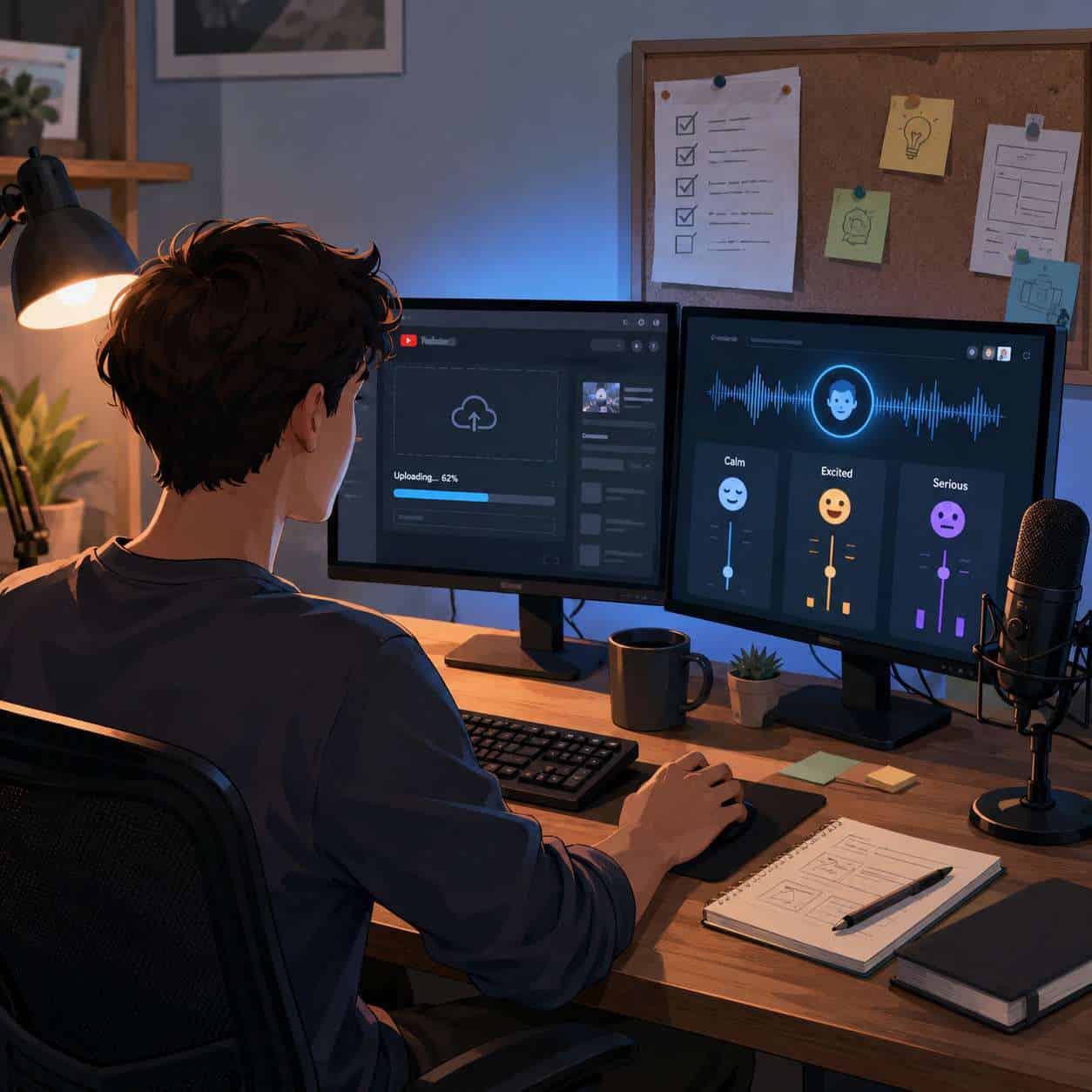
- Emotion controls let you shift between calm, urgent, empathetic, and dramatic delivery [8].
- Voice cloning captures subtle accent characteristics from the source audio, so a cloned voice retains its original accent [6].
Edge case: Less common languages and regional dialects (e.g., Swiss German, specific Indian regional languages) still have noticeably lower quality than English or Spanish output. Always test before committing to a multilingual content strategy.
How Do AI Voices Compare to Hiring Real Voice Actors?
AI voices are faster and cheaper for high-volume, standardized content. Human voice actors are better for premium, emotionally complex, or brand-defining work. Here’s a direct comparison:
| Factor | AI Voice Generator | Human Voice Actor |
|---|---|---|
| Cost per finished minute | $0.01–$0.50 | $5–$50+ |
| Turnaround time | Seconds to minutes | Hours to days |
| Emotional nuance | Good (improving) | Excellent |
| Consistency across 100+ clips | Perfect | Variable |
| Revisions | Instant, free | Additional cost/time |
| Unique brand personality | Limited | Strong |
| Legal simplicity | Requires license review | Clear work-for-hire contracts |
When to choose AI: Internal training videos, product demos, app notifications, social media clips at scale, multilingual content localization.
When to choose human: Brand anthem videos, audiobooks with character voices, emotional ad campaigns, any content where the voice is the product.
For businesses building their online presence alongside audio content, our roundup of the best drag-and-drop website builders can help you create a home for your content.
What Are the Ethical Concerns Around Using AI-Generated Voices?
The biggest ethical concerns are unauthorized voice cloning, lack of consent, and potential for deepfake misuse. As of early 2026, twelve U.S. states have passed legislation restricting unauthorized AI voice cloning, modeled on Tennessee’s 2024 ELVIS Act, with nine more states having active bills [10].
Core ethical rules for commercial voice cloning:
- Get explicit informed consent from anyone whose voice you clone, with a clear definition of allowed uses [7].
- Maintain robust logging so you can prove consent was obtained and respected.
- Disclose AI use when required by platform terms of service (YouTube, Spotify, and others are updating policies).
- Never clone a public figure’s voice without authorization, even for parody, as legal protections are expanding rapidly [10].
This is an area where the AI content landscape is evolving quickly, and staying current on regulations matters.
Who Shouldn’t Use AI Voice Generation Technology?
AI voice generators aren’t the right fit for everyone. You should probably avoid them if:
- Your audience expects a personal connection with a specific human voice (e.g., a therapy podcast, a personal memoir audiobook).
- You need highly emotional or improvisational delivery that current AI can’t replicate convincingly.
- You’re in a heavily regulated industry (healthcare, legal, financial advice) where AI-generated content may face additional disclosure requirements.
- You lack the resources to review output carefully. AI voices can mispronounce names, misread numbers, or produce awkward phrasing that damages credibility if not caught.
What Are the Top Mistakes People Make When Using AI Voice Tools?
Based on what I’ve seen working with content teams, these are the most common errors:
- Skipping text preprocessing. Raw blog posts, bullet points, and abbreviations produce awkward audio. Rewrite for spoken delivery first.
- Choosing a voice based on a 10-second demo. Always test with a full-length sample that matches your actual content type.
- Ignoring licensing terms. Some free tiers restrict commercial use. Read the fine print before publishing.
- Over-relying on default settings. Adjusting speed, pitch, and pauses (even slightly) makes a significant difference in perceived quality.
- Not disclosing AI use when required. Platform policies and state laws are changing fast [10]. When in doubt, disclose.
- Using one voice for everything. Different content types (tutorials vs. ads vs. customer support) benefit from different voice profiles.
If you’re integrating AI tools into a WordPress-based workflow, our guide on AI plugins for WordPress covers automation options that pair well with voice generation.
Frequently Asked Questions
Can I use AI-generated voices commercially? Yes, but only on plans that include commercial licensing. Free tiers often restrict commercial use. Check each platform’s terms, and ensure you have consent documentation for any cloned voices [10].
How long does it take to generate a 10-minute audio clip? With current tools, a 10-minute clip (roughly 1,500 words) generates in under 60 seconds on most commercial platforms. Voxtral TTS reports a real-time factor of 6x, meaning 10 seconds of audio renders in about 1.6 seconds [6].
Do I need special hardware to use AI voice generators? No. Cloud-based tools like ElevenLabs and Murf.ai run in your browser. Self-hosting open-source models like Voxtral TTS requires a GPU server.
Can AI voice generators read scripts with technical jargon accurately? Proprietary models handle technical content better than most open-source options, but you should still proofread output. Symbols, acronyms, and unusual formatting are common failure points [9].
Is voice cloning legal? It depends on your jurisdiction and whether you have consent. Twelve U.S. states have specific voice-cloning laws as of 2026, and the trend is toward stricter regulation [10].
Can I clone my own voice for content creation? Yes, and this is one of the most popular use cases. Most platforms require you to verify that you’re the voice owner or have explicit permission.
What’s the difference between TTS and voice cloning? TTS (text-to-speech) converts text to audio using a pre-built voice. Voice cloning creates a custom voice model from sample audio, which can then be used for TTS.
Are there free AI voice generators worth using? ElevenLabs and Play.ht offer free tiers that are good enough for testing and light personal use. For anything beyond a few minutes of audio per month, a paid plan is necessary.
Conclusion
AI voice generation in 2026 is practical, affordable, and good enough for most commercial audio content. The technology has moved well past the robotic-sounding output of a few years ago, with top models scoring above 4.0 MOS for naturalness [9] and supporting dozens of languages.
Your next steps:
- Define your use case (podcast, YouTube, e-learning, customer support) before choosing a tool.
- Test at least three platforms with your actual content, not just demo text.
- Budget for a paid plan if you’re producing more than a few minutes of audio per month.
- Document consent for any voice cloning, and stay current on your state’s regulations [10].
- Always rewrite text for spoken delivery before generating audio. This single step makes the biggest quality difference.
The tools are ready. The legal framework is catching up. And the cost-to-quality ratio has never been better for creators and businesses willing to invest a few hours in learning the workflow. For more on how AI is reshaping digital content and design workflows, explore our AI content archives.
References
[3] Best Ai Voice Generator – https://www.wellsaid.io/resources/blog/best-ai-voice-generator [4] News Reporter Voice Generator – https://murf.ai/blog/news-reporter-voice-generator [6] Mistral Releases A New Open Source Model For Speech Generation – https://techcrunch.com/2026/03/26/mistral-releases-a-new-open-source-model-for-speech-generation/ [7] Synthetic Media Voice Cloning And The New Right Of Publicity Risk Map For 2026 – https://holonlaw.com/entertainment-law/synthetic-media-voice-cloning-and-the-new-right-of-publicity-risk-map-for-2026/ [8] Emotion Based Ai Voice Generator Guide – https://revoicer.com/news/emotion-based-ai-voice-generator-guide [9] Top Text To Speech Tts Models In – https://trelis.substack.com/p/top-text-to-speech-tts-models-in [10] Protect Music From Ai Cloning 2026 – https://www.chartlex.com/blog/business/protect-music-from-ai-cloning-2026