Last updated: May 30, 2026
Quick Answer: ElevenLabs is a browser-based AI voice synthesis platform that converts text into realistic speech using deep learning models. Beginners can generate natural-sounding voiceovers, clone their own voice with a short audio sample, and produce long-form content like audiobooks — all without any audio engineering experience. As of March 2026, the platform’s v3 model delivers roughly 68% better accuracy on complex text compared to earlier versions, and a free tier lets you test it before spending anything.
Key Takeaways
- ElevenLabs runs entirely in your browser — no special hardware or software installs required.
- Voice cloning needs as little as 30 seconds of clean audio, though 3+ minutes yields better results.
- The free plan gives you limited characters per month; paid plans start at $5/month (Starter tier as of 2026).
- The v3 model, released March 14, 2026, supports inline “Audio Tags” like
[laughs]and[sighs]for expressive control [1]. - ElevenLabs supports 32+ languages and dozens of accents.
- The new Projects feature lets you organize multi-chapter audiobooks in a single workspace [1].
- ElevenMusic, launched April 29, 2026, extends the platform into AI music generation across 70+ genres [2].
- Ethical use matters: voice cloning requires consent, and misuse can violate terms of service and local laws.
What Exactly Is ElevenLabs and How Does AI Voice Synthesis Work?
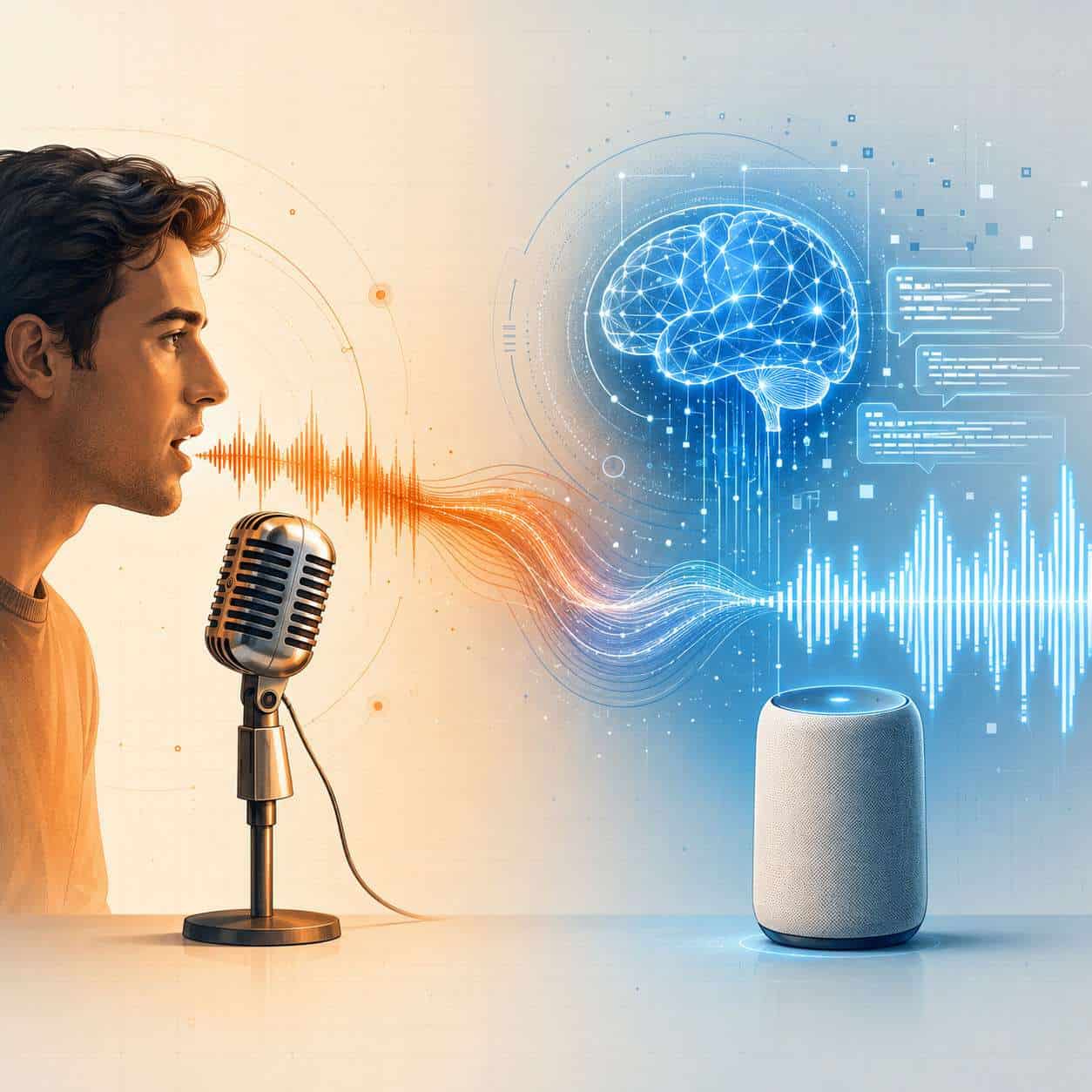
ElevenLabs is an AI company that builds text-to-speech (TTS) and voice cloning tools accessible through a web app and API. It uses deep neural networks trained on large datasets of human speech to generate audio that sounds remarkably close to a real person.
Here’s the simplified version of how it works:
- Text input — You type or paste your script into the platform.
- Model processing — The AI analyzes the text for context, punctuation, and meaning, then predicts how a human would naturally speak those words.
- Audio output — The system generates a waveform you can preview, tweak, and download as an MP3 or WAV file.
The global text-to-speech market has been growing rapidly, driven by demand in accessibility, content creation, and enterprise applications [7][10]. ElevenLabs sits at the premium end of this market, and in March 2026, IBM partnered with ElevenLabs to bring its voice capabilities into enterprise agentic AI workflows [6].
If you’re exploring other AI-powered creative tools, our comprehensive guide to AI-powered content generation tools covers the broader landscape.
How Much Does ElevenLabs Cost Compared to Other Voice AI Tools?
ElevenLabs offers a free tier and four paid plans. The free plan gives you a limited monthly character quota with access to pre-made voices. Paid plans unlock voice cloning, higher quotas, and commercial licensing.
| Plan | Monthly Cost (2026) | Characters/Month | Voice Cloning | Commercial Use |
|---|---|---|---|---|
| Free | $0 | ~10,000 | No | No |
| Starter | $5 | ~30,000 | Instant clone | Yes |
| Creator | $22 | ~100,000 | Instant + Professional | Yes |
| Pro | $99 | ~500,000 | Full suite | Yes |
| Scale | $330+ | 2,000,000+ | Full suite + API | Yes |
Note: Character limits and pricing may shift. Check ElevenLabs’ pricing page for current numbers.
How this compares: Competitors like Amazon Polly charge per character with no subscription (cheaper at very high volume, less expressive). Google Cloud TTS and Microsoft Azure offer enterprise-grade APIs but require developer setup. Resemble.AI is another popular alternative with similar cloning features [9]. For most beginners and solo creators, ElevenLabs hits a practical sweet spot between quality and ease of use.
Can I Clone My Own Voice or Only Use Preset Voices?
Yes, you can clone your own voice. ElevenLabs offers two cloning methods: Instant Voice Cloning (available on Starter plans and above) and Professional Voice Cloning (on Creator plans and above).
- Instant cloning requires uploading a clean audio sample — as short as 30 seconds works, but 1-3 minutes of varied speech produces noticeably better results.
- Professional cloning uses a longer training process with more audio data (typically 30+ minutes) and produces a higher-fidelity replica.
Common mistake: Recording in a noisy room. Background hum, echo, or inconsistent microphone distance will degrade your clone. Use a quiet space, speak at a consistent volume, and keep the mic 6-8 inches from your mouth.
You also get access to a library of pre-made voices covering different ages, genders, and speaking styles. For many use cases — explainer videos, draft narrations, prototyping — these preset voices are more than sufficient.
What Are the Most Common Mistakes Beginners Make with ElevenLabs?
The biggest beginner mistake is treating the platform like a simple copy-paste tool without preparing the input text. AI voice models are sensitive to how you write.
Top mistakes and how to avoid them:
- No punctuation or formatting. The model uses commas, periods, and paragraph breaks to determine pacing. A wall of text produces flat, rushed audio.
- Ignoring Audio Tags. Since v3’s release in March 2026, you can insert tags like
[laughs],[sighs], or[whispers]directly into your text for expressive control [1]. Skipping these means missing out on natural-sounding delivery. - Choosing the wrong voice for the content. A deep, slow narrator voice doesn’t work well for upbeat ad copy. Preview multiple voices before committing.
- Generating everything in one massive block. Break long scripts into sections. The Projects feature is specifically designed for this — it lets you organize chapters and assign different voices per section [1].
- Not checking pronunciation. Proper nouns, technical terms, and acronyms often need phonetic spelling or manual correction.
Which Industries or Creators Use ElevenLabs Most Effectively?
Content creators, e-learning companies, game studios, and marketing teams get the most value from ElevenLabs. The platform is also increasingly used in accessibility — generating audio versions of written content for visually impaired users.
Specific use cases:
- YouTubers and video creators use it for narration when they don’t want to record their own voice or need multilingual versions.
- Indie game developers generate character dialogue without hiring a full voice cast.
- E-learning platforms produce course narration at scale across multiple languages.
- Marketing agencies create voiceovers for ads, product demos, and social media content.
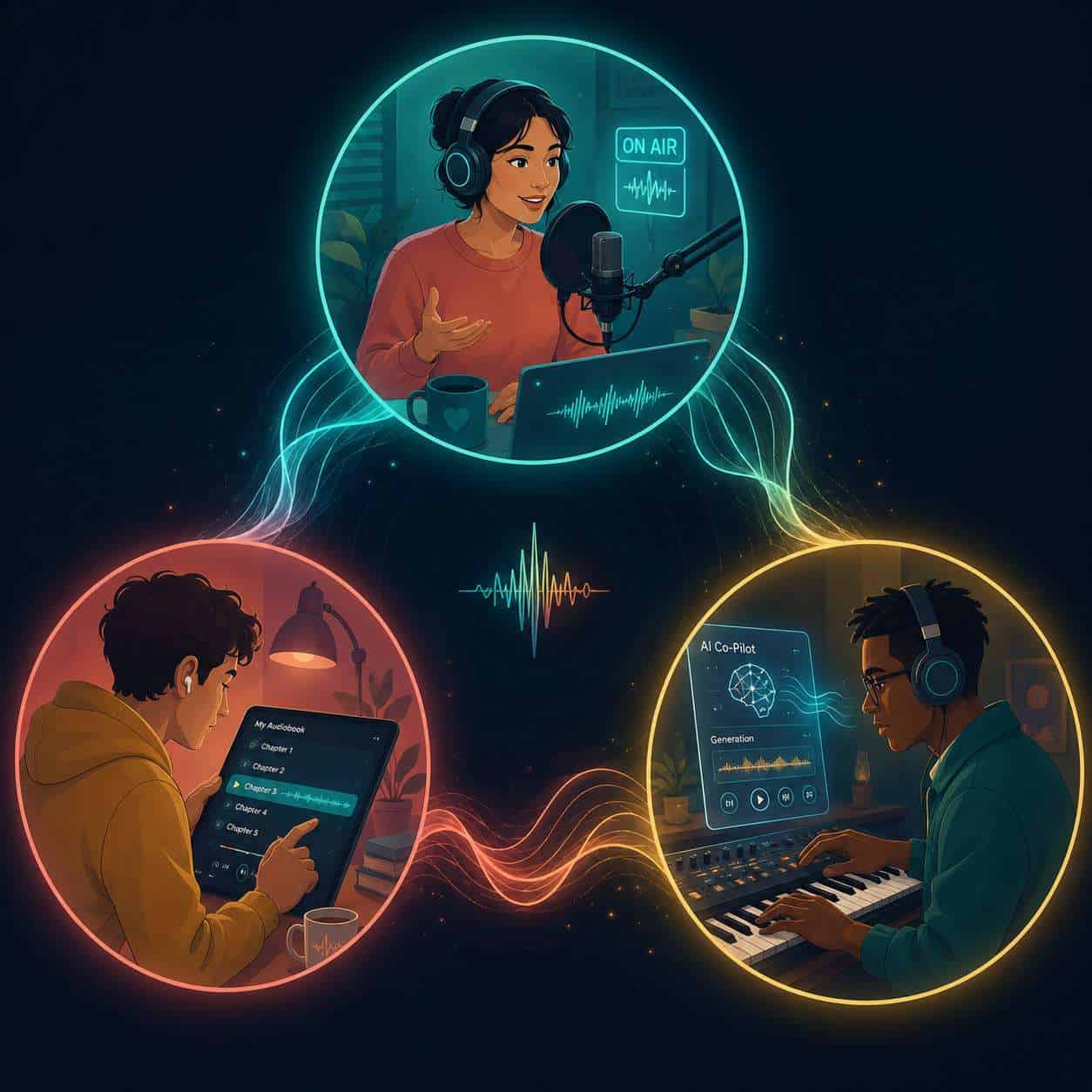
- Authors and publishers use the Projects feature to produce audiobook drafts or final productions.
If you’re a creator building a broader digital presence, you might also find value in learning how to master graphic design for social media marketing alongside your audio content.
Is ElevenLabs Good for Podcasting or Just Voiceover Work?
ElevenLabs works for both, but with different strengths. For scripted podcasts and narration-style shows, it’s excellent. For conversational, interview-style podcasts, it’s less suitable because the AI can’t improvise or respond dynamically.
Choose ElevenLabs for podcasting if:
- Your show follows a script or structured outline
- You want to produce episodes in multiple languages from the same script
- You need a consistent “host” voice without recording sessions
Skip it for podcasting if:
- Your format relies on spontaneous conversation
- Authenticity and personal connection with listeners is your primary differentiator
The new ElevenMusic platform, launched April 29, 2026, adds another dimension — you can generate intro/outro music and background tracks from text prompts in 70+ genres, with separate stems for professional mixing [2][3]. That means a solo podcaster could theoretically produce an entire show — voice, music, and sound design — using ElevenLabs tools alone.
For podcast websites, consider pairing your audio content with a well-optimized site. Our guide on AI-powered content optimization covers strategies that complement audio-first workflows.
How Accurate Is the Voice Cloning Technology?
ElevenLabs’ Professional Voice Cloning produces results that are often indistinguishable from the original speaker in casual listening. Instant cloning captures the general tone and cadence but may miss subtle vocal characteristics.
The v3 model improved complex text accuracy by approximately 68% compared to previous versions [1]. This means fewer mispronunciations, better handling of numbers and abbreviations, and more natural intonation on long sentences.
Factors that affect accuracy:
- Quality of training audio — Clean, varied samples produce better clones
- Length of training data — More data means a more faithful reproduction
- Content type — The clone performs best on content similar to the training material (if you trained it on calm narration, it may struggle with excited ad reads)
What Kind of Computer or Hardware Do I Need?
You need almost nothing special. ElevenLabs runs entirely in the cloud through your web browser. Any modern computer, tablet, or even a smartphone with a stable internet connection will work [5].
Minimum requirements:
- A web browser (Chrome, Firefox, Safari, Edge)
- Internet connection (broadband recommended for smooth streaming previews)
- For voice cloning: a decent microphone (even a good smartphone mic works for instant cloning)
There’s no GPU requirement, no software to install, and no large files to download. This is one of the platform’s biggest advantages for beginners — the barrier to entry is essentially zero. If you’re building a website to host your audio content, check out our list of the best no-coding website design software platforms for 2026.
Are There Any Free Alternatives to ElevenLabs?
Several free or freemium alternatives exist, though none match ElevenLabs’ voice quality across the board as of 2026.
- Google Cloud TTS — Free tier available; good quality but requires technical setup via API
- Amazon Polly — Pay-per-use with a 12-month free tier; solid for developers, less intuitive for non-technical users
- Resemble.AI — Offers voice cloning with a free trial; community discussions suggest it’s competitive on cloning quality [9]
- Coqui TTS — Open-source option for developers comfortable with Python
- Microsoft Azure Speech — Free tier with neural voices; enterprise-focused
Decision rule: Choose ElevenLabs if you want the best quality-to-ease ratio and don’t mind paying after the free tier. Choose an open-source tool like Coqui if you’re a developer who wants full control and zero ongoing costs.
What Languages and Accents Does ElevenLabs Support?
ElevenLabs supports 32+ languages including English, Spanish, French, German, Japanese, Korean, Hindi, Arabic, Portuguese, and Polish, among others. Within English alone, you can select from American, British, Australian, Indian, and other regional accents.
The platform automatically detects the language of your input text in most cases. For best results with non-English content, select a voice that was trained in or is optimized for that language. Mixing languages in a single generation (code-switching) works but can produce inconsistent results.
How Do I Fix Audio Quality Issues in ElevenLabs?
Most audio quality problems come from input issues, not the AI itself. Start by checking your text formatting, voice selection, and stability settings before assuming the platform is at fault.
Troubleshooting checklist:
- Robotic or flat delivery — Add punctuation. Use commas for pauses, periods for full stops, and Audio Tags for emotion.
- Words cut off or garbled — Break long sentences into shorter ones. The model handles 2-3 sentence chunks better than paragraphs.
- Background noise in cloned voice — Re-record your training audio in a quieter environment.
- Inconsistent pacing — Adjust the “Stability” and “Clarity” sliders. Higher stability = more consistent but potentially less expressive. Lower stability = more dynamic but occasionally unpredictable.
- Wrong pronunciation — Use phonetic spelling or the platform’s pronunciation dictionary feature.
For creators integrating AI audio into WordPress sites, our guide on AI SEO tools for WordPress can help you optimize the pages where you embed this content.
Is ElevenLabs Suitable for Non-Technical People?
Absolutely. The web interface is designed for people with zero audio engineering or programming experience. You type text, pick a voice, click generate, and download. That’s the core workflow.
The API exists for developers who want to integrate voice generation into apps, but it’s entirely optional. Every feature — including voice cloning, Projects, and the new ElevenMusic tool — is accessible through a point-and-click interface [3][5].
I’ve personally seen writers, teachers, and small business owners with no technical background produce professional-quality voiceovers within their first session. The learning curve is about 15-30 minutes for basic text-to-speech and perhaps an hour to understand cloning and project organization.
What Are the Ethical Considerations of AI Voice Cloning?
Voice cloning raises real ethical and legal concerns. You should only clone voices you have explicit permission to clone — ideally with written consent. Cloning a public figure’s voice or someone else’s voice without authorization can violate ElevenLabs’ terms of service and potentially break laws around fraud, impersonation, or right-of-publicity statutes depending on your jurisdiction.
Key ethical guidelines:
- Always get consent before cloning another person’s voice
- Disclose AI-generated audio when publishing or distributing content, especially in journalism or political contexts
- Don’t create deepfakes — generating audio that impersonates someone for deception is both unethical and increasingly illegal
- Respect platform policies — ElevenLabs has built-in safeguards and moderation to detect misuse
ElevenLabs’ approach to licensing with ElevenMusic — where catalog content is cleared and can be legally remixed within the platform [2][3] — shows the company is actively addressing intellectual property concerns. But the responsibility ultimately falls on the user.
Conclusion
Mastering Eleven Labs as a beginner in 2026 is genuinely straightforward. The platform handles the technical complexity so you can focus on what matters: creating great content. Start with the free tier to test voices and understand the interface. When you’re ready, upgrade to Starter for voice cloning or Creator for long-form projects.
Your actionable next steps:
- Create a free ElevenLabs account and generate your first voiceover today
- Experiment with 3-5 different preset voices to find one that fits your content style
- Practice formatting your scripts with proper punctuation and Audio Tags
- If you plan to clone your voice, record 3 minutes of clean audio in a quiet room
- Try the Projects feature for any content longer than a single paragraph
- Explore AI-powered content generation tools to build a complete creative workflow
The technology is moving fast — v3 launched just months ago, and ElevenMusic is brand new. The best time to start learning is now, while the tools are accessible and the creative possibilities are still wide open.
FAQ
How long does it take to generate audio in ElevenLabs? Most clips under 5,000 characters generate in 10-30 seconds. Longer projects take a few minutes depending on server load.
Can I use ElevenLabs audio in commercial projects? Yes, on any paid plan. The free tier is for personal and non-commercial use only.
Do I need to credit ElevenLabs when using generated audio? No attribution is required on paid plans, but check the current terms of service for your specific plan tier.
Can I edit the generated audio after downloading? Yes. Download as WAV or MP3 and edit in any audio editor (Audacity, Adobe Audition, GarageBand, etc.).
Is there a mobile app? Yes. ElevenLabs has a mobile app available on Google Play and the App Store for generating and managing audio on the go [5].
What’s the difference between Instant and Professional voice cloning? Instant cloning uses a short sample (30 seconds to a few minutes) and produces results in seconds. Professional cloning uses 30+ minutes of audio and a longer training process for higher fidelity.
Can I use ElevenLabs for real-time voice conversion? Yes, ElevenLabs offers a voice changer feature for real-time applications, though latency varies based on your internet connection.
What audio formats does ElevenLabs export? MP3 and WAV are the standard export formats. The API supports additional options.
Does ElevenLabs work offline? No. All processing happens in the cloud, so you need an active internet connection.
How does ElevenMusic differ from the voice tools? ElevenMusic generates full songs from text prompts in 70+ genres with 44.1kHz audio and separate stems, while the voice tools focus on speech synthesis and cloning [2].
References
[1] Changelog – https://elevenlabs.io/docs/changelog [2] elevenlabs – https://elevenlabs.io/docs/changelog/2026/4/1 [3] Blog – https://elevenlabs.io/blog [5] Details – https://play.google.com/store/apps/details?id=io.elevenlabs.coreapp&hl=en_US [6] 2026 03 25 Enterprise Ai Finds Its Voice Elevenlabs And Ibm Bring Premium Voice Capabilities To Agentic Ai – https://newsroom.ibm.com/2026-03-25-enterprise-ai-finds-its-voice-elevenlabs-and-ibm-bring-premium-voice-capabilities-to-agentic-ai [7] Text To Speech Market – https://www.mordorintelligence.com/industry-reports/text-to-speech-market [9] Resembleai Vs Eleven Labs – https://www.reddit.com/r/ElevenLabs/comments/1265k7c/resembleai_vs_eleven_labs/ [10] Text To Speech Market – https://www.polarismarketresearch.com/industry-analysis/text-to-speech-market